翻刻
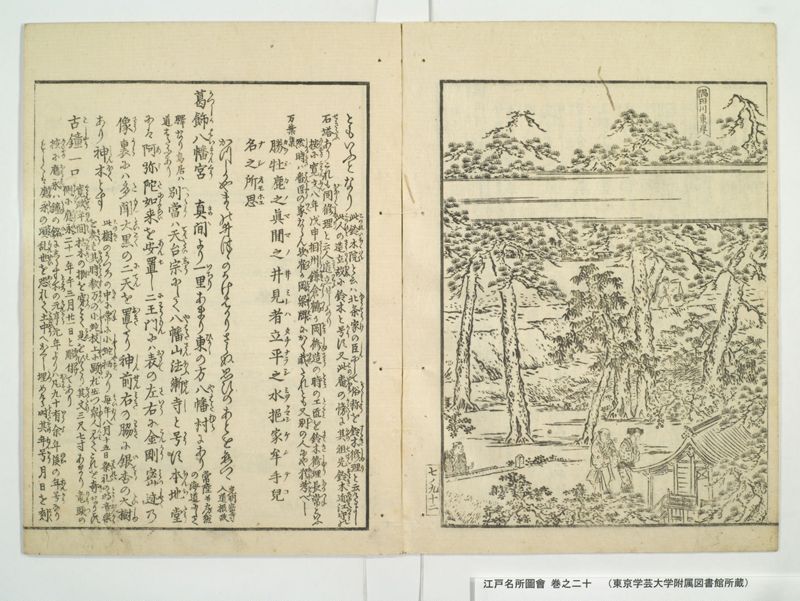
【左ページの挿し絵は乱丁。巻の19のコマ14と同じものである。> https://honkoku.org/app/#/transcription/346016D3BD3173DEAE979A550AD63DF7/15/ 】
【この資料では、左ページの前に、「真間の井」「挿し絵:梨園」が欠けている】
【真間井を以下より補う > https://dl.ndl.go.jp/pid/2559059/1/31 】
真間井(まゝのゐ) 同所 北(きた)の山際(やまきは)鈴木院(れいもくゐん)といふ草庵(さうあん)の傍(かたはら)にあり手児奈(てこな)か
汲(くみ)ける井(ゐ)なりと云伝(いひつた)ふ中古(なかむかし)此井(このゐ)より霊亀(れいき)しゆつけん)せし故(ゆゑ)に亀井(かめゐ)
【挿し絵:梨園を以下より補う > https://dl.ndl.go.jp/pid/2559059/1/32】
梨園(なしその)
真間(まゝ)より八幡(やはた)へ
行道(ゆくみち)の間(あひた)に
あり二月(きさらき)の
花盛(はなさかり)は雪(ゆき)を
欺(あさゆく)に似(に)たり
李太白(りたいはく)の詩(し)
に梨(り)花(くわ)白雪(はくせつ)
香(かうはし)と賦(ふ)したる
も諾(うへ)なり
かし
【左ページ、真間の井の続き】
ともいふとなり 《割書:此(この)鈴木院(れいほくいん)と云は北条家(ほうてうけ)の臣(しん)にして俗称(そくしやう)を鈴木修理(すすきしゆり)と云けるよし|此人(このひと)の造立故(さうりうゆゑ)に鈴木と号(かう)す又 此庵(このいほり)の傍(かたはら)に其(その)祖先(そせん)鈴木近江守(あふみのかみ)の》
《割書: 石塔(せきたふ)ありこれも同(おなしく)修理(しゆり)と云人 造立(さうりふ)せしなり| 按(あんする)に寛文(くわんふん)八年戊申 相州鎌倉(さうしうかまくら)鶴(つる)か岡(をか)修造(しゆさう)の時(とき)の工匠(たくみ)を鈴木修理長常(すゝきしゆりなかつね)といふ》
《割書: 然時(しかるとき)は番匠(はんしやう)の家(いへ)ならん歟(か)鶴(つる)か岡(をか)梁牌(りやうはい)にかく載(のせ)たれとも又 別(へつ)の人にや猶(なほ)考(かんかふ)へし| 万葉集》
勝(カツ)牡鹿(シカ)之(ノ)真間之井(ママノイ)見(ミレ)者(ハ)立(タチ)乎(ナラ)之(シ)水(ミトゥ)挹(クマシ)家牟(ケム)手児(テコ)
名(ナ)之(シ)所思(オモホユ)
かつしかやまゝの井つゝのかけはかりさらぬ思ひのあとを恋つゝ 《割書:光明密寺|入道摂政》
葛飾八幡宮(かつしかはちまんくう) 真間(まゝ)より一里(いちり)あまり東(ひかし)の方 八幡村(やはたむら)にあり 《割書:常陸并房総|の街道にして》
《割書:駅なり鳥居は|道はたにあり》 別当(へつたう)は天台宗(てんたいしう)にして八幡山法漸寺(やはたさんほふせんし)と号(かう)す本地堂(ほんちたう)
には阿弥陀如来(あみたによらい)を安置(あんち)し二王門(にわうもん)には表(おもて)の左右(さいゆ)に金剛密迹(こんかうみつしやく)乃
像(さう)裏(うら)には多聞(たもん)大黒(たいこく)の二天(にてん)を置(おき)たり神前(しんせん)右(みき)の脇(わき)に銀杏(いてう)の大樹(たいしゆ)
あり神木(しんほく)とす 《割書:此樹(このき)のうろの中(なか)に常(つね)に小蛇(しやうしや)棲(す)めり毎年(まいねん)八月十五日 祭礼(さいれい)の時(とき)音楽(おんかく)|を奏(そう)す其時(そのとき)数万(すまん)の小蛇(しやうしや)枝上(ししやう)に顕(あらは)れ出つ衆人(しゆうしん)見(み)てこれを奇(き)なりとす》
古鐘(こしやう)一口 《割書:寛政年間(くわんせいねんかん)枯木(かれき)の根(ね)を穿(うかつ)とて是(これ)を得(え)たり其丈(そのたけ)三尺七寸あまり竜頭(りうつ)の|側(かたはら)に応永(おうえい)二十一年午三月廿一日と彫付(ほりつけ)てあり》
《割書: 按(あんする)に応永(おうえい)は鐘(かね)の銘(めい)にしるす所(ところ)の元亨(けんかう)元年よりは凡(およそ)九十 有余(いうよ)年 後(のち)の年号(ねんかう)なり| もしくは応永(おうえい)の頃(ころ)乱世(らんせい)を恐(おそ)れて土中(とちゆう)へかくし埋(うつ)めける時(とき)其(その)年号(ねんかう)月日を刻(こく)》
現代語訳
【左ページの挿し絵は乱丁。巻の19のコマ14と同じものである。】
【この資料では、左ページの前に、「真間の井」「挿し絵:梨園」が欠けている】
【真間井を以下より補う】
真間井(ままのい) 同所の北の山際、霊木院という草庵の傍らにあり、手児奈が汲んだ井戸であると言い伝えられている。中古の頃、この井戸から霊亀が出現したため、亀井とも呼ばれる。
【挿し絵:梨園を以下より補う】
梨園(なしぞの)
真間から八幡へ向かう道の途中にある。二月の花盛りは雪を欺くほどに美しい。李太白の詩に「梨花白雪香し」と詠んだのも納得である。
【左ページ、真間の井の続き】
《小字》この霊木院というのは北条家の家臣で、俗称を鈴木修理と言った人物による。この人の建立ゆえに鈴木と号す。また、この庵の傍らにその祖先である鈴木近江守の石塔があり、これも同じく修理という人が造立したものである。
考えるに、寛文八年戊申、相州鎌倉鶴岡八幡宮修造の時の工匠を鈴木修理長常という。そうであれば番匠(大工)の家であろうか。鶴岡八幡宮の梁牌にこのように記載されているが、また別の人物かもしれない。なお考察が必要である。
万葉集より:
「勝鹿の真間の井見れば立ち平し水汲ましけむ手児奈し思ほゆ」
「かつしかや真間の井筒のかけばかりさらぬ思ひのあとを恋ひつつ」《光明密寺入道摂政》
葛飾八幡宮(かつしかはちまんぐう) 真間から一里余り東の方、八幡村にある。《常陸並びに房総への街道にして駅である。鳥居は道端にある。》別当は天台宗にして八幡山法漸寺と号す。本地堂には阿弥陀如来を安置し、二王門には表の左右に金剛密跡の像、裏には多聞・大黒の二天を置いている。神前右の脇に銀杏の大樹があり、神木とする。《この樹の洞の中に常に小蛇が棲んでいる。毎年八月十五日の祭礼の時に音楽を奏する。その時、数万の小蛇が枝上に現れ出る。衆人これを見て奇なりとする。》
古鐘一口 《寛政年間、枯木の根を掘った時にこれを得た。その丈三尺七寸余り、竜頭の側に応永二十一年午三月二十一日と彫り付けてある。》
《考えるに、応永は鐘の銘に記す所の元亨元年よりは凡そ九十有余年後の年号である。もしくは応永の頃、乱世を恐れて土中へ隠し埋めた時、その年号月日を刻んだものか。》
英語訳
[The illustration on the left page is misordered. It is the same as frame 14 of volume 19.]
[In this document, "Mama no I" (Mama Well) and "Illustration: Pear Garden" are missing before the left page]
[Supplementing Mama Well from the following source]
Mama Well (Mama no I) - Located at the same place, beside a grass hermitage called Reiboku-in at the northern mountain edge. It is said to be the well from which Tekona drew water. In medieval times, a sacred turtle appeared from this well, so it is also called Kame-i (Turtle Well).
[Illustration: Pear Garden supplemented from the following]
Pear Garden (Nashizono)
Located along the road from Mama to Hachiman. The flower blooming in the second month is so beautiful it seems to deceive the snow. Li Taibai's poem "pear blossoms white as fragrant snow" is quite fitting.
[Continuation of Mama Well from the left page]
《Small text》This Reiboku-in was established by a retainer of the Hōjō family, commonly called Suzuki Shuri. It is called Suzuki due to this person's founding. Also, beside this hermitage stands a stone pagoda of his ancestor Suzuki Ōmi-no-kami, which was also erected by the same person called Shuri.
Considering that in Kanbun 8 (1668), during the reconstruction of Tsurugaoka Hachiman Shrine in Kamakura, Sagami Province, the master craftsman was called Suzuki Shuri Nagatsune. If so, it would be a family of carpenters. Though this is recorded on the beam plaques of Tsurugaoka, it might be a different person. Further investigation is needed.
From the Man'yōshū:
"When I see the well of Mama in Katsushika, I think of Tekona who must have drawn water there standing calmly"
"At Katsushika, by Mama's well-curb, like its rim, I continue to long for the traces of undying thoughts" 《Kōmyō Mitsuji, Lay Priest Regent》
Katsushika Hachiman Shrine - Located in Hachiman village, more than one ri east of Mama. 《On the highway to Hitachi and Bōsō, it is a post station. The torii stands roadside.》The bettō (temple administrator) belongs to the Tendai sect and is called Hachiman-zan Hōsen-ji. The main hall enshrines Amida Nyorai, and the Niō gate has Kongō Misshaku statues on the left and right front, with Tamon and Daikoku deities placed in the rear. To the right of the shrine front stands a great ginkgo tree, which serves as the sacred tree. 《Small snakes constantly dwell in the hollow of this tree. Every year on August 15th during the festival, when music is performed, tens of thousands of small snakes appear on the branches. People see this as a marvel.》
One ancient bell 《During the Kansei era, this was found when digging up the roots of a dead tree. It measures over 3 shaku 7 sun in height, with "Ōei 21, year of the horse, third month, 21st day" carved beside the dragon head.》
《Considering that Ōei is about ninety-some years after the Genkō first year mentioned in bell inscriptions. Perhaps during the Ōei period, fearing the chaos of war, it was hidden and buried underground, with that year and date carved upon it.》