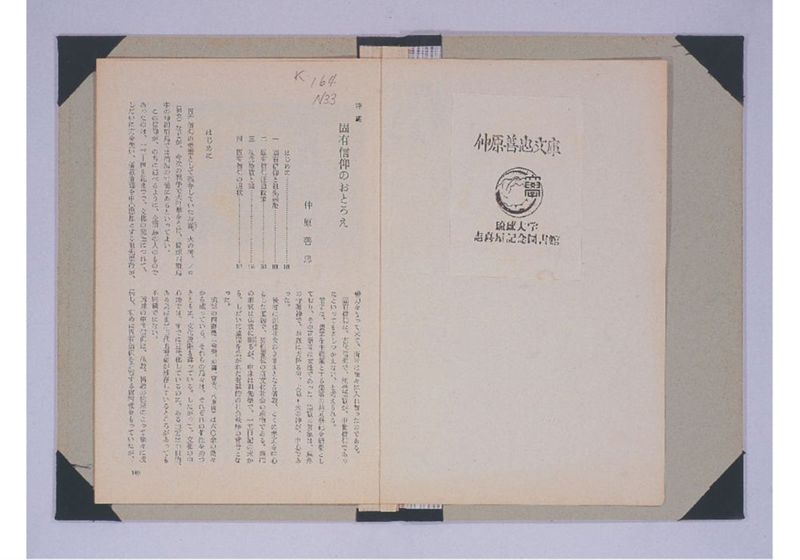
翻刻
【右頁上段】
沖縄
固有信仰のおとろえ
仲原善忠
はじめに…………………………………149
一 固有信仰と祖先崇敬……………………150
二 固有信仰圧迫政策………………………153
三 祖先崇敬と墓……………………………155
四 固有信仰の現状…………………………157
はじめに
固有信仰の要素として残存していたお嶽、火の神、ノロ
(神女)などが、今次の戦争で大打撃をうけ、琉球四群島
中の沖縄群島では消滅の寸前にあるといってよい。
この信仰が、のちに述べるように、全群島の人のもので
あったのは、一三―四世紀までで、文化の発達につれて、
しだいに力を失い、儒教倫理を中心思想とする祖先崇敬が、
【右頁下段】
勢力をもって来て、両者は徐々に入れ替ったのである。
固有信仰は、古代信仰で、祖先崇敬が、中世信仰であっ
たといってもさしつかえない、と考えられる。
前者は、農業を主産業とする集落の共同祭祀を紐帯とし
ており、その司祭者は女性であった。崇敬の対象は、集落
の守護神で、お嶽に天降る神、太陽=火の神が、中心であ
った。
後者は封建社会のささえとなる儒教、とくに孝□を中心
とした□□で、男性優位の高文化社会の産物である。祭祀
の形式は仏教に則(のっと)るが、中味は祖先祭で、一五世紀の末か
ら、しだいに□□を□がれた封建的の社会秩序の背骨とな
った。
琉球の四群島(奄美、沖縄、宮古、八重山)は六〇余の島々
から成っている。それらの島々は、それぞれの□性を持つ
とともに、文化段階も違っている。したがって、文化の中
心地では、すでに近代化しているのに、ある地方は中世的、
ある島はまだ古代的習俗が残存しているところがあっても
不思議ではない。
琉球の中世信仰は、仏教、儒教の伝来によって徐々に成
長し、初めは固有信仰を許容する寛容性をもっていたが、
149
現代語訳
【右頁上段】
沖縄
固有信仰の衰退
仲原善忠
はじめに…………………………………149
一 固有信仰と祖先崇拝……………………150
二 固有信仰弾圧政策………………………153
三 祖先崇拝と墓……………………………155
四 固有信仰の現状…………………………157
はじめに
固有信仰の要素として残存していた御嶽、火の神、ノロ(神女)などが、太平洋戦争で大きな被害を受け、琉球四群島のうちの沖縄群島では消滅寸前にあると言ってよい。
この信仰が、後に述べるように、全群島の人々のものであったのは、13~14世紀までで、文化の発達に伴って、次第に力を失い、儒教倫理を中心思想とする祖先崇拝が、
【右頁下段】
勢力を持つようになって、両者は徐々に入れ替わったのである。
固有信仰は、古代信仰で、祖先崇拝が、中世信仰であったと言っても差し支えない、と考えられる。
前者は、農業を主産業とする集落の共同祭祀を結びつきとしており、その司祭者は女性であった。崇拝の対象は、集落の守護神で、御嶽に天降る神、太陽=火の神が、中心であった。
後者は封建社会の支えとなる儒教、特に孝行を中心とした思想で、男性優位の高度な文化社会の産物である。祭祀の形式は仏教に則るが、中身は祖先祭で、15世紀の末から、次第に[不明]を[不明]れた封建的な社会秩序の背骨となった。
琉球の四群島(奄美、沖縄、宮古、八重山)は60余りの島々から成っている。それらの島々は、それぞれの特性を持つとともに、文化段階も違っている。したがって、文化の中心地では、すでに近代化しているのに、ある地方は中世的、ある島はまだ古代的習俗が残存しているところがあっても不思議ではない。
琉球の中世信仰は、仏教、儒教の伝来によって徐々に成長し、初めは固有信仰を許容する寛容性を持っていたが、
英語訳
【Right Page Upper Section】
Okinawa
The Decline of Indigenous Faith
Nakahara Zenchu
Introduction…………………………………149
I Indigenous Faith and Ancestor Worship……150
II Policies of Suppressing Indigenous Faith…153
III Ancestor Worship and Tombs………………155
IV Current State of Indigenous Faith…………157
Introduction
Elements of indigenous faith that had survived—such as utaki (sacred groves), the fire deity, and noro (priestesses)—suffered devastating damage in the recent war, and in the Okinawa island group among the four Ryukyu island clusters, they can be said to be on the verge of extinction.
This faith belonged to all the people of the island groups, as will be discussed later, until the 13th-14th centuries, but gradually lost power with cultural development, while ancestor worship centered on Confucian ethics began to gain
【Right Page Lower Section】
influence, and the two gradually replaced each other.
Indigenous faith can be considered ancient religion, while ancestor worship was medieval religion, without any problem in this characterization.
The former was based on communal rituals of agricultural settlements as its binding force, and its priests were women. The objects of worship were the guardian deities of settlements, with deities descending to utaki and the sun = fire deity at the center.
The latter is Confucianism that supports feudal society, particularly ideology centered on filial piety, a product of male-dominated high culture society. The ritual forms follow Buddhism, but the content is ancestor worship, which from the end of the 15th century gradually became the backbone of feudal social order that [unclear text].
The four Ryukyu island clusters (Amami, Okinawa, Miyako, Yaeyama) consist of over 60 islands. These islands each have their own characteristics and are also at different cultural stages. Therefore, it is not surprising that while cultural centers have already modernized, some regions remain medieval, and some islands still retain ancient customs.
Medieval faith in the Ryukyus gradually developed through the introduction of Buddhism and Confucianism, initially showing tolerance toward indigenous faith, but