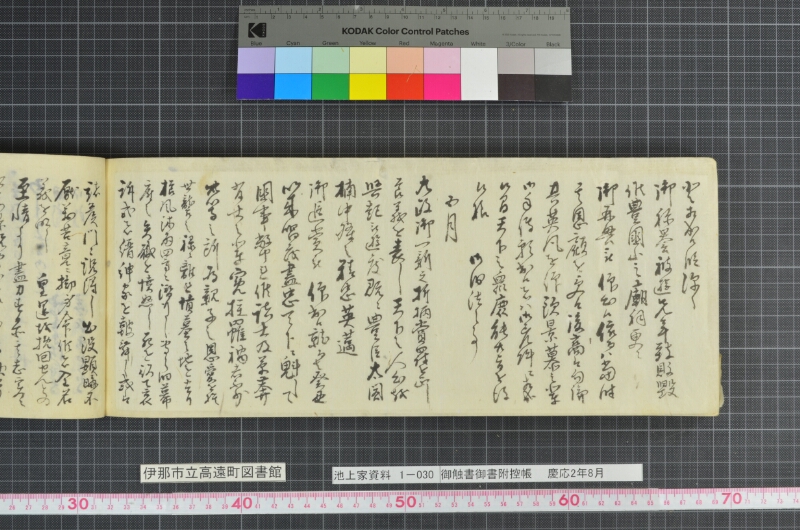
翻刻
【右丁】
北々相成候段深く
御称誉被遊先年致敗毀
作豊国山之廟詞更に
御再興被仰出候依而は当時
其恩顧を受取後商は勿論
其英風を仰観景慕之輩
御手伝願出候者は御差許に相成
候間天下之衆康能共旨を得
候様 御沙汰之事
五月
大政御一新之折柄賞罰を正し
節義を表し天下之人心を
興起被遊度既に豊臣太閤
楠中将之精忠英慈英邁
御追賞被 仰出候就而は登丑
以来唱も尽忠天下に魁して
国事幣被供諸士及草天井
有士之輩寛狂羅禍者露
此等之所為親子之恩愛を捨
世襲之禄に離れ墳墓之地を去り
櫛風淋雨四方に潜行し専ら旧幕
府之矢職を焼怒し花を以て哀
訴式者縉沖家を鼓舞し或は
現代語訳
【右丁】
(前頁よりの続き)
北々相成り候段、深く御称誉遊ばされ、先年致し敗毀させ作られた豊国山の廟詞(びょうし)を、更に御再興仰せ出され候。依って、当時その恩顧を受け取り、後商(こうしょう)は勿論、その英風を仰ぎ観て景慕する輩、御手伝い願い出で候者は御差許しに相成り候間、天下の衆、能くこの旨を得候様、御沙汰の事。
五月
大政御一新の折柄、賞罰を正し、節義を表し、天下の人心を興起遊ばされたく、既に豊臣太閤・楠中将の精忠・英慈・英邁を御追賞仰せ出され候。就いては、丑年(慶応元年・1865年頃)以来、尽忠を唱え、天下に魁けて国事に身を捧げた諸士、および草莽(そうもう)の有志の輩、艱難・禍難に遭いながらも、これ等の所為は、親子の恩愛を捨て、世襲の禄を離れ、墳墓の地を去り、風雨に曝されながら四方に潜行し、専ら旧幕府の失職(しっしょく)を糾弾し、花(はな)をもって哀訴する者、縉紳(しんしん)の家を鼓舞し、或いは――
英語訳
【Right Folio】
(Continued from the previous page)
…that [his deeds] had become increasingly [renowned to the] north, he was greatly praised and honored; accordingly, the shrine (*byōshi*) of Toyokuni-yama, which had previously been destroyed and fallen into ruin, has now been ordered to be rebuilt and restored. Therefore, those currently receiving his benevolence, as well as merchants and others who look up to and admire his illustrious spirit, and those who wish to volunteer their assistance in the reconstruction — such persons shall be granted permission to do so. It is hereby decreed that all people under heaven should understand this intention clearly.
Fifth Month
In this time of the Great Renewal of Imperial Governance (*Taisei go-isshin*), it is desired that rewards and punishments be properly administered, that loyalty and righteousness be made manifest, and that the hearts of all people under heaven be inspired and uplifted. Already, posthumous commendations have been decreed for the steadfast loyalty, noble benevolence, and outstanding excellence of *Toyotomi Taikō* (Toyotomi Hideyoshi) and *Kusunoki Chūjō* (Kusunoki Masashige). Accordingly, since approximately the Year of the Ox (*Ushi*, c. 1865), those knights and men of high purpose among the common people (*sōmō no yūshi*) who proclaimed their loyalty, who, foremost in the realm, dedicated themselves to national affairs and suffered hardship and calamity — these persons, in the course of their actions, abandoned the bonds of love between parent and child, left behind their hereditary stipends, departed from the lands of their ancestors' graves, and, braving the wind and rain, moved covertly in all directions. Devoted solely to denouncing the misdeeds of the former Shogunate, some made earnest petitions, others encouraged and rallied the houses of the court nobility (*shinshin*), and still others —