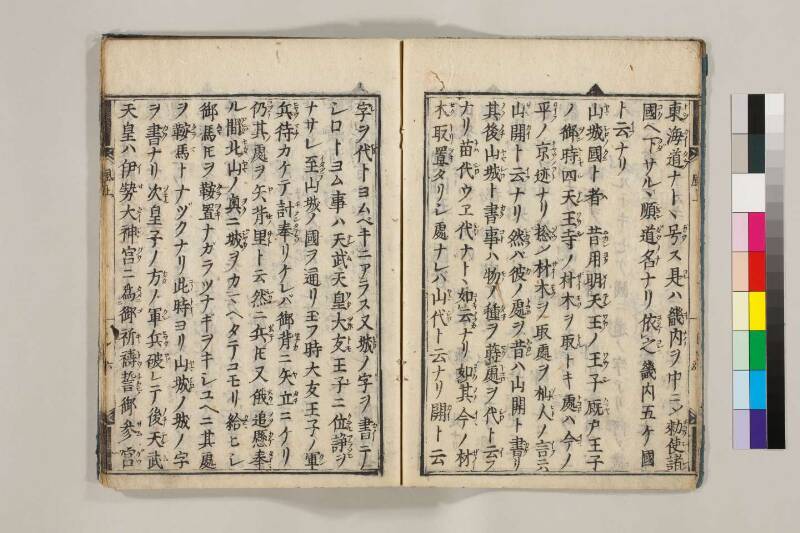
翻刻
【コマ10】
【右丁】
東海道(トウカイタウ)ナトヽ号(ガウ)ス是(コレ)ハ畿内(キナイ)ヲ中ニ𬼀勑使(チヨクシ)諸(シヨ)
國(コク)ヘ下(クダ)サルヽ順道名(シユンダウノナ)ナリ《振り仮名:依_レ之|ヨツテ コレニ》畿内五个國
ト云(イフ)ナリ
山城國(ヤマシロノクニ)ト者(ハ) 昔(ムカシ)用明天王(ヨウメイテンワウ)ノ王子(ワウシ)厩戸王子(ムマヤ )
ノ御時(ヲントキ)四天王寺(シテンワウシ)ノ材木(ザイモク)ヲ取(トル)トキ處(トコロ)ハ今(イマ)ノ
《振り仮名:平ノ京迹|タイラ キヤウノアト》ナリ捴(ソウ)𬼀材木(サイモク)ヲ取處ヲ杣人(ソマヒト)ノ言(イフ)ニハ
山開(サンカイ)ト云(イフ)ナリ然(シカラ)バ彼(カ)ノ處(トコロ)ヲ昔(ムカシ)ハ山開ト書(カケ)リ
其後(ノノノチ)山城(ヤマシロ)ト書事(カクコト)ハ物(モノ)ノ種(タネ)ヲ蒔處(マクトコロ)ヲ代(シロ)ト云(イ)フ
ナリ苗代(ナハシロ)《振り仮名:ウヱ代| シロ》ナドヽ《振り仮名:如_レ云|コトキ イフカ》ナリ《振り仮名:如_レ其|ゴトク ソノ》今(イマ)ノ材(ザイ)
木(モク)取置(トリヲキ)タリシ處ナレバ山代(ヤマシロ)ト云ナリ開(カイ)ト云
【左丁】
字(シ)ヲ代(シロ)トヨムベキニアラス又 城(シロ)ノ字(シ)ヲ書(カイ)テ
シロトヨム事ハ天武天皇(テンム ワウ)大友王子(ヲホトモ シ )ニ位諍(クラヒアラソヒ)ヲ
ナサレ至(イタツテ)山城ノ國ヲ通リ玉フ時大友王子ノ軍(クン)
兵(ヒヤウ)待(マチ)カケテ討(チウシ)奉(タテマツ)リケレバ御背( セナカ)ニ矢(ヤ)立(タチ)ニケリ
仍(ヨツテ)其 ̄ノ處ヲ矢背里(ヤセノサト)ト云 然(シカル)ニ兵(ツハモノ)𪜈又 俄(ニハカニ)追懸(ヲツカケ)《振り仮名:奉|タテマ#1》
ル間(アヒダ)北山(キタヤマ)ノ奥(ヲク)ニ城(ジヤウ)ヲカマヘタテコモリ給(タマ)ヒシ
御馬( ムマ)𪜈ヲ鞍(タラ)置(ヲキ)ナガラツナギヲキシユヘニ其處
ヲ鞍馬(クラマ)トナヅクナリ此時(コノトキ)ヨリ山城(ヤマシロ)ノ城ノ字
ヲ書(カク)ナリ次(ツキニ)皇子ノ方(カタ)ノ軍兵(クンヒヤウ)破(ヤブ)レテ後(ノチ)天武(テンム)
天皇ハ伊勢大神宮(イセタイジングウ)ニ《振り仮名:為_二御祈禱誓_一|タメニ ゴキトウチカヒノ 》御参宮( サムグウ)
現代語訳
### 東海道などと称するのは
畿内を中心として、勅使(天皇の使者)が諸国へ下向される順路の名称である。これにより「畿内五か国」と言うのである。
---
### 山城国(やましろのくに)について
昔、用明天皇の王子・厩戸王子(うまやどのおうじ)の御時代に、四天王寺の材木を採取した場所は、今の平の京の跡(平城京跡)である。総じて、材木を採る場所を杣人(そまびと/木こり)の言葉では「山開(さんかい)」と言う。それゆえ、かの地を昔は「山開」と書いた。
その後、「山城(やましろ)」と書くようになったのはなぜか。物の種を蒔く場所を「代(しろ)」と言う。「苗代(なわしろ)」「植え代(うえしろ)」などと言うのと同じである。その例のように、今の材木を取り置いた場所であるから「山代(やましろ)」と言うのである。「開(かい)」という字を「代(しろ)」と読むべきではない。
また、「城(しろ)」の字を書いて「しろ」と読むようになったことについては次のような由来がある。天武天皇が大友王子(おおとものおうじ)と帝位を争われ、山城の国を通り過ぎられた時、大友王子の軍兵が待ち伏せして天武天皇を討ち奉ったため、御背中に矢が立った。それによって、その場所を「矢背里(やせのさと)」と言う。
しかるに、兵がまた俄かに追い掛けてきたので、北山の奥に城を構えて立て籠もりなさった。御馬も鞍を置いたままつなぎ置いたので、その場所を「鞍馬(くらま)」と名付けるのである。
この時より、「山城(やましろ)」に「城」の字を書くようになったのである。
次に、(大友)皇子方の軍兵が破れた後、天武天皇は伊勢大神宮に御祈禱・誓いのため御参宮なされ……
英語訳
### On the Name "Tōkaidō" and Similar Designations
These names refer to the routes along which imperial envoys (chokushi) travel from the capital (Kinai) to the various provinces. It is for this reason that the term "Five Provinces of Kinai" is used.
---
### On the Province of Yamashiro
Long ago, during the time of Prince Umayado (Shōtoku Taishi), son of Emperor Yōmei, the timber for Shitennō-ji Temple was taken from a place that corresponds to the present-day ruins of Taira-no-Kyō (the old capital site). In the language of timber cutters (soma-bito), a place where timber is harvested is generally called "sankai" (山開, "mountain opening"). Thus, that place was anciently written as "Sankai."
As for why the name later came to be written as "Yamashiro" (山城): a place where seeds are sown is called "shiro" (代). This is used in words such as "nawashiro" (seedling bed) and "ueshiro" (planting bed). In the same way, because it was the place where timber had been taken and stored, it came to be called "Yamashiro" (山代, "mountain store"). However, the character "kai" (開) should not simply be read as "shiro" (代).
As for why the character "shiro" came to be written with the character for "castle" (城) rather than "代": When Emperor Tenmu was contending for the throne against Prince Ōtomo (Emperor Kōbun), and was passing through Yamashiro Province, the troops of Prince Ōtomo lay in ambush and attacked him, causing arrows to strike him in the back. Consequently, that place came to be called "Yase-no-Sato" (Arrow-Back Village / 矢背里).
Furthermore, as enemy soldiers suddenly gave chase again, Emperor Tenmu fortified himself in a castle deep in the northern mountains. Since even his horse was left tied up with its saddle still on, that place came to be named "Kurama" (鞍馬, "Saddled Horse").
It is from this time that the character "城" (castle/shiro) came to be used in writing "Yamashiro."
Next, after the forces of Prince Ōtomo were defeated, Emperor Tenmu made a pilgrimage to the Grand Shrine of Ise to offer prayers and vows…