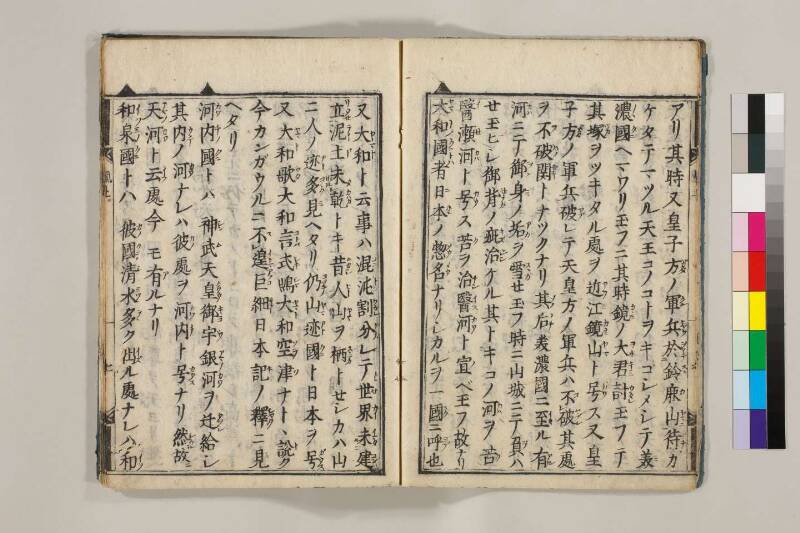
翻刻
【コマ11】
【右丁】
アリ其時又 皇子方( ガタ)ノ軍兵(クンヒヤウ)《振り仮名:於_二鈴鹿山_一|ヲイテ スヽカヤマニ 》待(マチ)カ
ケタテマツル天王コノコトヲキコシメシテ美(ミ)
濃國(ノヽクニ)ヘマワリ玉フニ其時《振り仮名:鏡ノ大君|カヽミ ヲホキミ》討(ウタレ)玉フテ
其塚( ツカ)ヲツキタル處ヲ近江鏡山(アフミカヽミヤマ)ト号(ガウ)ス又皇
子方( ガタ)ノ軍兵 破(ヤブ)レテ天皇方ノ軍兵ハ《振り仮名:不_レ破|ス ヤブレ》其處
ヲ不破関(フハノセキ)トナツクナリ其后(ソノノチ)美濃國ニ至(イタ)ル有(アル)
河(カハ)ニテ御身(ヲンミ)ノ垢(アカ)ヲ雪(スヽガ)セ玉フ時ニ山城ニテ負(ヲ)ハ
セ玉ヒシ御背( セナカ)ノ疵(キズ)治(ジシ)ケル其トキコノ河(カハ)ヲ苦(ク)
醫瀬河(イセカハ)ト号(カウ)ス苦(ク)ヲ治醫河(チシイスカワ)ト宣(ノ)ベ玉フ故ナリ
大和國者(ヤマトノクニトハ) 日本(ニホン)ノ惣名(ソウメウ)ナリシカルヲ一國( ユク)ニ呼(ヨブ)也
【左丁】
又 大和(ヤマト)ト云事ハ混沌(コントン)割分(ワカレワカ)レテ世界(セカイ)《振り仮名:未_二建|イマタ コン| ル 》
《振り仮名:立_一|リツセ 》泥土(テイド)《振り仮名:未_レ乾| タ カハカ| ザル 》トキ昔(ムカシ)人(ヒト)山(ヤマ)ヲ栖(スミカ)トセシカハ山
ニ人ノ迹(アト)多見(ヲヽクミ)ヘタリ仍(ヨツテ)山迹國(ヤマアトクニ)ト日本ヲ号(ガウス)
又 大和歌(ヤマトウタ)大和言( コトバ)式嶋(シキシマ)大和(ヤマト)空津(ソラツ)ナトヽ說(ト)ク
今カンガウルニ《振り仮名:不_レ遑|ス イトマアラ》巨細(コサイ)日本記( キ)ノ釋(シヤク)ニ見(ミ)
ヘタリ
河内國(カワチノクニ)トハ 神武天皇(シンム クワウ)御宇(キヨウ)銀河(アマノカワ)ヲ迂(ウツシ)給シ
其内( ウチ)ノ河(カウ)ナレハ彼處(カノ )ヲ河内(カワチ)ト号(カウス)ナリ然(シカル)故 ̄ニ
天河(アマノカワ)ト云(イフ)處今モ有(ア)ルナリ
和泉國(イツミノクニ)トハ 彼國(カノクニノ)清水(シミツ)多(ヲヽ)ク出(イズ)ル處ナレハ和(イツ)
現代語訳
### (前ページからの続き)
その時また、(大友)皇子方の軍兵が鈴鹿山にて(天武天皇を)待ち伏せ申し上げた。天皇はこのことをお聞きになり、美濃国へ迂回なさった。その時、「鏡の大君」がお討たれになり、その塚を築いた場所を「近江鏡山(あふみかがみやま)」と称する。
また、(大友)皇子方の軍兵が破れ、天皇方の軍兵は破れなかったので、その場所を「不破関(ふわのせき)」と名付けるのである。
その後、美濃国に至り、ある川にて御身の垢をお濯ぎになった時、山城にて負われた御背中の傷がお治りになった。その時、この川を「苦醫瀬河(くいせかわ)」と称する。「苦(く)を治醫する河(かわ)」とお述べになったからである。
---
### 大和国(やまとのくに)について
大和とは、日本の総称であった。それをある一国の呼び名として用いるようになったのである。
また、「大和(やまと)」という言葉については、混沌(こんとん)が割れ分かれ、世界がまだ出来上がらず、泥土がまだ乾かない頃、昔の人は山を住処としていたため、山に人の跡が多く見えた。それゆえ、「山迹国(やまとのくに)」と日本を称するようになったのである。
また、「大和歌(やまとうた)」「大和言葉(やまとことば)」「式嶋の大和」「空津(そらつ)」などと説くが、今これを考えるに、細かく述べる暇はない。詳しくは『日本記(にほんき)』の注釈に見えている。
---
### 河内国(かわちのくに)について
神武天皇の御代に、天の川を移しお遷しになり、その内の川であるから、かの地を「河内(かわち)」と称するのである。それゆえ、「天河(あまのかわ)」と言う場所が今もあるのである。
---
### 和泉国(いずみのくに)について
かの国は清水が多く湧き出る場所であるから、「和(いず)……」
(次ページへ続く)
英語訳
### (Continued from previous page)
At that time, the troops of Prince Ōtomo's faction lay in wait for Emperor Tenmu at Mount Suzuka. Upon learning of this, the Emperor detoured through Mino Province. During this time, the "Great Lord of Kagami" (Kagami-no-Ōkimi) was slain, and the place where his burial mound was raised came to be called "Ōmi Kagamiyama" (Mirror Mountain of Ōmi).
Furthermore, because the troops of Prince Ōtomo's faction were defeated while the Emperor's forces remained undefeated, that place came to be named "Fuwa-no-Seki" (the Barrier of Fuwa — literally, "the Unbroken Barrier").
After this, upon reaching Mino Province, Emperor Tenmu bathed in a certain river to cleanse his body, and at that time the wound on his back that he had suffered in Yamashiro was healed. That river was then named "Kuise-kawa" (苦醫瀬河, the River That Cures Suffering), because he declared it to be "the river that heals suffering."
---
### On the Province of Yamato
"Yamato" was originally the general name for all of Japan. It later came to be used as the name of a single province.
As for the word "Yamato" itself: in the time of primordial chaos, when heaven and earth had only just separated and the world had not yet fully formed — when the mud and earth had not yet dried — the people of old used mountains as their dwelling places, and thus many traces of human habitation could be seen upon the mountains. For this reason, Japan as a whole came to be called "Yamato-no-kuni" (山迹国, "the Land of Mountain Traces").
There are also explanations related to "Yamato-uta" (Japanese poetry), "Yamato-kotoba" (the Japanese language), "Shikishima-no-Yamato," and "Soratsu," but to examine all of these in detail here would take too long. The explanations can be found in the commentaries on the Nihongi (Chronicles of Japan).
---
### On the Province of Kawachi
During the reign of Emperor Jinmu, the Heavenly River (Ama-no-kawa, the Milky Way) was redirected or relocated, and because the waterway in question lay within (uchi) that river, the place came to be called "Kawachi" (河内, "Within the River"). For this reason, a place called "Ama-no-kawa" (Heavenly River) still exists there to this day.
---
### On the Province of Izumi
Because that province is a place from which many clear springs flow forth, it was called "Izu(mi)…"
(Continues on next page)