翻刻
【コマ12】
【右丁】
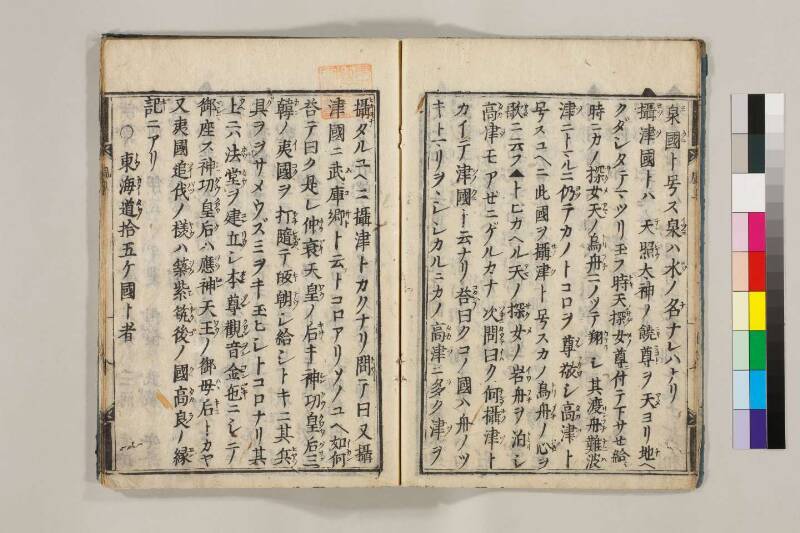
泉國(ミクニ)ト号ス泉(イツミ)ハ水(ミヅ)ノ名(ナ)ナレハナリ
攝津(セツツ)國トハ 天照太神(テンシヤウ )ノ饒尊(ニキミコト)ヲ天(アメ)ヨリ地(チ)ヘ
クダシタテマツリ玉フ時(トキ)《振り仮名:天 ̄ノ探女尊| サグメノ 》 ̄ニ付テ下サセ給 ̄シ
時ニカノ探女(サクメ)《振り仮名:天ノ鳥舟|アマ トリフネ》ニノツテ《振り仮名:翔󠄁|カケリ》シ其渡 ̄リシ舟(フネ)《振り仮名:難波|ナニハ》
津(ツ)ニトマルニ仍(ヨツ)テカノトコロヲ尊敬(ソンケウ)シ高津(タカツ)ト
号スユヘニ此國ヲ攝津(セツツ)ト号スカノ鳥舟(トリブネ)ノ心(コヽロ)ヲ
歌(ウタ)ニ云フ▲トビカヘル《振り仮名:天ノ探女|アマ サクメ 》ノ岩舟(イワフネ)ヲ泊(トマリ)シ
高津(タカツ)モアゼニゲルカナ次(ツキニ)問曰(タウテイハ)ク何(ナン𬼀)攝津(セツツ)ト
カイテ津國(ツノクニ)ト云ナリ荅(コタヘテ)曰クコノ國ハ舟ノツ
キトマリヲヽシシカルニカノ高津(タカツ)ニ多(ヲヽ)ク津(ツ)ヲ
【左丁】
攝(ヒキモチ)タルユヘニ攝津トカクナリ問(トウ)テ曰又攝
津國ニ武庫郷(ムコサト)ト云《送り仮名:フ》トコロアリソノユヘ如何(イカン)
荅テ曰ク是レ《振り仮名:仲衰天皇|チウアイ ワウ》#1ノ后(キサ)キ神㓛皇后(シンクウクワウグ)三(サン)
韓(カン)ノ夷國(イコク)ヲ打隨(ウチシタガヘ)テ皈朝(キテウ)シ給シトキニ其 兵(ヒヤウ)
《振り仮名:具󠄁|グ》ヲヲサメウズミヲキ玉ヒシトコロナリ其
上(ウヘ)ニハ法堂(ホウタウ)ヲ建立(コンリウ)シ本尊(ホンゾン)觀音(クワンヲン)金色(コンジキ)ニシテ
御座(マシマ)ス神㓛皇后(シングウクワウク)ハ應神天王(ヲウシン ワウ)ノ御母后( ハヽキミ)トカヤ
又夷國 追伐(ツイバツ)ノ樣(ヤウ)ハ築紫(ツクシ)筑後(チクゴ)ノ國(クニ)高良(タカラ)ノ縁(ヱン)
記(キ)ニアリ
○東海道(トウカイタウ)拾五个國ト者
現代語訳
### (前頁からの続き)和泉国について
……泉国(いづみのくに)と称する。「泉(いづみ)」とは水の名であるゆえである。
---
### 摂津国(せっつのくに)について
摂津国とは、天照大神が饒速日尊(にぎはやひのみこと)を天より地へお降ろし申し上げなさった時、天の探女尊(あまのさぐめのみこと)にお付き添わせてお下しになった。その時、かの探女が「天の鳥舟(あまのとりふね)」に乗って飛翔し、その渡られた舟が難波津(なにわのつ)に停まったことにより、かの場所を尊んで「高津(たかつ)」と称したゆえに、この国を「摂津(せっつ)」と称するのである。かの鳥舟のことを歌に詠んでいる。
▲「飛び帰る 天の探女の 岩舟を 泊まりし高津も あぜ逃げるかな」
次に、問うていわく、「何ゆえ『摂津』と書いて『津の国(つのくに)』と言うのか」。答えていわく、「この国は舟の停泊地が多かった。かの高津に多くの津(港)を摂(ひきもち)たるゆえに、『摂津』と書くようになったのである」。
また問うていわく、「摂津国に『武庫郷(むこのさと)』という場所があるが、そのゆえはいかなるものか」。答えていわく、「これは仲哀天皇の后・神功皇后が三韓の夷国を打ち従えて帰朝なさった時に、その兵具(武器・軍具)を収めて埋め置かれた場所である。その上に法堂(ほうどう)を建立し、本尊は観音、金色にてましますのである」。神功皇后は応神天皇の御母君とのことである。
また、夷国追伐の詳しい様子は、筑紫・筑後の国の「高良(たから)の縁記(えんき)」に記されている。
---
### ○東海道十五か国とは
(本頁はここで終わる)
英語訳
### (Continued from the previous page) On the Province of Izumi
…it is called Izumi Province (和泉国). This is because "izumi" (泉) is a word for water (a spring or wellspring).
---
### On the Province of Settsu (摂津国)
As for Settsu Province: when Amaterasu Ōmikami sent Nigihayahi-no-Mikoto down from heaven to earth, the deity Ama-no-Sagume-no-Mikoto was dispatched to accompany him. At that time, Sagume boarded the "Heavenly Bird-Boat" (Ama-no-Torifune) and flew across. The boat upon which she had traveled came to rest at Naniwa Port (Naniwa-no-tsu), and in reverence for that place, it was called "Takatsu" (High Port). For this reason, the province came to be called "Settsu." The following poem was composed about that bird-boat:
▲ *Tobikaeru / Ama-no-Sagume no / iwafune wo / tomari-shi Takatsu mo / aze nigeru kana*
("The rock-boat of Ama-no-Sagume, who flew back — even the Takatsu where it once moored, alas, has it now fled away?")
Then, a question is posed: "Why is the province written as 'Settsu' (摂津) but called 'Tsu-no-kuni' (the Province of Ports)?" The answer given is: "This province had many port-anchorages for ships. Because it held (摂, *hikimoち*) many ports (津) within the area of Takatsu, it came to be written as 'Settsu' (摂津)."
A further question is asked: "Within Settsu Province there is a place called 'Muko-no-sato' (武庫郷). What is the reason for this name?" The answer: "This is the place where Empress Jingū, the consort of Emperor Chūai, upon returning to the court after subduing the barbarian lands of the Three Han (Samkan), stored away and buried the military weapons and equipment. Upon that spot, a Buddhist hall (hōdō) was erected, and the principal image enshrined therein is Kannon (Avalokiteśvara) in golden form." Empress Jingū is said to be the mother of Emperor Ōjin.
Furthermore, the details of the subjugation of the barbarian lands are recorded in the *Engi* (縁記, Foundation Record) of Kōra (高良) in the provinces of Tsukushi and Chikugo.
---
### ○ On the Fifteen Provinces of the Tōkaidō
(The page ends here.)