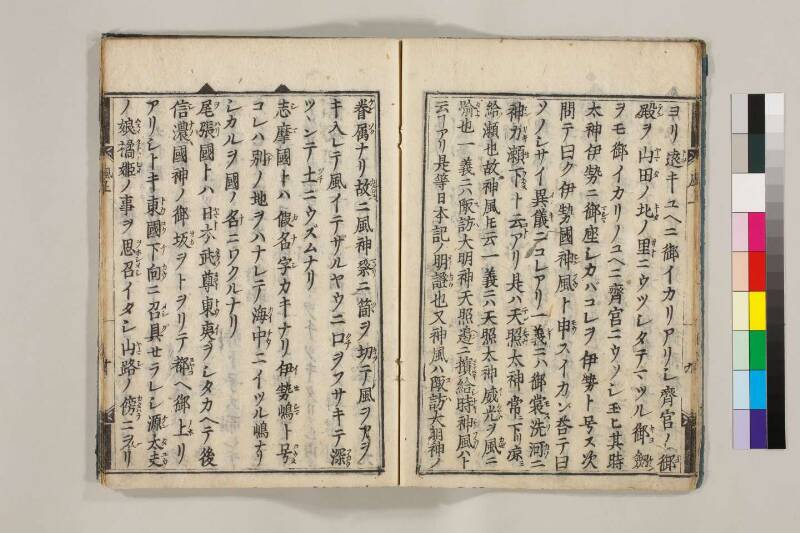
翻刻
ヨリ遠(トヲ)キユヘニ御イカリアリシ齊宮ノ御(ゴ)
殿(テン)ヲ山田(ヤマタ)ノ北(キタ)ノ里(サト)ニウツシタテマツル御劔(キヨケン)
ヲモ御イカリノユヘニ齊宮ニウツシ玉ヒ其時
太神伊㔟ニ御座(マシマ)シカバコレヲ伊㔟ト号ス次
問テ曰ク伊㔟國 神風(シンフウ)ト申(モウ)スイカン荅テ曰
ソノシサイ異儀(イキ)ニコレアリ一義( ギ)ニハ御裳洗河( モスソカワ)ニ
神力(シンリキ)瀬下(セクタス)ト云《送り仮名:コト》アリ是ハ天照太神(テンシヤウ )常 ̄ニ下 ̄リ凉 ̄ミ
給 ̄フ瀬也故 ̄ニ神風𪜈云一義ニハ天照太神 威光(イクワウ)ヲ風(カゼ)ニ
喩(タトフ)也一義ニハ陬訪大明神(スハ )天照邊( ヘン)ニ擯(ミナヒキ)給 ̄シ時(トキ)神風(シンフウ)ハト
云ヿアリ是等日本記ノ明證(メイシヨウ)也又神風ハ陬訪大明神(スハ )ノ
【左丁】
眷属(ケンソク)ナリ故(カルカユヘ)ニ風神 祭(マツリ)ニ筒(ツヽ)ヲ切(キツ)テ風ヲアヲ
キ入レテ風イテザルヤウニ口(クチ)ヲフサキテ深(フカク)
ツヽンテ土(ツチ)ニウズムナリ
志摩國(シマ )トハ 假名字(カナシ)カキナリ伊㔟嶋(イセシマ)ト号(カウス)
コレハ別(ヘチ)ノ地ヲハナレテ海中(カイチウ)ニイツル嶋ナリ
シカルヲ國ノ名(ナ)ニワクルナリ
尾張國(ヲハリ )トハ 日木武尊(ヤマトタケノミコト)東夷(トウイ)ヲシタカヘテ後
信濃國(シナノ )《振り仮名:神ノ御坂| サカ》ヲトヲリテ都(ミヤコ)ヘ御上( ノホ)リ
アリシトキ東國下向(トウコクケカウ)ニ《振り仮名:召具󠄁|メシグ》セラレシ源太夫(ケンタユウ)
ノ娘(ムスメ)《振り仮名:橘姬|タチハナヒメ》ノ事ヲ思召(ヲホシメシ)イタシ山路(ヤマシ)ノ傍(カタハラ)ニヲリ
現代語訳
### 伊勢国(いせのくに)について(承前)
(太神宮が斎宮より)遠いため、御怒りがあった。そこで斎宮の御殿を山田の北の里へお移し申し上げた。御剣もまた、御怒りのゆえに斎宮へお移しなさった。その時、天照大神が伊勢にお鎮まりになったので、これを「伊勢」と号するのである。
次に問うて言う。「伊勢国を『神風(かみかぜ)』と申すのはいかなる訳か。」
答えて言う。「その子細には異なる説がある。一説には、御裳濯川(みもすそがわ)に神力が瀬を下るということがある。これは天照大神が常にお下りになり、涼まれる瀬であるからして、『神風』と云うのである。また一説には、天照大神の威光を風に喩えたものである。さらに一説には、諏訪大明神が天照(大神)の辺り(周辺)から追い払われた時、『神風』という言葉があったとされる。これらは日本紀の明証である。また、神風とは諏訪大明神の眷属(けんぞく)である。」
それゆえ、風神の祭りに筒を切って、風を扇ぎ入れ、風が出て行かぬよう口を塞いで、深く包んで土に埋めるのである。
---
### 志摩国(しまのくに)について
志摩とは仮名書きの名前である。「伊勢嶋(いせしま)」と号する。これは別の地を離れて海中に出る島であって、それを国の名として区分けするのである。
---
### 尾張国(おわりのくに)について
尾張とは、日本武尊(やまとたけるのみこと)が東夷(あずまえびす)を平定した後、信濃国の神の御坂(みさか)を通って都へお上りになる途中、東国へ下向される際に召し連れられた源太夫の娘・橘姫のことをお思いになり、山路の傍らに降りられて……
(本頁はここで終わる)
英語訳
### On the Province of Ise (伊勢国) — continued
Because (the Taijingū) was far from the Saigū, the Great Deity was displeased. Therefore, the palace of the Saigū was relocated to the village north of Yamada. The sacred sword was also transferred to the Saigū on account of the deity's anger. At that time, Amaterasu Ōmikami came to reside at Ise, and for this reason the place came to be called "Ise."
Next, a question is posed: "Why is the Province of Ise referred to as 'Kamikaze' (Divine Wind)?"
The answer given is: "The reasons for this are various, and there are differing explanations. According to one view, there is said to be a divine power that flows down the rapids of the Mimosuso River (御裳濯川). This is the rapid where Amaterasu Ōmikami regularly descends to cool herself, and for this reason it is called 'Kamikaze.' According to another view, it is a metaphor for the radiant authority and majesty of Amaterasu Ōmikami, likened to the wind. According to yet another view, there is a reference to 'Kamikaze' in connection with the time when Suwa Daimyōjin was driven away from the vicinity of Amaterasu. These are attested by clear evidence in the Nihongi (Chronicles of Japan). Furthermore, Kamikaze is said to be among the retinue (kenzoku) of Suwa Daimyōjin."
For this reason, at the festival of the Wind Deity, a tube (of bamboo) is cut, wind is fanned into it, and the opening is sealed so that the wind cannot escape; it is then wrapped tightly and buried in the earth.
---
### On the Province of Shima (志摩国)
As for Shima, it is written in kana. It is called "Ise-shima." This refers to islands that extend out into the sea, separate from the main landmass, and this is distinguished as the name of the province.
---
### On the Province of Owari (尾張国)
As for Owari: after Yamato Takeru-no-Mikoto had subjugated the eastern barbarians (Tōi), while passing through the Divine Pass (Kami-no-Misaka) in Shinano Province on his way back up to the capital, he recalled the daughter of Gentayū — Lady Tachibana (Tachibana-hime) — who had accompanied him on his journey down to the eastern provinces, and he descended to the side of the mountain path...
(The page ends here.)