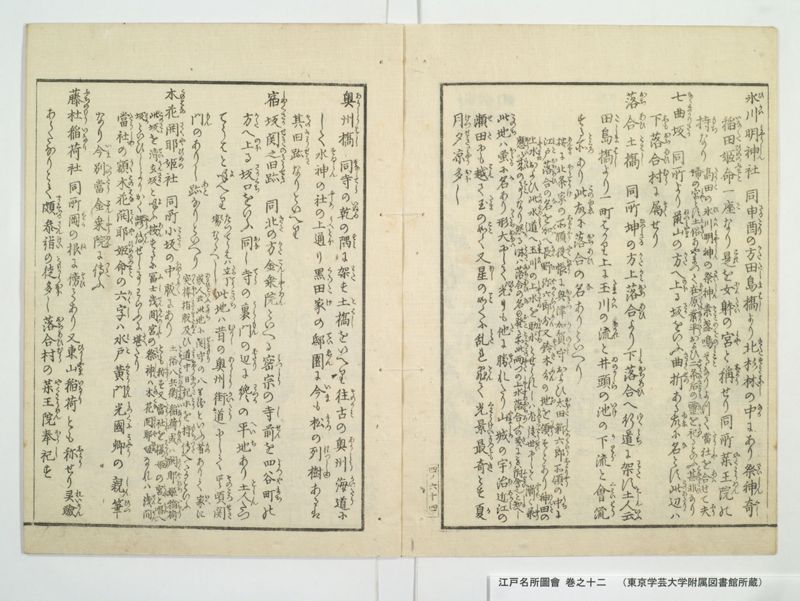
翻刻
【右丁】
氷川明神社(ひかはみやうしん ) 同 申酉(さるとり)の方(かた)田島橋(たしまはし)より北(きた)杉林(すきはやし)の中(なか)にあり祭神(さいしん)奇(くし)
稲田姫命(いなたひめのみこと)一座( さ)なり是(これ)を《振り仮名:女躰の宮|によたい みや》と稱(しよう)せり同所 薬王寺(やくわうゐん)の
持(もち)なり《割書:髙田(たかた)の氷川明神(ひかはみやうしん)の祭神(さいしん)素盞鳴尊(すさのをのみこと)なりよつて當社(たうしや)を合(あは)せて夫(ふう)|《振り仮名:婦の宮|ふ みや》とす土俗(とそく)あやまつて在原業平(ありはらのなりひら)およひ二条后(にてうのきさき)の霊(れい)を祀(まつ)るといふ甚(はなはた)非(ひ)なり》
七曲坂(なゝまかりさか) 同所より鼠山(ねつみやま)の方(かた)へ上(のほ)る坂(さか)をいふ曲折(きよくせつ)ある故(ゆゑ)に名(な)とす此辺(このあたり)は
下落合村(しもおちあひむら)に属(そく)せり
落合土橋(おちあひとはし) 同所 坤(ひつしさる)の方(かた)上落合(かみおちあひ)より下落合(そもおちあひ)へ行道(ゆくみち)に架(わた)す土人(としん)云(いふ)
田島橋(たしまはし)より一町はかり上に玉川(たまかは)の流(なかれ)と井頭(ゐのかしら)の池(いけ)の下流(かりう)と會流(くわいりう)
する所(ところ)あり此故(このゆゑ)に落合(おちあひ)の名(な)ありといへり
《割書:按(あんする)に北条家(ほうてうけ)の所領役帳(しよりやうやくちやう)に奥津加賀守(おきつかゝのかみ)およひ太田新六郎(おほたしんろくらう)所領(しよりやう)の中(なか)に|江戸(えと)落合(おちあひ)の名(な)を加(くは)へ長野弥六郎(なかのやろくらう)分(ふん)又 鈴木(すゝき)分(ふん)の地(ち)を領(りやう)すとあり神田(かんた)の》
《割書:上水(しやうすゐ)およひ此(この)水道(すゐたう)へ玉川(たまかは)の上水(しやうすゐ)を助水(ちよすゐ)とせられしかは尤(もつとも)後世(こうせい)にして漸(やうや)く承(しやう)|應(おう)以来(いらい)の事(こと)なり然(しか)る時(とき)は落合(おちあひ)の名(な)の発(おこ)る所(ところ)此(この)両(ふた)つの上水(しやうすゐ)落合(おちあ)ふの義(き)にとるは附會(ふくわい)也と知(しる)へし》
此地(このち)は蛍(ほたる)に名(な)あり形(かたち)大(おほい)にして光(ひか)りも他(た)に勝(すく)れたり山城(やましろ)の宇治(うち)近江(あふみ)の
瀬田(せた)にも越(こえ)て玉(たま)の如(こと)く又 星(ほし)の如(こと)くに乱(みた)れ飛(とん)て光景(くわうけい)最(もつとも)奇(き)とす夏(か)
月(けつ)夕涼(せきりやう)多(おほ)し
【左丁】
奥州橋(あうしうはし) 同寺(おなしてら)の乾(いぬゐ)の隅(すみ)に架(わた)す土橋(とはし)をいへり往古(そのかみ)の奥州海道(あうしうかいたう)に
して水神(すゐしん)の社(やしろ)の上(うへ)通(とほ)り黒田家(くろたけ)の邸園(ていゑん)に今(いま)も松(まつ)の列樹(れつしゆ)あるは
其(その)旧跡(きうせき)なりといへり
宿坂関旧跡(しゆくさかせきのきうせき) 同 北(きた)の方(かた)金乗院(こんしやうゐん)といへる密宗(みつしう)の寺前(しせん)を四谷町(よつやまち)の
方(かた)へ上(のほ)る坂口(さかくち)をいふ同(おな)し寺(てら)の裏門(うらもん)の辺(あたり)に纔(わつか)の平地(へいち)あり土人(としん)たつ
てうはと呼(よ)へり《割書:たつてうはは立丁(たつてう)|塲(は)なるへし》此地(このち)は昔(むかし)の奥州街道(あうしうかいたう)にして其頃(そのころ)関(せき)
門(もん)のありし跡(あと)なりといへり《割書:或人(あるひと)云(いふ)此地(このち)に関守(せきもり)の八笠勝といふ者(もの)ありて家(いへ)に|突棒(つくほう)指股(さすまた)及(およ)ひ道中日記(たうちゆうにつき)等(とう)を持傳(もちつた)へたるといふ》
木花開耶姫社(このはなさくやひめの ) 同所 小坂(こさか)の中服(ちゆうふく)にあり《割書:土俗(とそく)八兵衛稲荷(はちひやうゑいなり)或(あるひ)は開耶姫稲荷(さくやひめいなり)|とも称(しよう)す又 當社(たうしや)を《振り仮名:桜姫の宮|さくらひめ みや》と唱(とな)へ》
《割書:此坂(このさか)を清玄坂(せいけんさか)と呼(よ)ふ按(あん)するに冨士浅間宮(ふしせんけんのみや)の祭神(さいしん)は木花開耶姫(このはなさくやひめ)なれは浅間(せんけん)|坂(さか)といひしよりかく謬傳(ひやうてん)せし事わらふに堪(たへ)たり》
當社(たうしや)の額(かく)木花開耶姫命(このはなさくやひめのみこと)の六字(ろくし)は水戸黄門光國卿(みとくわうもんみつくにきやう)の親筆(しんひつ)
なり今(いま)別當(へつたう)金乗院(こんしやうゐん)に傳(つた)ふ
藤杜稲荷社(ふちのもりいなり ) 同所 岡(をか)の根(ね)に傍(そひ)てあり又 東山稲荷(ひかしやまいなり)とも称(しよう)せり霊驗(れいけん)
あらたなりとて頗(すこふる)参詣(さんけい)の徒(ともから)多(おほ)し落合村(おちあひむら)の薬王院(やくわうゐん)奉祀(ほうし)す
現代語訳
【右丁】
氷川明神社 同じく申酉(南西)の方角、田島橋から北の杉林の中にある。祭神は奇稲田姫命一座である。これを「女体の宮」と称している。同所の薬王寺が管理している。《高田の氷川明神の祭神は素戔嗚尊なので、当社と合わせて夫婦宮とする。土地の人々が間違って在原業平および二条后の霊を祀るというのは、非常に間違いである》
七曲坂 同所から鼠山の方へ上る坂をいう。曲がりくねっているところから名付けられた。この辺りは下落合村に属している。
落合土橋 同所の坤(南西)の方角、上落合から下落合へ行く道に架けられている。土地の人が言うには、田島橋から一町ほど上に玉川の流れと井の頭池の下流とが合流する所があり、このため「落合」の名があるという。
《考えるに、北条家の所領役帳に奥津加賀守および太田新六郎の所領の中に江戸落合の名を加え、長野弥六郎分、また鈴木分の地を領するとあり、神田の上水およびこの水道へ玉川の上水を助水とされたのは、最も後世のことで、ようやく承応以来のことである。そうであれば、落合の名の起こるところ、この両つの上水が落ち合うという意味に取るのは附会であると知るべきである》
この地は蛍で有名である。形が大きく光も他に勝っている。山城の宇治、近江の瀬田にも勝って、玉のように、また星のように乱れ飛んで、光景が最も奇麗である。夏の月夕涼みする人が多い。
【左丁】
奥州橋 同寺の乾(北西)の隅に架けられた土橋をいう。往古の奥州街道で、水神の社の上を通り、黒田家の邸園に今も松の並木があるのはその旧跡であるという。
宿坂関旧跡 同じく北の方角、金乗院という密教の寺の前を四谷町の方へ上る坂口をいう。同じ寺の裏門の辺りにわずかな平地があり、土地の人は「たってうば」と呼んでいる。《「たってうば」は「立丁場」であろう》この地は昔の奥州街道で、その頃関門があった跡であるという。《ある人が言うには、この地に関守の八笠勝という者がいて、家に突棒、指股および道中日記等を代々伝えているという》
木花開耶姫社 同所の小坂の中腹にある。《土俗では八兵衛稲荷、あるいは開耶姫稲荷とも称し、また当社を「桜姫の宮」と唱える》
《この坂を清玄坂と呼ぶ。考えるに富士浅間宮の祭神は木花開耶姫なので、浅間坂と言ったのがこのように誤って伝わったのは、笑うに堪える》
当社の額「木花開耶姫命」の六字は水戸黄門光圀卿の親筆である。今、別当金乗院に伝わっている。
藤杜稲荷社 同所の岡の根に沿ってある。また東山稲荷とも称している。霊験あらたかということで、かなり参詣する人が多い。落合村の薬王院が祭祀を行っている。
英語訳
【Right page】
Hikawa Myōjin Shrine Located in the same area, in the direction of sarutori (southwest), within a cedar forest north of Tajima Bridge. The enshrined deity is Kushiinada-hime-no-mikoto, one座 (single deity). This is called "Nyotai-no-miya" (Shrine of the Female Deity). It is maintained by Yakuōji Temple in the same location. 《Since the deity of Takada's Hikawa Myōjin is Susanoo-no-mikoto, together with this shrine they form a married couple shrine. It is quite wrong for the local people to mistakenly say that the spirits of Ariwara no Narihira and Nijō-no-kisaki are enshrined here》
Nanamagari-zaka (Seven-Turn Slope) Refers to the slope ascending from the same location toward Nezumi-yama. It is named for its winding turns. This area belongs to Shimo-Ochiai Village.
Ochiai Earth Bridge Located in the kun (southwest) direction of the same place, built on the road from Kami-Ochiai to Shimo-Ochiai. Local people say that about one chō upstream from Tajima Bridge, there is a place where the flow of the Tama River and the downstream of Inokashira Pond converge, hence the name "Ochiai" (meeting/falling together).
《Upon examination, in the Hōjō family's domain registry, among the domains of Okitsu Kaga-no-kami and Ōta Shinrokurō, the name Edo Ochiai is included, ruling over lands of Nagano Yarokurō's portion and also Suzuki's portion. The use of Tama River's water supply as supplementary water for Kanda's water supply and this aqueduct is quite a recent development, gradually beginning from the Jōō era onward. Therefore, one should know that attributing the origin of the name Ochiai to the meeting of these two water supplies is mere speculation》
This area is famous for fireflies. They are large in form and their light surpasses others. Exceeding even those of Uji in Yamashiro and Seta in Ōmi, they flutter in disorder like jewels and stars, creating a most wondrous spectacle. Many people come for evening cooling in summer months.
【Left page】
Ōshū Bridge Refers to the earth bridge built at the inui (northwest) corner of the same temple. It was part of the ancient Ōshū Highway, passing over the Suijin shrine, and the row of pine trees still remaining in the Kuroda family's estate garden is said to be remnants of this old route.
Shukusaka Checkpoint Ruins Refers to the slope entrance ascending from in front of Konjōin Temple, a Shingon sect temple to the north, toward Yotsuya-machi. Near the back gate of the same temple is a small flat area that locals call "tattēba." 《"Tattēba" is probably "tatechōba" (standing station)}} This location was part of the ancient Ōshū Highway, and is said to be the site where checkpoint gates once stood. 《Someone says that there was a checkpoint keeper named Yakasa Katsu at this location, whose family has passed down through generations items such as striking poles, forked spears, and travel diaries}}
Konohanasakuya-hime Shrine Located on the middle slope of a small hill in the same area. 《Locally it is also called Hachihē Inari or Sakuya-hime Inari, and the shrine is also referred to as "Sakura-hime-no-miya" (Shrine of Princess Cherry Blossom)}}
《This slope is called Seigen-zaka. Upon consideration, since the deity of Fuji Sengen Shrine is Konohanasakuya-hime, what was originally called Sengen-zaka has been mistakenly transmitted this way, which is laughable}}
The six characters "Konohanasakuya-hime-no-mikoto" on the shrine's plaque are written in the hand of Mito Kōmon Mitsukuni. They are now preserved at the affiliated temple Konjōin.
Fuji-no-mori Inari Shrine Located along the base of a hill in the same area. It is also called Higashiyama Inari. Said to have miraculous efficacy, it attracts quite a number of worshippers. Yakuōin Temple of Ochiai Village conducts the religious services.