翻刻
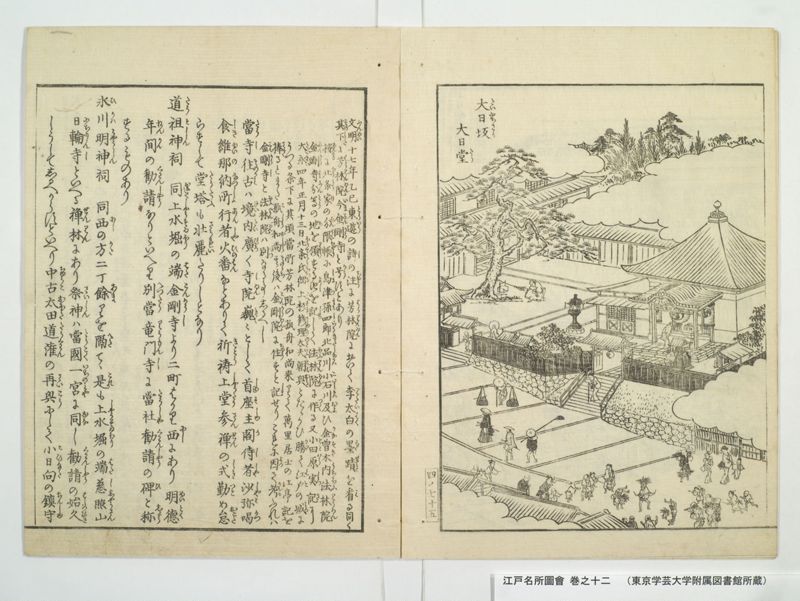
【右丁 絵図】
大日坂(たいにちさか)
大日堂( たう)
【左丁】
《割書:文明(ふんめい)十七年乙巳 東遊(とういう)の詩(し)の注(ちゆう)に芳林院(はうりんゐん)において李太白(りたいはく)の墨蹟(ほくせき)を看(み)る同く|其下(そのした)に芳林院(はうりんゐん)今(いま)金剛寺(こんかうし)と号(かう)すとあり》
《割書:按(あんする)に北条家(ほうてうけ)の分限帳(ふんけんちやう)に島津孫四郎(しまつまこしらう)北品川(きたしなかは)小石川(こいしかは)及(およ)ひ金曽木(かなそき)内(うち)法林院(ほふりうゐん)#2|金剛寺分(こんかうしふん)等(とう)の地(ち)を領(りやう)する由(よし)を記(しる)して法林院(ほふりんゐん)に作(つく)る又 小田原実記(をたはらしつき)に》
《割書:大永(たいえい)四年正月十三日 北条氏綱(ほうてううちつな)上杉修理太夫朝興(うへすきしゆりのたいふともおき)とたゝかひ勝(かつ)て江戸(えと)の城(しろ)に|うつる条下に其頃當所芳林院の孤舟和尚来りて萬里居士の江亭記を》
《割書:捧(さゝく)るとまた孤舟和尚(こしうおしやう)其後(そのゝち)は金剛院(こんかうゐん)に住(ちゆう)すと記(しる)せりこれに因(よつ)て考(かんか)ふれは|金剛寺(こんかうし)と法林院(ほふりんゐん)は別(へつ)なる事しるへし》
當寺(たうし)往古(そのかみ)は境内(けいたい)廣(ひろ)く寺院(しゐん)巍々(きゝ)として首座(しゆそ)主閣(しゆか)侍者(ししや)沙弥(しやみ)喝(かつ)
食(しき)維那(ゆいの)納所(なつしよ)行者(あんしや)火番(ひのはん)なとありて祈祷(きとう)上堂(しやうたう)参禅(さんせん)の式(しき)勤(つと)め怠(おこた)
らすして堂塔(たうたふ)も壮麗(さうれい)たりしとなり
道祖神祠(たうそしん ) 同(おなしく)上水堀(しやうすゐほり)の端(はた)金剛寺(こんかうし)より二町はかり西(にし)にあり明德(めいとく)
年間(ねんかん)の勧請(くわんしやう)なりといへり別當(へつたう)竜門寺(りうもんし)に當社(たうしや)勧請(くわんしやう)の碑(ひ)と称(しよう)
するものあり
氷川明神祠(ひかはみやうしん ) 同 西(にし)の方(かた)二丁 餘(あま)りを隔(へた)てゝ是(これ)も上水堀(しやうすゐほり)の端(はた)慈照山(ししやうさん)
日輪寺(にちりんし)といへる禅林(せんりん)にあり祭神(さいしん)は當國(たうこく)一宮(いちのみや)に同(おな)し勧請(くわんしやう)の始(はしめ)久(ひさ)
しうしてしるへからすといへり中古(ちゆうこ)太田道灌(おほたたうくわん)の再興(さいこう)にして小日向(こひなた)の鎮守(ちんしゆ)
現代語訳
【右丁 絵図】
大日坂
大日堂
【左丁】
《文明十七年乙巳、東遊の詩の注に、芳林院において李太白の墨跡を見るとあり、その下に芳林院は今金剛寺と号するとある》
《考察するに、北条家の分限帳に島津孫四郎が北品川、小石川および金曽木内の法林院、金剛寺分等の地を領有する旨を記して法林院に作る。また小田原実記に大永四年正月十三日、北条氏綱が上杉修理大夫朝興と戦って勝利し、江戸の城に移った条文の下に、その頃当所芳林院の孤舟和尚が来て万里居士の江亭記を奉ったとあり、また孤舟和尚はその後金剛院に住したと記されている。これによって考えれば、金剛寺と法林院は別であることは明らかである》
当寺は往古、境内が広く、寺院は巍々として立派で、首座・主閣・侍者・沙弥・喝食・維那・納所・行者・火番などがあって、祈祷・上堂・参禅の式を勤めて怠らず、堂塔も壮麗であったという。
道祖神祠 同じく上水堀の端、金剛寺より二町ほど西にある。明徳年間の勧請であるという。別当竜門寺に当社勧請の碑と称するものがある。
氷川明神祠 同じく西の方二丁余りを隔てて、これも上水堀の端、慈照山日輪寺という禅林にある。祭神は当国一宮と同じ。勧請の始まりは古くて詳らかでないという。中古、太田道灌の再興で、小日向の鎮守である。
英語訳
【Right Page - Illustration】
Dainichi Slope
Dainichi Hall
【Left Page】
《In the notes to the poem "Toyu" from the 17th year of Bunmei (1485), it mentions viewing Li Taibai's calligraphy at Horin-in, and below that it states that Horin-in is now called Kongo-ji》
《Upon examination, the Hojo family's property register records that Shimazu Koshiro held lands including Horin-in and Kongo-ji holdings in Kita-Shinagawa, Koishikawa, and Kanasoki areas, referring to it as Horin-in. Also, in the Odawara Jitsuki, under the entry for January 13th of the 4th year of Taiei (1527), when Hojo Ujitsuna fought and defeated Uesugi Shuri-no-taifu Tomooki and moved to Edo Castle, it mentions that around that time, the monk Koshu from the local Horin-in came and presented Banri Koji's "Kotei-ki." It also records that monk Koshu later resided at Kongo-in. Based on this, it is clear that Kongo-ji and Horin-in were separate institutions》
In ancient times, this temple had extensive grounds, and the temple buildings were magnificent and imposing, with positions for shuso (head monk), shuka (main hall keeper), jisha (attendant), shami (novice), kasshiki (meal server), yuino (director of monks), nassho (treasurer), anja (practitioner), and hiban (fire watch). They diligently performed rituals of prayer, dharma talks, and zen meditation without neglect, and the halls and pagodas were also magnificent.
Dosojin Shrine Similarly located at the edge of the waterway, about two cho west of Kongo-ji. It is said to have been established during the Meitoku era (1390-1394). At the head temple Ryumon-ji, there is what is called a stele commemorating the establishment of this shrine.
Hikawa Myojin Shrine Also located over two cho to the west, at the edge of the waterway, in the zen temple called Jishosan Nichirin-ji. The deity enshrined is the same as the provincial first shrine (ichinomiya). The beginning of its establishment is ancient and unclear. It was restored by Ota Dokan in medieval times and serves as the tutelary deity of Kohinata.