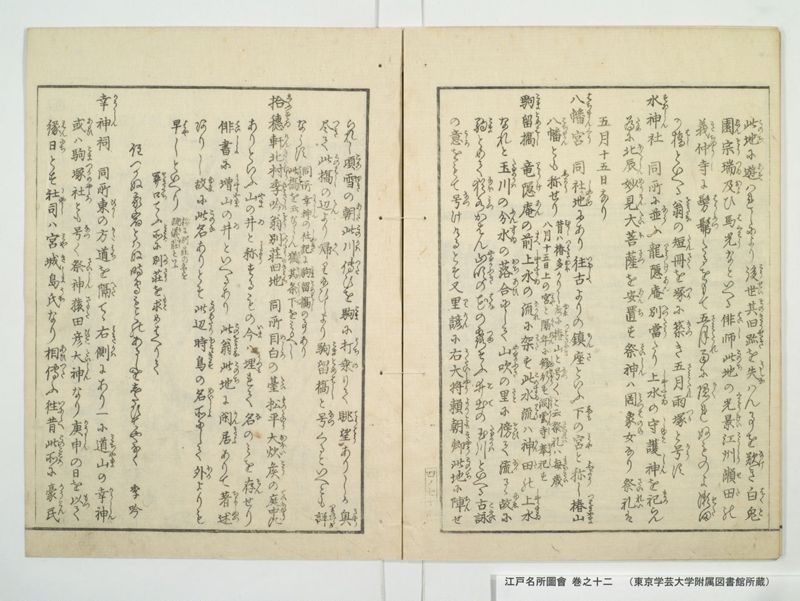
翻刻
【右丁】
此地(このち)に遊(あそ)はれしにより後世(こうせい)其(その)旧跡(きうせき)を失(うしな)はん事を歎(なけ)き白兎(はくと)
園宗瑞(ゑんそうつゐ)及(およ)ひ馬光(はくわう)なといへる俳師(はいし)此地(このち)の光景(くわうけい)江州(こうしう)瀬田(せた)の
義仲寺(きちゆうし)に髣髴(はうふつ)たるをもて五月雨(さみたれ)に隠(かく)れぬものよ瀬田(せた)
の橋(はし)といへる翁(をきな)の短冊(たんさく)を塚(つか)に築(きつ)き五月雨塚(さみたれつか)と号(かう)す
水神社(すゐしん ) 同所に並(なら)ふ龍隠庵(りうけあん)別當(へつたう)たり上水(しやうすゐ)の守護神(しゆこしん)を祀(まつ)らん
為(ため)に北辰妙見大菩薩(ほくしんめうけんたいほさつ)を安置(あんち)す祭神(さいしん)は罔象女(みつはのめ)なり祭礼(さいれい)は
五月十五日なり
八幡宮(はちまんくう) 同 社地(しやち)にあり往古(いにしへ)よりの鎮座(ちんさ)といふ《振り仮名:下の宮|しも みや》と称(しよう)し椿山(つはきやま)
八幡(はちまん)とも称(しよう)せり《割書:昔(むかし)は椿(つはき)多(おほ)かりし故(ゆゑ)に椿山(つはきやま)と号(なつ)くと云 祭礼(さいれい)は毎歳(まいさい) |八月十五日《振り仮名:上の宮| みや》と隔年(かくねん)に修行(しゆきやう)す洞雲寺(とううんし)奉祀(ほうし)す》
駒留橋(こまとめはし) 竜隠庵(りうけあん)の前(まへ)上水(しやうすゐ)の流(なかれ)に架(わた)す此(この)水流(すゐりう)は神田(かんた)の上水(しやうすゐ)
なれと玉川(たまかは)の分水(ふんすゐ)の落合(おちあひ)にして《振り仮名:山吹の里|やまふき さと》に傍(そひ)て流(なか)るゝ故(ゆゑ)に
駒(こま)とめて猶(なほ)水(みつ)かはん山吹(やまふき)の花(はな)の露(つゆ)そふ井出(ゐて)の玉川(たまかは)といへる古詠(こえい)
の意(こゝろ)をもて号(なつ)けけるとそ又 里諺(りけん)に右大將(うたいしやう)頼朝卿(よりともきやう)此地(このち)に陣(ちん)せ
【左丁】
られし頃(ころ)雪(ゆき)の朝(あした)此(この)川傳(かはつた)ひを駒(こま)に打乗(うちの)りて眺望(てうはう)ありしか興(きやう)
尽(つき)て此橋(このはし)の辺(へん)より帰(かへ)り給ひしより駒留橋(こまとめはし)と号(なつ)くるといへとも詳(つまひらか)
ならす《割書:同所 幸神(かうしん)の社記(しやき)に駒留橋(こまとめはし)の事あり|此橋(このはし)を云ならん猶(なほ)其(その)条下(てうか)をみるへし》
拾穂軒(しふほゐけん)北村季吟翁(きたむらききんをう)別荘旧地(へつさうのきうち) 同所 目白(めしろ)の臺(たい)松平大炊侯(まつたいらおほいこう)の庭中(ていちゆう)に
ありといふ《振り仮名:山の井|やま ゐ 》と称(しよう)するもの今(いま)は埋(うつも)れて名(な)のみを存(そん)せり
俳書(はいしよ)に《振り仮名:増山の井|ますやま ゐ 》といへるあり此翁(このをきな)此地(このち)に閑居(かんきよ)ありて著述(ちよしゆつ)
ありし故(ゆゑ)に此名(このな)ありとそ此辺(このあたり)時鳥(ほとゝきす)の名所(めいしよ)にして外(ほか)よりも
早(はや)しといへり《割書:按に別荘の名を|䟽儀荘(そきさう)といふ》
関口(せきくち)てふ所(ところ)に別荘(へつさう)を求(もと)めはへりて
住つかぬ我宿とはぬ時鳥もとのあるしをしたひてやなく 季吟
幸神祠(かうしん ) 同所 東(ひかし)の方(かた)道(みち)を隔(へた)てゝ右側(みきかは)にあり一に《振り仮名:道山の幸神|みちやま かうしん》
或(あるひ)は駒塚社(こまつかのやしろ)とも号(なつ)く祭神(さいしん)猿田彦大神(さるたひこたいしん)なり庚申(かうしん)の日を以(もつ)て
縁日(えんにち)とす社司(しやし)は宮城島氏(みやきしまうち)なり相傳(あひつた)ふ往昔(いにしへ)此所(このところ)に豪民(かうみん)
現代語訳
【右丁】
この地で遊ばれたので、後世にその旧跡を失うことを嘆き、白兎園宗瑞および馬光などという俳人が、この地の光景が江州瀬田の義仲寺に似ていることから「五月雨に隠れぬものよ瀬田の橋」という翁の短冊を塚に築き、五月雨塚と名付けた。
水神社 同じ場所に並ぶ竜隠庵の別当である。上水の守護神を祀るために北辰妙見大菩薩を安置している。祭神は罔象女(みずはのめ)である。祭礼は五月十五日である。
八幡宮 同じ境内にある。古来からの鎮座といい、「下の宮」と称し、椿山八幡とも称した。《昔は椿が多かったので椿山と号したという。祭礼は毎年八月十五日に「上の宮」と隔年で修行する。洞雲寺が奉祀している》
駒留橋 竜隠庵の前の上水の流れに架けられている。この水流は神田の上水だが、玉川の分水の落ち合いで、山吹の里に沿って流れるので、「駒とめて猶水かはん山吹の花の露そふ井手の玉川」という古歌の意味を込めて名付けたという。また里の言い伝えに、右大将頼朝公がこの地に陣を
【左丁】
張られた頃、雪の朝にこの川沿いを馬に乗って眺望されたが、興が尽きてこの橋のあたりから帰られたので駒留橋と号するというが、詳細は明らかでない。《同所の幸神の社記に駒留橋のことがある。この橋のことを言うのだろう。なお、その条下を見るべし》
拾穂軒 北村季吟翁の別荘旧地 同所の目白の台、松平大炊侯の庭中にあるという「山の井」と称するものは、今は埋もれて名前のみを残している。俳書に「増山の井」というものがある。この翁がこの地に閑居して著述したので、この名があるという。このあたりは時鳥(ほととぎす)の名所で、他よりも早いという。《按ずるに別荘の名を疎儀荘という》
関口という所に別荘を求めて
住みつかぬ我宿とはぬ時鳥もとのあるじをしたひてやなく 季吟
幸神祠 同所の東の方、道を隔てて右側にある。一つには「道山の幸神」、あるいは駒塚社とも号する。祭神は猿田彦大神である。庚申の日を縁日とする。社司は宮城島氏である。相伝によると、昔この所に豪民が
英語訳
【Right page】
Since [Basho] composed poetry at this location, later generations lamented that the historical site might be lost. Haiku poets named Hakuto Ensozui and Bako, noting that the scenery of this place resembled Gichuji Temple at Seta in Omi Province, built a mound with a poem card inscribed with the master's verse "What the May rains cannot hide - the bridge at Seta," and named it Samidare-zuka (May Rain Mound).
Suijin Shrine: Located in the same area, it serves as the subsidiary temple of Ryuin-an hermitage. To enshrine the guardian deity of the water supply, Hokushin Myoken Daibosatsu is enshrined here. The deity worshipped is Mizuhanome. The festival is held on May 15th.
Hachiman Shrine: Located within the same precinct. Said to have been established since ancient times, it is called "Shimo no Miya" (Lower Shrine) and was also known as Tsubakiyama Hachiman. {{In the past, there were many camellia trees, so it was called Tsubakiyama. The festival is held every year on August 15th, alternating with the "Kami no Miya" (Upper Shrine). Toun-ji Temple serves as its priest.}}
Komadome Bridge: Spans the water flow in front of Ryuin-an hermitage. This water flow is from Kanda's water supply, but it's at the confluence of Tamagawa's branch water, flowing alongside Yamabuki no Sato (Village of Yellow Rose). It was named after the ancient poem "Stop the horse and let it drink the water still, dew from yamabuki flowers adds to Ide's Tamagawa." Also, according to local legend, when Right General Yoritomo established his camp at this location,
【Left page】
one snowy morning he rode his horse along this riverside for sightseeing, but when his interest waned, he returned from around this bridge area, hence it was named Komadome Bridge, though the details are unclear. {{At the same location, the shrine records of Koshin mention Komadome Bridge. This probably refers to this bridge. One should refer to that section for more details.}}
Shuho-ken: Former site of Kitamura Kigin's villa. At the same location, at Mejiro-no-dai in the garden of Lord Matsudaira Ohoi, there was something called "Yama-no-i" (Mountain Well), but now it is buried and only the name remains. In haiku books, there is mention of "Masuyama-no-i." This master had a retreat here where he wrote, hence this name exists. This area is famous for cuckoos (hototogisu), said to arrive earlier than elsewhere. {{Note: The villa was called Sokiso.}}
Seeking a villa in a place called Sekiguchi:
"I cannot settle in my temporary dwelling, does the cuckoo cry longing for its former master?" - Kigin
Koshin Shrine: Located on the right side across the road to the east of the same area. Also called "Michiyama no Koshin" or Komazuka Shrine. The deity enshrined is Sarutahiko Okami. Days of Koshin are considered lucky days. The shrine priest is of the Miyakishima family. According to tradition, in ancient times, a wealthy person lived at this location