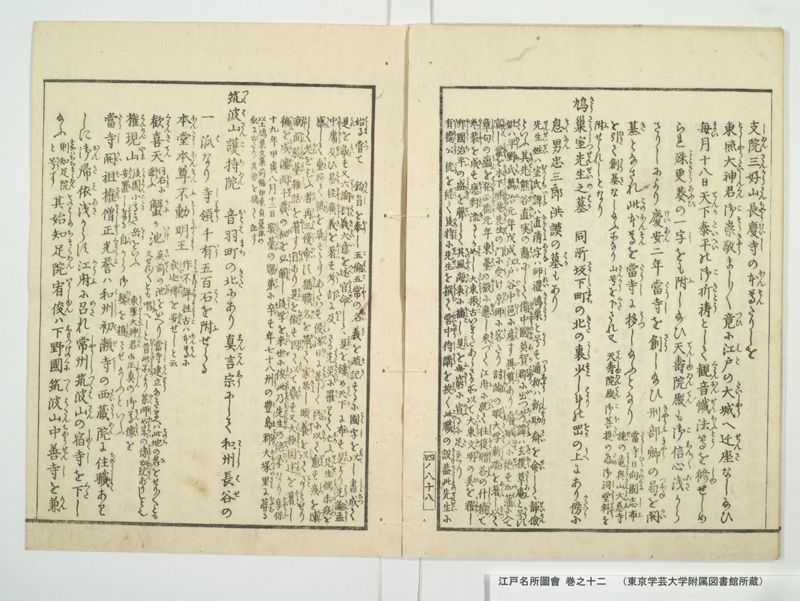
翻刻
【右丁】
支院(しゐん)三好山(さんかうさん)長慶寺(ちやうけいし)の本尊(ほんそん)たりしを
東照大神君(とうしやうたいしんくん)御崇敬(こそうきやう)まし〳〵竟(つひ)に江戸(えと)の大城(たいしやう)へ迁座(せんさ)なし給ひ
毎月(まい )十八日 天下泰平(てんかたいへい)の御祈祷(こきとう)として観音懺法(くわんおんせんほふ)等(とう)を修(しゆ)せしめ
られ殊更(ことさら)葵(あふひ)の一字( し)をも附(ふ)し給ひ天壽院殿(てんしゆゐんてん)も御信心(こしん〳〵 )浅(あさ)から
さりしにより慶安(けいあん)二年 當寺(たうし)を創(さう)し給ひ刑部卿(きやうふきやう)の局(つほね)を開(かい)
基(き)となされ此(この)本尊(ほんそん)を當寺(たうし)に移(うつ)し給ふとなり《割書:當寺(たうし)日向國(ひうかのくに)志布(しふ)|施(せ)の竜興山(りうこうさん)大慈寺(たいしし)》
《割書:を引(ひき)て創基(さうき)なし給ふ所なり山号(さんかう)を下(くた)され又 天寿院殿(てんしゆゐんてん)御菩提(こほたい)の為(ため)御祠堂料( したうりやう)を|附(ふ)せられしとなり》
鳩巢室先生之墓(きうさうしつせんせいのはか) 同所 坂下町(さかしたまち)の北(きた)の裏(うら)少(すこ)し斗(はかり)の岡(をか)の上(うへ)にあり傍(かたはら)に
息男(そくなん)忠三郎洪謨の墓(はか)もあり
《割書:先生 姓(せい)は室氏(むろうち)諱(いみな)は直清(なほきよ)字(あさな)は師禮(しれい)鳩巣(きうさう)と号(かう)す通称(つうしよう)は新助(しんすけ)斎(さい)を命(めい)して静儉(せいけん)|といふ其先(そのせん)熊谷直実(くまかやなほさね)の裔(えい)にして備中國(ひつちゆうのくに)英賀郡(あかこほり)に出(い)つ考諱(ちゝいみな)は玄撲(けんほく)草庵(さうあん)と号(かう)す》
《割書:妣(はゝ)は平野氏(ひらのうち)萬治(まんち)元年戊戌 江戸(えと)谷中邑(やなかむら)に産(さん)す異質(いしつ)あり叡敏(えいひん)人(ひと)に絶(せつ)す加藩(かはん)に入て|宦(みやつかへ)し業(きやう)を木下順菴先生(きのしたしゆんあんせんせい)の門(もん)に受(う)け京師(けいし)に客(かく)たり討論(とうろん)の暇(いとま)大学(たいかく)新疏(しんそ)を著(あらは)し以(もつ)て》
《割書:章句(しやうく)の蘊(うん)を発(はつす)正德(しやうとく)元年 東臺(とうたい)の徴(めし)に應(おう)し来(きた)つて江府( ふ)に就(つひ)て往復(わうふく)贈答(そうたふ)の什(しう)積(つもり)て|巻装(くわんしやう)を成(な)す應對(おうたい)流(な )#1るゝか如(こと)し大東(たいとう)振古(しんこ)いまたあらさる所以て大東(たいとう)文明(ふんめい)の美(ひ)を耀(かゝやか)し》
《割書:邦國(ほうこく)治平(ちへい)の盛(さかんなる)を聲(せい)して其風(そのふう)海表(かいへう)に播(ほとこ)し是(これ)を無窮(ふきう)に宣(のふ)るに足(た)れり|有德公(いうとくこう)統(たう)を継(つき)て後(のち)特(こと)に先生(せんせい)を撰(えらむ)て営中(えいちゆう)侍講(しかう)を授(さつ)く此職(このしよく)の設(もうけ)蓋(けたし)此(この)先生(せんせい)に》
【左丁】
《割書:始(はしま)る嘗(かつ)て 鈞旨(きんし)を奉(ほう)し五倫五常(こりんこしやう)の名義(めいき)を疏記(そき)するに國字(こくし)を以(もつて)し書(しよ)成(なつ)て|是(これ)を叡(えい)す又 六諭衍義(りくゆえんき)大意(たいい)を述(のへ)官命(くわんめい)して是(これ)を鏤(ちしは)め天下(てんか)に布(ふ)す是(これ)より先(さき)論孟(ろんもう) 》
《割書:中庸(ちゆうよう)及(およ)ひ易経(えききやう)廣義(くわうき)を著(あらは)す考訂(かうてい)に及(およ)はさる先(さき)災(わさはひ)罹(かゝ)りて亡(ほろ)ふ先生(せんせい)偶(たま〳〵)未疾(ひしつ)を|感(かん)して重(かさ)ねて稿(かう)を属(しよく)する事あたはす侵淫(しんいん)日(ひゝ)に甚(はなはた)しく終(つひ)に以(もつ)て愈(しえ)す疾(しつ)を陳(ちん)》
《割書:して老(おひ)を乞(こ)ふ者(もの)再三(さいさん)優命(いうめい)す猶(なほ)職名(しよくめい)を帯(おひ)て家居(かきよ)し頤養(いやう)を以(もつ)て事(こと)とせり|病間(ひやうかん)駿臺雑話(しゆんたいさつわ)を著(あらは)す旨(むね)あり是(これ)を徴(ちやう)す因(よつ)て以(もつ)て叡(えい)す又 大極図述(たいきよくつしゆつ)を著(あらは)し》
《割書:徧(へん)を成(なす)濂閩(れんみん)千載(せんさい)の秘(ひ)を弘闡(こうたん)し後学(こうかく)を来世(らいせ)に俟(まつ)此(これ)乃(すなはち)先生(せんせい)の絶筆(せつひつ)なり享保(きやうほ) |十九年甲寅八月十二日 駿臺(しゆんたい)の賜弟(してい)に卒(そつ)す年七十八 州(しう)の豊島郡(としまこほり)大塚里(おほつかのさと)に葬(ほふむ)る》
《割書:以上鳩巣文集前編伊東貞薫休の|叙に出たり其要を摘て記す》
筑波山(つくはさん)護持院(こちゐん) 音羽町(おとはまち)の北(きた)にあり真言宗(しんこんしう)にして和州(わしう)長谷(はせ)の
一派( は)なり寺領(しりやう)千 有(いう)五百 石(こく)を附(ふ)せらる
本堂(ほんたう)本尊(ほんそん)不動明王(ふとうみやうわう)《割書:作(さく)不詳(つまひらかならす)往古(わうこ)は本尊(ほんそん)の|釈迦佛(しやかふつ)を安(あん)せしと云》
歓喜天(くわんきてん)《割書:同 右(みき)に|並(なら)ふ》《振り仮名:蟹か池|かに いけ》《割書:庭前(ていせん)の池(いけ)をいへり當寺(たうし)建立(こんりふ)なきまへは此地(このち)の名(な)をせり〳〵とも|又せれ〳〵とも唱(とな)へしと昔(むかし)此所(このところ)より薬師如来(やくしによらい)の像(さう)出現(しゆつけん)ありしと也》
権現山(こんけんやま)《割書:後園(こうえん)小高(こたか)き岳(をか)をいふ 東照大神君(とうせうたいしんくん)御正真( しやうしん)の御尊像( そんさう)を|安置(あんち)し奉(たてまつ)る自(みつ)から御髭( ひけ)を植(うゑ)させ給ふといふ》
當寺(たうし)開祖(かいそ)権僧正光誉(こんそうしやうくわうよ)は和州(わしう)初瀬寺(はせてら)の西蔵院(さいさうゐん)に住職(ちゆうしよく)あり
しに御帰依(おんきえ)浅(あさ)からす江府(かうふ)に召(めさ)れ常州(しやうしう)筑波山(つくはさん)の宿寺(しゆくし)を下(くた)し
給ふ《割書:則(すなはち)知足院(ちそくゐん) |と号(かう)す》其始(そのはしめ)知足院(ちそくゐん)宥俊(いうしゆん)は下野國(しもつけのくに)筑波山(つくはさん)中善寺(ちゆうせんし)を兼(けん)
現代語訳
【右丁】
…(葵正観世音菩薩は)支院・三好山長慶寺の本尊であったが、東照大神君(徳川家康)が深くご崇敬なされ、ついに江戸の大城(江戸城)へ遷座なさり、毎月十八日に天下泰平の御祈祷として観音懺法などを修せしめられた。ことさら「葵」の一字をもお付けになり、天寿院殿(徳川家光の妻、孝子)もご信心が浅からぬことにより、慶安二年(1649年)に当寺を創建なさり、刑部卿の局を開基とされ、この本尊を当寺に移されたということである。《当寺は日向国志布施の龍興山大慈寺を引いて創基された所であり、山号を下され、また天寿院殿の菩提のために御祠堂料を付けられたということである。》
---
**鳩巣室先生の墓** 同所・坂下町の北の裏、少しばかり岡の上にある。傍らには息男・忠三郎洪謨の墓もある。
《先生の姓は室氏、諱は直清、字は師礼、鳩巣と号す。通称は新助。斎を命じて静倹という。その先祖は熊谷直実の末裔であり、備中国英賀郡の出身である。父の諱は玄朴、草庵と号す。母は平野氏。万治元年戊戌(1658年)、江戸・谷中村に生まれた。異質の才があり、叡敏さは人に絶した。加賀藩に仕え、学業を木下順庵先生の門で受け、京都に客となった。討論の傍ら『大学新疏』を著し、以って章句の蘊奥を発した。正徳元年(1711年)、江戸幕府の召しに応じて江府に就き、往復贈答の詩文が積もって巻装をなした。応対は流れるようで、大東(日本)が古来まだかつてなかったほどの文明の美を輝かし、国の治平の盛んなることを声高に謳い、その風は海外にも広まり、これを無窮に宣べるに足るものであった。有徳公(徳川吉宗)が統を継いだ後、特に先生を選んで営中侍講を授けた。この職の設置は、蓋し、この先生に》
【左丁】
《始まる。かつて鈞旨(将軍のご意向)を奉じ、五倫五常の名義を国字(仮名)をもって疏記し、書を成してこれを覧に供した。また『六諭衍義大意』を述べ、官命によってこれを刊行し天下に布いた。これ以前に『論孟』・『中庸』および『易経広義』を著した。考訂が完成しないうちに先に災いに遭って失われた。先生はたまたま未知の病にかかり、重ねて稿を続けることができなくなった。病は日を追うごとに甚だしくなり、ついに癒えることなく、病を申し述べて退職を乞い、再三優命(厚い上意)があった。なお職名を帯びながら自宅で静養をもって事とした。病の間に『駿台雑話』を著した。意義があるとしてこれを(将軍が)お求めになり、以って覧に供した。また『太極図述』を著し、一篇をなし、濂渓・閩(朱子)千載の秘奥を弘め、後学を来世に俟った。これが先生の絶筆である。享保十九年甲寅(1734年)八月十二日、駿台の賜邸にて卒す。享年七十八。武州豊島郡大塚里に葬る。》
《以上は鳩巣文集前編・伊東貞薫休の叙に出たり。その要を摘んで記す。》
---
**筑波山護持院** 音羽町の北にある。真言宗にして大和国長谷の一派である。寺領千五百石余を付けられる。
**本堂** 本尊は不動明王《作者不詳。往古は本尊として釈迦仏を安置していたとも云う。》
**歓喜天**《同じく右に並ぶ》〔蟹ヶ池〕《庭前の池のことをいう。当寺建立の前はこの地の名を「せりせり」とも「されされ」とも唱えたという。昔、この所より薬師如来の像が出現したとのことである。》
**権現山**《後園の小高い岡をいう。東照大神君(徳川家康)の御正真の御尊像を安置し奉る。御自らお髭を植えさせ給うたという。》
当寺の開祖・権僧正光誉は、大和国初瀬寺(長谷寺)の西蔵院に住職しておられたが、(将軍の)御帰依が浅からず、江府(江戸)に召され、常州(常陸国)・筑波山の宿寺を下し給うた《すなわち知足院と号す》。その始め、知足院・宥俊は下野国筑波山中禅寺を兼ね…
英語訳
【Right page】
…(The Aoi Shō Kannon Bosatsu) had been the principal image of the sub-temple Sankōzan Chōkei-ji, but Tōshō Daijin-kun (Tokugawa Ieyasu) held it in profound veneration and ultimately had it transferred to the great castle of Edo (Edo Castle). On the eighteenth day of every month, the Kannon Senbō ritual and other ceremonies were performed for the sake of peace throughout the realm. In particular, the character "Aoi" (葵, hollyhock — the Tokugawa crest) was appended to its name, and as the Tenjū-in (the wife of Tokugawa Iemitsu) also held deep faith in it, she founded this temple in Keian 2 (1649), installed the Lady Gyōbukyō as its founding patron, and transferred this principal image to this temple. 《This temple was founded in reference to the Ryūkōzan Daiji-ji Temple in Shibuse, Hyūga Province, and was granted a mountain name. Additionally, a stipend for memorial services was granted for the sake of the late Tenjū-in.》
---
**The Grave of Master Kyūsō Muro** Located in the same area, slightly up a hill behind the north side of Sakashita-machi. Beside it is also the grave of his son Chūzaburō Hiromo.
《The master's family name was Muro; his personal name was Naokiyo; his courtesy name was Shirei; he took the literary name Kyūsō. His common name was Shinsuke. His studio was named Seiken (Quiet Frugality). His ancestor was a descendant of Kumagai Naozane, and the family originated from Aga-gun in Bitchū Province. His father's name was Genboku, who took the literary name Sōan. His mother was of the Hirano family. He was born in the village of Yanaka in Edo in Manji 1 (1658), the year of Tsuchinoe-inu. He was of extraordinary talent, and his keen intelligence surpassed all others. He entered service in the Kaga domain, studied under Master Kinoshita Jun'an, and resided as a guest in Kyoto. In his spare time from discussions and debates, he composed the "Daigaku Shinsho" (New Commentary on the Great Learning), thereby elucidating the deep meanings of the text's chapters and phrases. In Shōtoku 1 (1711), in response to a summons from the Edo Shogunate, he came to Edo, and his poems and writings of exchange and correspondence accumulated into volumes. His manner of response flowed like a stream; he caused the glory of Eastern civilization (Japan) to shine as never before in all antiquity, proclaimed the flourishing peace of the nation, spread his influence across the seas, and rendered it worthy of proclamation for all eternity. After Lord Yūtoku (Tokugawa Yoshimune) succeeded to the position of Shōgun, he specially selected this master and appointed him as Lecturer-in-Attendance at the castle. The establishment of this post is said to have》
【Left page】
《begun with this very master. He once received the Shōgun's august instructions and composed an explanatory record of the names and meanings of the Five Relationships and Five Virtues in native Japanese script (kana), and the completed work was presented for the Shōgun's perusal. He also composed the "Rokuyū Engi Taigi" (Essentials of the Extended Meaning of the Six Maxims), which was published and distributed throughout the realm by official order. Before this, he had written commentaries on the Analects and Mencius, the Doctrine of the Mean, and a broad interpretation of the Book of Changes. Before the collation and revision were complete, they were lost in a disaster. The master happened to fall ill with an unknown ailment and was unable to continue working on the manuscript. The illness worsened day by day, and in the end he did not recover. He repeatedly submitted requests citing illness and asking to retire, but received gracious responses urging him to remain in service. He continued to bear his official title while residing at home, devoting himself to recuperation. During his illness he composed "Shundai Zatsuwa" (Miscellaneous Conversations at Shundai), which was recognized as significant and requested by the Shōgun for perusal. He also composed "Taikyoku-zu Jutsu" (Explication of the Diagram of the Supreme Ultimate), completing one volume, which broadly expounded the millennium-old secrets of Lianxi (Zhou Dunyi) and the Fujian school (Zhu Xi), leaving it for future scholars in generations to come. This was the master's final work. On the twelfth day of the eighth month of Kyōhō 19 (1734), the year of Kinoe-tora, he passed away at his Shogunate-granted residence at Shundai. He was seventy-eight years of age. He was buried at Ōtsuka-no-sato in Toshima-gun, Musashi Province.》
《The above is taken from the preface by Itō Teikunkyu in the first volume of the Collected Works of Kyūsō; the main points have been selected and recorded here.》
---
**Tsukubasan Goji-in Temple** Located to the north of Otowa-machi. It belongs to the Shingon sect and is a branch of the Hase school of Yamato Province. It is granted a temple estate of over one thousand five hundred koku.
**Main Hall** The principal image is Fudō Myōō (Acala, the Immovable Wisdom King). 《The maker is unknown. It is also said that in former times, a Shakyamuni Buddha was enshrined as the principal image.》
**Kangiten (Vinayaka)**《Enshrined to the right alongside (the principal image).》 [Kani-ga-ike Pond] 《This refers to the pond in front of the temple. Before the temple was built, this location was called "Seriseri" or "Seresere." It is also said that in ancient times, an image of Yakushi Nyorai (Bhaiṣajyaguru) appeared from this very spot.》
**Gongen-yama (Gongen Hill)**《This refers to a slightly elevated hill in the rear garden. The true likeness and sacred image of Tōshō Daijin-kun (Tokugawa Ieyasu) is enshrined here. It is said that he personally planted his own whiskers (into the image).》
The founding patriarch of this temple, the Senior Ecclesiastic (Gon-Sōjō) Kōyo, had been residing as chief priest at the Saizō-in of Hase-dera Temple in Yamato Province. The Shōgun's devotion to him was deep, and he was summoned to Edo (Kōfu) and granted the lodging temple of Tsukubasan in Jōshū (Hitachi Province). 《It was accordingly named Chisoku-in.》 In its beginnings, the Chisoku-in's Yūshun had concurrently held the position at Chūzen-ji Temple on Tsukubasan in Shimotsuke Province, and…