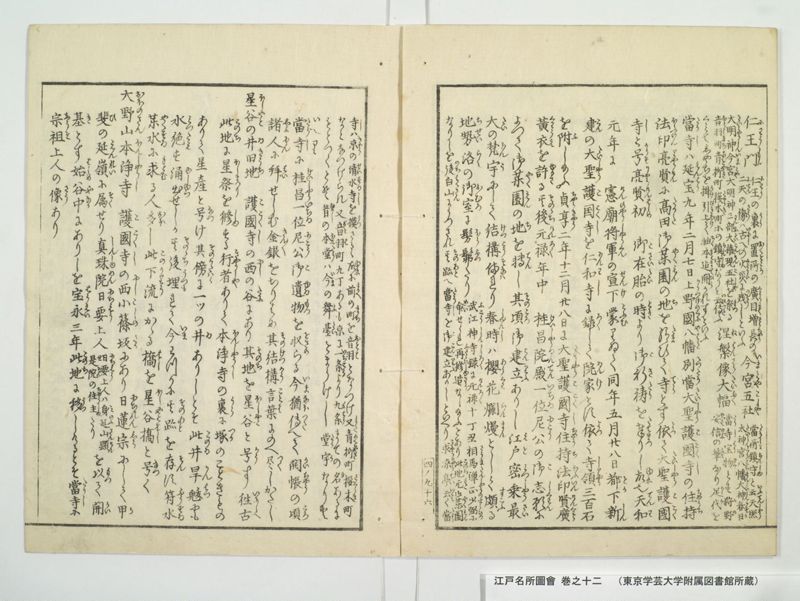
翻刻
【右丁】
仁王門(にわうもん)《割書:仁王(にわう)の裏(うら)に置(おく)所(ところ)の廣目(くわうもく)増長(さうちやう)の|二天(にてん)の像(さう)は古(いにし)への火災(くわさい)に残(のこり)しといふ》今宮五社(いまみやこしや)《割書:當所(たうしよ)鎮守(ちんしゆ)と云(いふ)天照(てんしやう)|太神宮(たいしんくう)八幡大神(はちまんたいしん)春日(かすか)》
《割書:大明神(たいみやうしん)今宮大明神(いまみや )三部大権現(さんふたいこんけん)五社(こしや)を祭(まつ)る|音羽町(おとはまち)青栁町(あをやき )桜木町(さくらき )等の鎮守(ちんしゆ)なりと云傳(いひつた)ふ》涅槃像(ねはんさう)大幅(たいふく)《割書:當寺(たうし)宝物(はうもつ)とす狩野(かの)|安信(やすのふ)の筆(ふて)なり足代(あしろ)を》
《割書:くみてしやちを掛(かけ)引上(ひきあけ)て軸本(ちくもと)迠(まて)開(ひら)かれすといふ》
當寺(たうし)は延宝(えんはう)九年二月七日 上野國(かみつけのくに)八幡(やはた)別當(へつたう)大聖護國寺(たいしやうここくし)の住持(ちゆうち)
法印亮賢(ほふいんりやうけん)に髙田御薬園(たかた やくえん)の地(ち)を給(たま)ひて寺(てら)とす依(よつ)て大聖護國(たいしやうここく)
寺(し)と号(かうす)亮賢(りやうけん)初(はしめ) 御在胎(こさいたい)の時(とき)より御祈祷(こきたう)を奉(たてまつ)りし故(ゆゑ)也 天和(てんわ)
元年に 憲廟將軍(けんひやうしやうくん)の宣下(せんけ)蒙(こふむ)りゐて同年五月廿八日 都下(とか)新(しん)
建(こん)の大聖護國寺(たいしやうここくし)を仁和寺(にんわし)に録(ろく)して院家(ゐんけ)とす依(よつ)て寺領(しりやう)三百石
を附(ふ)し給ふ貞享(ちやうきやう)二年十二月廿八日に大聖護國寺(たいしやうここくし)住持(ちゆうち)法印賢廣(ほふいんけんくわう)
黄衣(くわうえ)を許(ゆるさ)る其後(そのゝち)元禄(けんろく)年中 桂昌院殿一位尼公(けんしやうゐんてんいちゐにこう)の御志願(こしくわん)に
よつて御薬園( やくえん)の地(ち)を轉(てん)し其頃(そのころ)御建立( こんりふ)ありし江戸密乗(えとみつしやう)最(さい)
大(たい)の梵宇(ほんう)にして結搆(けつこう)備(そなは)れり春時(しゆんし)は櫻花(あうくわ)爛熳(らんまん)として頗(すこふ)る
地勢(ちせい)洛(らく)の御室(おむろ)に髣髴(ほうふつ)たり《割書:武江神寺録(ふこうしんしろく)に元禄(けんろく)十丁丑 相馬弾正少弼(さうまたんしやうのせうひつ)に|命(めい)せられ再(ふたゝひ)修造(しゆさう)なし給ふとあり此地(このち)元(もと)御薬園( やくえん)》
《割書:なりしを後(のち)白山(はくさん)にうつされ其跡(そのあと)へ當寺(たうし)を御建立(ここんりふ)ありしといへり求凉亭(きゆうりやうてい)云(いは)く當(たう) 》
【左丁】
《割書:寺(し)は京(きやう)の清水寺(せいすゐし)を摸(うつ)さるゝ故(ゆゑ)に前(まへ)の町(まち)を音羽(おとは)となつけ又(また)青栁町(あをやき )桜木町(さくらき ) |なとなつけられ又 音羽町(おとは )九丁あるも京に一条(いちてう)より九条(くてう)まての名(な)あるに》
《割書:もとつくとそ昔(むかし)の本堂(ほんたう)は今(いま)の舞臺(ふたい)をまうけし堂宇(たうう)なりと|いへり》
當寺(たうし)に桂昌一位尼公(けいしやういちゐにこう)御遺物(こゆゐもつ)を収(をさめ)らる今(いま)猶(なほ)傳(つた)へて開帳(かいちやう)の頃(ころ)
諸人(しよにん)に拜(はい)せしむ金銀(きん〳〵)をちりはめ其(その)結搆(けつかう)言葉(ことは)にのへ尽(つく)しかたし
《振り仮名:星谷の井|ほしやと ゐ 》旧地(きうち) 護國寺(ここくし)の西(にし)の谷(たに)にあり其地(そのち)を星谷(ほしやと)と号(かう)す往古(いにしへ)
此地(このち)に星祭(ほしまつり)を修(しゆ)する行者(きやうしや)ありて本浄寺(ほんしやうし)の裏(うら)に塚(つか)のこときもの
ありて星産と号(なつ)け其傍(そのかたはら)に一ツの井(ゐ)ありしとそ此井(このゐ)旱魃(かんはつ)にも
水(みつ)絶(たえ)す涌出(ゆしゆつ)せしか其後(そのゝち)埋(うつも)れて今(いま)わつかに其跡(そのあと)を存(そん)す符水(ふうすゐ)
薬水(やくすゐ)に求(もとむ)る人 多(おほ)し此(この)下流(かりう)にかゝる橋(はし)を星谷橋(ほしやとはし)と号(なつ)く
大野山(おほのさん)本浄寺(ほんしやうし) 護國寺(ここくし)の西(にし)小篠坂(こしのさか)にあり日蓮宗(にちれんしう)にして甲(か)
斐(ひ)の延嶺(えんれい)に属(そく)せり真珠院(しんしゆゐん)日要上人(にちえう )《割書:日要上人(にちえう )は身延山(みのふさん)顕(けん) |是院(せゐん)の住主(ちゆうしゆ)たり》を以(もつ)て
基(き)とす始(はしめ)谷中(やなか)にありしを宝永(はうえい)三年 此地(このち)に移(うつ)しけるとそ當寺(たうし)に
宗祖上人(しうそ )の像(さう)あり
現代語訳
【右丁】
仁王門:仁王の裏側に安置されている広目天・増長天の二天像は、昔の火災を免れて残ったものと伝えられている。今宮五社:当地の鎮守社と言われ、天照太神宮・八幡大神・春日大明神・今宮大明神・三部大権現の五社を祀る。音羽町・青柳町・桜木町などの鎮守であると伝えられている。涅槃像(大幅):当寺の宝物とされており、狩野安信の筆によるものである。足場を組んで軸を掛け、引き上げても軸の根本まで開くことができないという。
当寺は延宝九年(1681)二月七日、上野国八幡の別当・大聖護国寺の住持・法印亮賢に、高田の御薬園の地を賜って寺とした。それにより大聖護国寺と号した。亮賢は、将軍(綱吉)がまだ母の胎内にあったときより御祈祷を奉っていたためである。天和元年(1681)に憲廟将軍(徳川綱吉)の宣下を受け、同年五月二十八日に、都下に新たに建てられた大聖護国寺を仁和寺に録して院家とした。それにより寺領三百石を賜った。貞享二年(1685)十二月二十八日に大聖護国寺住持・法印賢広が黄衣を許された。その後、元禄年中に桂昌院殿一位尼公の御志願によって御薬園の地を移し、その頃に御建立のあった江戸密乗最大の堂宇であり、結構(建物の造り)も整っている。春には桜の花が爛漫と咲き誇り、その地勢は京の御室(仁和寺)によく似ている。
〔武江神寺録によれば、元禄十年(丁丑の年)に相馬弾正少弼に命じられ、再び修造されたとある。この地はもともと御薬園であったが、後に白山に移され、その跡地に当寺が建立されたという。求涼亭に曰く、当寺は京の清水寺を模して建てられたため、前の町を「音羽」と名付け、また「青柳町」「桜木町」などと名付けられた。また音羽町が九丁あるのも、京に一条から九条までの名前があることに基づくという。昔の本堂は、今の舞台を設けた堂宇であったと言われている。〕
【左丁】
当寺には桂昌一位尼公の御遺物が収められている。今もなお伝えられており、開帳の頃に諸人に拝ませている。金銀をちりばめた見事な造りは、言葉で言い尽くしがたいものである。
星谷の井(旧地):護国寺の西の谷にある。その地を星谷と号する。往古、この地に星祭を修する行者があり、本浄寺の裏に塚のようなものがあって「星塚」と名付け、その傍らに一つの井戸があったという。この井戸は旱魃のときも水が絶えることなく湧き出していたが、その後埋もれてしまい、今はわずかにその跡が残るだけである。符水・薬水を求める人が多い。この下流にかかる橋を「星谷橋」と号する。
大野山本浄寺:護国寺の西、小篠坂にある。日蓮宗であり、甲斐の延嶺に属する。真珠院日要上人〔日要上人は身延山顕是院の住主であった〕を開基とする。はじめ谷中にあったが、宝永三年(1706)にこの地に移ったという。当寺には宗祖上人(日蓮聖人)の像がある。
英語訳
**[Right page]**
**Niōmon (Two Guardian Kings Gate):** The statues of Kōmokuten (Virūpākṣa) and Zōchōten (Virūḍhaka)—the two heavenly kings placed behind the Niō guardians—are said to have survived an ancient fire. **Imamiya Gosha (Five Shrines of Imamiya):** Said to be the guardian shrines of the area, they enshrine five deities: Tenshō Daijingū, Hachiman Daijin, Kasuga Daimyōjin, Imamiya Daimyōjin, and Sanbu Daigongen. They are said to have been transmitted as the tutelary shrines of Otowachō, Aoyagichō, Sakuragichō, and surrounding neighborhoods. **Nehan-zō (Nirvana Picture, Large Format):** Regarded as a treasure of this temple, it was painted by Kanō Yasunobu. The scroll is so large that scaffolding must be erected to hang it, and even when pulled up, it cannot be fully opened to the very end of the scroll.
This temple was established on the 7th day of the 2nd month of Enpō 9 (1681), when the land of the Takata Medicinal Garden was granted to Hōin Ryōken, the abbot of Daishō Gokokuji and the bettō of Yawata in Kōzuke Province, for the purpose of founding a temple. It was accordingly named Daishō Gokokuji. This was because Ryōken had offered prayers on behalf of the Shogun (Tsunayoshi) even from the time he was still in his mother's womb. In Tenna 1 (1681), the temple received a proclamation from the Kenmyō Shogun (Tokugawa Tsunayoshi), and on the 28th day of the 5th month of the same year, the newly built Daishō Gokokuji in the capital was registered under Ninnaji Temple as an "inge" (a subordinate temple of an imperial family temple). Accordingly, a temple estate of 300 koku of rice was granted. On the 28th day of the 12th month of Jōkyō 2 (1685), Hōin Kenhiro, the abbot of Daishō Gokokuji, was permitted to wear the yellow robe (kōe). Subsequently, during the Genroku era, in accordance with the wishes of Lady Keishōin (Ichii Nikō), the land of the Medicinal Garden was relocated, and around that time the temple was constructed, becoming the grandest esoteric Buddhist temple in Edo, with all its structures magnificently complete. In spring, the cherry blossoms bloom in full splendor, and the topography is strikingly reminiscent of Omuro (Ninnaji) in Kyoto.
[According to the *Bukō Shinji Roku*, in Genroku 10 (1697, the year of Hinoto-Ushi), Sōma Danjō no Shōhitsu was ordered to undertake a second round of repairs. It is said that this land was originally a medicinal garden, which was later relocated to Hakusan, and the temple was built on that site thereafter. According to the *Kyūryōtei*, the temple was modeled after Kiyomizudera in Kyoto, which is why the street in front was named "Otowa," and names such as "Aoyagichō" and "Sakuragichō" were given to the surrounding streets. Furthermore, the reason Otowachō has nine blocks (chō) is said to be based on the naming of the streets in Kyoto from Ichijō (First Avenue) through Kujō (Ninth Avenue). It is also said that the old main hall was the structure with the stage that exists today.]
**[Left page]**
The personal effects (*ibutsu*) of Lady Keishō Ichii Nikō are preserved at this temple. They are still kept to this day, and during the periods of *kaichō* (public display of sacred objects), the public is allowed to view them in reverence. Adorned with gold and silver, the craftsmanship is so exquisite that it defies description in words.
**Hoshiyato no I (The Well of Hoshiyato, former site):** Located in the valley to the west of Gokokuji Temple. This area is called Hoshiyato. In ancient times, there was an ascetic practitioner here who performed star festivals (*hoshi matsuri*). Behind Honshōji Temple there was something resembling a burial mound, named "Hoshi-zuka" (Star Mound), and beside it there was said to be a single well. This well never ran dry even during droughts and continually gushed forth water, but it later became buried, and today only faint traces of its former location remain. Many people come seeking *fusui* (talisman water) and *yakusui* (medicinal water). The bridge spanning the stream below is named "Hoshiyato Bridge."
**Ōnosan Honshōji Temple:** Located on Koshinosaka slope to the west of Gokokuji Temple. It belongs to the Nichiren sect and is affiliated with Enrei in Kai Province. It was founded by Shinjuin Nichiyō Shōnin [Nichiyō Shōnin was the chief priest of Kenzeiin on Mt. Minobu]. It was originally located in Yanaka but was relocated to its present site in Hōei 3 (1706). The temple enshrines a statue of the founder of the sect (Saint Nichiren).