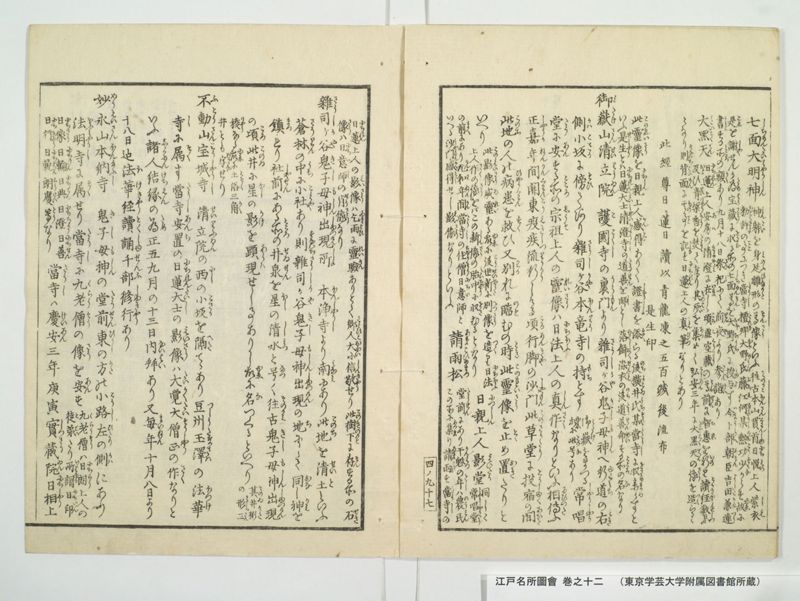
翻刻
【右丁】
七面大明神(しちめんたいみやうしん)《割書:神躰(しんたい)を身延雛形(みのふひなかた)の尊像(そうさう)といふ往古(そのかみ)本山(ほんさん)貫首(くわんしゆ)日悦上人(にちえつ )紫衣(しえ)|勅許(ちよくきよ)の事(こと)につき當寺(たうし)檀那(たんな)大野氏(おほのうち)藤江(ふちえ)何某(なにかし)勲功(くんこう)少(すくな)からす故(ゆゑ)に》
《割書:是(これ)を謝(しや)せんか為(ため)宝蔵(はうさう)に収(をさむ)る所の七面尊(しちめんそん)を大野氏(おほのうち)に授与(しゆよ)す今(いま)卜部朝臣吉田兼連(うらへあそんよしたかねつら)|書(しよ)する所(ところ)の額(かく)あり九月十八日 祭祀(さいし)にて前夜(せんや)より参詣(さんけい)あり》
大黒天(たいこくてん)《割書:日蓮上人(にちれん )安房(あは)の清澄(きよすみ)に在(いま)しゝ頃(ころ)虚空蔵(こくうせう)の尊前(そんせん)に智恵(ちゑ)を祈(いの)り讀經(とくきやう)数日(すしつ)に|及(およ)ひ青梁香(せいりやうかう)を焚(たき)て奉り其灰(そのはい)を集(あつ)めて弘安(こうあん)三年に大黒天(たいこくてん)の像(さう)を造(つく)らるゝ》
《割書:となり則(すなはち)背面(はいめん)に其事(そのこと)を記(しる)す日蓮上人(にちれん )の真筆(しんひつ)なりとあり》
此經尊日蓮日讀以青龍凍之五百滅後流布
是生印
《割書:此(この)霊像(れいさう)を日親上人(にちしん )感得(かんとく)ありて證書(しやうしよ)を添(そへ)らる後(のち)横井氏(よこゐうち)某(それかし)當寺(たうし)に収参(をさめまゐ)らすと|いふ是生(せしやう)とは日蓮大士(にちれんたいし)清澄寺(せいちやうし)の道善(たうせん)を師(し)とし落飾(らくしよく)染衣(せんえ)の後(のち)道善(たうせん)命(めい)する所(ところ)の名(な)なり》
御嶽山(みたけさん)清立院(せいりうゐん) 護國寺(ここくし)の裏門(うらもん)より《振り仮名:雜司ヶ谷|さうしかや》鬼子母神(きしもしん)へ行道(ゆくみち)の右(みき)
側(かは)小坂(こさか)に傍(そひ)てあり《振り仮名:雜司ヶ谷|さうしかや》本竜寺(ほんりうし)の持(もち)とす《割書:御嶽(みたけ)をまつる|故(ゆゑ)に此号(このな)あり》常唱(しやうしやう)
堂(たう)に安(あん)する所(ところ)の宗祖上人(しうそ )の霊像(れいそう)は日法上人(にちほう )の真作(しんさく)なりといふ相傳(あひつた)ふ
正嘉年間(しやうかねんかん)關東(くわんとう)疫疾(えきしつ)流行(りうかう)しける頃(ころ)行脚(あんきや)の沙門(しやもん)此(この)草堂(さうたう)に投宿(とうしゆく)の間(あひた)
此地(このち)の人の病患(ひやうくわん)を救(すく)ひ又 別(わか)れに臨(のそ)むの時(とき)此(この)霊像(れいそう)を止(とゝ)め置(おき)たりと
いへり《割書:此(この)影像(えいさう)威霊(ゐれい)ある故(ゆゑ)に後世(こうせい)新(あらた)に別像(へつさう)を造(つく)り日法(にちほふ) |上人 作(さく)の像(さう)をばこの新像(しんさう)の胎中(たいちゆう)に収(をさ)むるとなり》日親上人(につしん )影堂(えいたう)《割書:同しく|常唱堂(しやうしやうたう)》
《割書:の前(まへ)にあり元和年間(けんなねんかん)當寺(たうし)の住僧(ちゆうそう)日意師(にちい )と|いへる沙門(しやもん)感得(かんとく)せし影像(えいさう)なりといふ》請雨松(あまこひのまつ)《割書:堂前(たうせん)にあり干魃(かんはつ)の年(とし)は農民(のうみん)|この所に集(あつま)り請雨(あまこひ)す當寺(たうし)の》
【左丁】
《割書:日蓮上人(にちれん )の影像(えいさう)は乞雨(あまこひ)に霊驗(れいけん)ありとて郷人(さとひと)大(おほい)に信敬(しんきやう)せり此(この)樹下(きのもと)に存(そん)する所の石(せき) |像(さう)は日意師(にちいし)の肖像(せうさう)なり》
《振り仮名:雜司ヶ谷鬼子母神出現所|さうしかやきしもしんしゆつけんしよ》 本浄寺(ほんしやうし)より南(みなみ)にあり此地(このち)を清土(せいと)といふ
蒼林(さうりん)の中(うち)に小社(こみや)あり則(すなはち)《振り仮名:雜司ヶ谷鬼子母神|さうしかやきしもしん》出現(しゆつけん)の地(ち)にして同(おな)し神(かみ)を
鎮(まつ)れり社前(しやせん)にある所(ところ)の井泉(せゐせん)を《振り仮名:星の清水|ほし しみつ》と号(なつ)く往古(そのかみ)鬼子母神(きしもしん)出現(しゆつけん)
の頃(ころ)此井(このゐ)に星(ほし)の影(かけ)を顕現(あらは)せし事ありし故(ゆゑ)に名(な)つくるといへり《割書:其(その)井桁(ゐけた)|の形(かたち)三(さん) 》
《割書:稜(りやう)なる故(ゆゑ)に土俗(とそく)三角( かく) |井とも字(あさな)せり》
不動山(ふとうさん)宝城寺(はうしやうし) 清立院(せいりふゐん)の西(にし)の小坂(こさか)を隔(へた)てゝあり豆州(つしう)玉澤(たまさは)の法華(ほつけ)
寺(し)に属(そく)す當寺(たうし)安置(あんち)の日蓮大士(にちれんたいし)の影像(えいさう)は大覚大僧正(たいかくたいそうしやう)の作(さく)なりと
いふ諸人(しよにん)結縁(けちえん)の為(ため)正五九月の十三日 内拜(ないはい)あり又 毎年(まいねん)十月八日より
十八日迠 法華經讀誦千部修行(ほけきやうとくしゆせんふしゆきやう)あり
妙永山(めうえいさん)本納寺(ほんなふし) 鬼子母神(きしもしん)の堂前(たうせん)東(ひかし)の方(かた)の小路(こうし)左(ひたり)の側(かは)にあり
法明寺(ほふみやうし)に属(そく)せり當寺(たうし)に九老僧(くらうそう)の像(さう)を安(あん)す《割書:九老僧(くらうそう)は日朗上人(にちらう )の|徒弟(とてい)たり所謂(いはゆる)日印(にちいん)》
《割書:日像(にちさう)日輪(にちりん)日典(にちてん)日澄(にちちよう)日善(にちせん) |日行(にちきやう)日範(にちはん)朗慶(らうけい)等(とう)なり》當寺(たうし)は慶安(けいあん)三年庚寅 實藏院(しつさうゐん)日相上(にちしやう )
現代語訳
【右丁】
七面大明神:〔神体は身延山の尊像の雛形であるという。往古、本山の貫首・日悦上人が紫衣の勅許に関して、当寺の檀那である大野氏(藤江)某の勲功が少なくなかったため、これに報いるために宝蔵に収めてあった七面尊を大野氏に授与したものである。今、卜部朝臣吉田兼連が書した額がある。九月十八日が祭祀であり、前夜から参詣がある。〕
大黒天:〔日蓮上人が安房の清澄寺にいらっしゃった頃、虚空蔵菩薩の尊前において智慧を祈り、読経が数日に及び、青龍香を焚いてお供えし、その灰を集めて弘安三年(1280)に大黒天の像を造られたものとなっている。すなわち背面にその事が記されており、日蓮上人の真筆であるとある。〕
此の経を尊んで日蓮これを日々読む、青龍香をもってこれを焚じ、五百年の滅後に流布す
是生(印)
〔この霊像は日親上人が感得されて証書を添えられた。後に横井氏某が当寺に収めて参らせたという。「是生」とは、日蓮大士が清澄寺の道善を師として剃髪染衣した後に、道善が命じた名前である。〕
御嶽山清立院:護国寺の裏門から雑司ヶ谷の鬼子母神へ行く道の右側、小坂に沿ってある。雑司ヶ谷・本龍寺の持ちとする。〔御嶽をまつるためにこの名がある。〕常唱堂に安置する宗祖上人(日蓮聖人)の霊像は、日法上人の真作であると伝えられている。正嘉年間(1257〜1259)に関東で疫病が流行した頃、行脚の僧がこの草堂に宿泊している間に、この地の人々の病を救い、また別れに臨んだ時にこの霊像を留め置いたといわれている。〔この影像は霊威があるため、後世に新たに別の像を造り、日法上人作の像はこの新像の胎内に収めることとなった。〕
日親上人影堂:〔同じく常唱堂の前にある。元和年間(1615〜1624)に当寺の住僧・日意師という僧侶が感得した影像であるという。〕
請雨松:〔堂前にある。旱魃の年には農民がこの場所に集まって雨乞いをする。当寺の
【左丁】
日蓮上人の影像は雨乞いに霊験あらたかとして、郷人が大いに信仰し敬っている。この樹の下に存する石像は日意師の肖像である。〕
雑司ヶ谷鬼子母神出現所:本浄寺より南にある。この地を清土という。鬱蒼とした林の中に小社があり、これはすなわち雑司ヶ谷鬼子母神が出現した地であり、同じ神を鎮祀している。社前にある井泉を「星の清水」と号する。往古、鬼子母神が出現した頃、この井戸に星の影が現れたことがあったため、そのように名付けたといわれている。〔その井桁の形が三角形であるため、土地の人々は「三角井」とも呼んでいる。〕
不動山宝城寺:清立院の西の小坂を隔ててある。伊豆国玉沢の法華寺に属する。当寺に安置する日蓮大士の影像は大覚大僧正の作であるという。諸人の結縁のために正・五・九月の十三日に内拝がある。また毎年十月八日から十八日まで、法華経読誦千部修行がある。
妙永山本納寺:鬼子母神の堂前、東の方の小路の左側にある。法明寺に属する。当寺には九老僧の像を安置する。〔九老僧は日朗上人の徒弟であり、すなわち日印・日像・日輪・日典・日澄・日善・日行・日範・朗慶らである。〕当寺は慶安三年(1650)庚寅に実蔵院日相上人が……〔以下次ページへ続く〕
英語訳
**[Right page]**
**Shichimen Daimyōjin:** [The divine body is said to be a miniature replica (*hinagata*) of the sacred image of Mt. Minobu. In ancient times, because a certain Fujie of the Ōno clan, a patron (*danna*) of this temple, had rendered considerable meritorious service in connection with the granting of the imperial purple robe (*shie chokukyō*) to Nichietsu Shōnin, the chief priest (*kanshu*) of Minobu's head temple, in order to express gratitude, the Shichimen-son (Seven-Faced Deity) that had been stored in the treasury was bestowed upon the Ōno clan. Today, a votive tablet inscribed by Urabe no Ason Yoshida Kanetsura is on display. The festival is held on the 18th day of the 9th month, and worshippers come from the evening before.]
**Daikokuten:** [When the Venerable Nichiren was residing at Kiyosumi Temple in Awa Province, he prayed before the sacred image of Kokūzō Bosatsu (Ākāśagarbha Bodhisattva) for wisdom, chanted sutras for several days, offered incense of *seiryōkō* (blue dragon incense), and in Kōan 3 (1280), gathered the ashes and crafted a statue of Daikokuten. On the back of the statue this event is recorded, and it is said to be in the Venerable Nichiren's own hand.]
*This sutra, revered by Nichiren, is read daily; blue dragon incense is burned as an offering; it shall be disseminated five hundred years after the [Buddha's] passing.*
*Zeshō* (seal)
[This sacred image was received through spiritual revelation (*kantoku*) by Nichishin Shōnin, who added a certificate of authentication. Later, a certain Yokoi氏 is said to have enshrined it at this temple. "Zeshō" is the name given by Dōzen, head priest of Kiyosumiji Temple, to Nichiren the Great Master after he had taken the tonsure and donned Buddhist robes with Dōzen as his teacher.]
**Mitakesan Seiryūin:** Located along a small slope on the right side of the road leading from the back gate of Gokokuji Temple to the Kishimojin Shrine of Zōshigaya. It is held by Honryūji Temple of Zōshigaya. [It bears this name because it enshrines Mt. Ontake (Mitake).] The sacred image of the Founder (Saint Nichiren) enshrined in the Jōshōdō (Constant Chanting Hall) is said to be an authentic work (*shinsaku*) of Nichihō Shōnin. It is transmitted that during the Shōka era (1257–1259), when an epidemic was spreading throughout the Kantō region, a wandering monk (*angya no shamon*) lodged at this grass hut, healed the sick of the local people, and upon departing, left behind this sacred image. [Because this image possesses divine power, in later ages a new separate image was created, and the image by Nichihō Shōnin was enshrined within the body (*tainai*) of this new image.]
**Nichishin Shōnin Eidō (Portrait Hall of Nichishin Shōnin):** [Also located in front of the Jōshōdō. It is said to be a portrait image (*eigō*) received through revelation by a resident monk of this temple named Nichii-shi during the Genna era (1615–1624).]
**Amakohi no Matsu (Rain-Beseeching Pine):** [Located in front of the hall. During years of drought, farmers gather here to pray for rain. The
**[Left page]**
sacred image of the Venerable Nichiren at this temple is said to have miraculous power (*reigen*) in bringing rain, and the local people hold it in great veneration and reverence. The stone image beneath this tree is a likeness of Nichii-shi.]
**Zōshigaya Kishimojin Shutsugen-sho (The Site of the Manifestation of the Kishimojin of Zōshigaya):** Located south of Honshōji Temple. This area is called Seido (Pure Land/Pure Soil). Within a dense grove stands a small shrine, which is precisely the site where the Kishimojin of Zōshigaya manifested, and the same deity is enshrined there. The well spring in front of the shrine is named "Hoshi no Shimizu" (Clear Water of the Stars). It is said that this name derives from the fact that, in ancient times around the period of the Kishimojin's manifestation, the reflection of a star appeared in this well. [Because the shape of the well curb (*iigeta*) is triangular, the local people also call it "Sankaku-i" (Triangular Well).]
**Fudōsan Hōjōji Temple:** Located across a small slope to the west of Seiryūin. It belongs to Tamawaza Hokkeji Temple in Izu Province. The portrait image of Nichiren the Great Master enshrined at this temple is said to be the work of Daikaku Daisōjō (Grand Priest Daikaku). For the benefit of all people seeking karmic connection (*kechien*), inner worship (*naihai*) is conducted on the 13th day of the 1st, 5th, and 9th months. Furthermore, every year from the 8th to the 18th day of the 10th month, a religious practice of chanting one thousand copies of the Lotus Sutra (*Hokekyō dokuju senbu shugyō*) is performed.
**Myōeisan Honnōji Temple:** Located on the left side of a small lane to the east of the front of the Kishimojin Hall. It belongs to Hōmyōji Temple. This temple enshrines statues of the Nine Elder Monks (*Kurōsō*). [The Nine Elder Monks are disciples of Nichirō Shōnin, namely: Nichiin, Nichizō, Nichirin, Nichten, Nichichō, Nichizen, Nichikyō, Nichihan, and Rōkei.] This temple was founded in Keian 3 (1650), the year of Kanoe-Tora (*kōin*), by Jitsuzōin Nichishō Shō[nin]… [continued on the next page]