翻刻
【右丁】
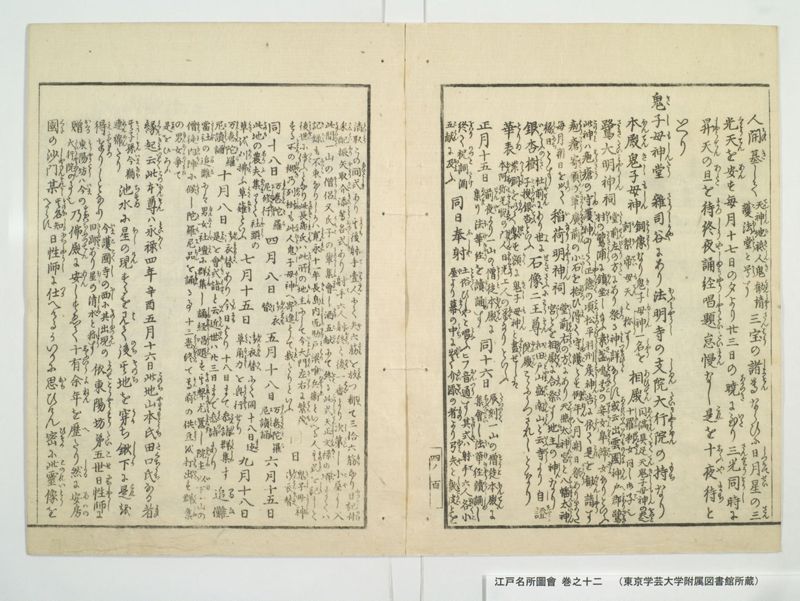
人 開基(かいき)して《割書:天神(てんしん)地祗(ちき)人鬼(しんき)勧請(くわんしやう)|護法堂(こほふたう)と号(かう)す》三宝(さんはう)の諸尊(しよそん)ならひに日月星(しつけてせい)の三(さん)
光天(くわうてん)を安(あん)す毎月十七日の夕より廿三日の暁(あかつき)に至(いた)り三光(さんくわう)同時(とうし)に
昇天(しやうてん)の旦(あした)を待(まつ)終夜(しうや)誦経(しゆきやう)唱題(しやうたい)怠慢(たいまん)なし是(これ)を十夜待(しふやまち)と
いへり
鬼子母神堂(きしもしんたう) 雜司谷(さうしかや)にあり法明寺(ほふみやうし)の支院(しゐん)大行院(たいきやうゐん)の持(もち)なり
本殿鬼子母神(ほんてんきしもしん)《割書:銅像(とうさう)なり鬼子母神(きしもしん)一名( みやう)を|訶梨帝母天(かりていもてん)と称(しよう)す》相殿(あひてん)《割書:円満具足天(えんまんくそくてん)鬼子母神(きしもしん)の夫(をつと)也|十羅刹女(しふらせちによ)同し御子( こ)也》
鷺大明神祠(さきたいみやうしん )《割書:堂前(たうせん)左(ひたり)の方(かた)にあり祭(まつ)る神(かみ)詳(つまひらか)ならす或云(あるひはいふ)出雲國(いつものくに)神戸郡(かんへこほり)鷺(さき)|村(むら)の鷺浦(さきうら)に鎮坐(ちんさ)し給ふ素戔嗚尊(そさのをのみこと)の妾女(せうちよ)皐諦女(くわうていによ)なりといふ》
《割書:此神(このかみ)は疱瘡(はうさう)の守護神(しゆこしん)にして正徳(しやうとく)の頃(ころ)松平羽州矦(まつたひらうしうこう)神告(しんこう)に依(よつ)て是(これ)を勧請(くわんしやう)す|疱瘡(はうさう)寄願(きくわん)の輩(ともから)廣前(くわうせん)の小石(こいし)を拾(ひろ)ひ得(え)て守護(しゆこ)とす例年(れいねん)八月朔日 祭(まつり)ありまた》
《割書:毎月朔日を以(もつ)て|縁日(えんにち)とす》稲荷明神祠(いなりみやうしん )《割書:堂前(たうせん)右(みき)の方(かた)にあり天照太神宮(てんしやうたいしんくう)と八幡太神(はちまんたいしん)|宮(くう)とを相殿(あひてん)に合祭(かつさい)す地主(ちしゆ)の神(しん)なり》
銀杏樹(いてふのき)《割書:社前(しやせん)にあり世(よ)に|子授銀杏(こさつけいてふ)といふ》石像(せきさふ)二王尊(にわうそん)《割書:和田戸山(わたとやま)盛南山(せいなんさん)と云(いふ)寺(てら)より自證(ししやう) |院殿(ゐんてん)こゝにうつされしとなり》
華表(とりゐ)《割書:紫銅(からかね)を以(もつ)て製(せい)す額(かく)に鬼子母神(きしもしん)と畫(くわ〳〵)せしは|本阿弥光悦(ほんあみくわうえつ)の門人(もんしん)日光上人(にちくわう )の筆(ふて)なりといふ》
正月十五日《割書:前夜(せんや)より一山の僧徒(そうと)本殿(ほんてん)に|集(あつま)り法華経(ほけきやう)を讀誦(とくしゆ)す》同十六日《割書:辰刻(たつのこく)一山の僧徒(そうと)本殿(ほんてん)に|集會(しふくわう)し法華経(ほけきやう)讀誦(とくしゆ)し》
《割書:終(をはり)て祝詞(のつと)酒(さけ) |五献(ここん)に及(およ)ふ》同日 奉射(ふしや)《割書:土俗(とそく)ひしやと唱(とな)ふヒフ音通(おんつう)す其式(そのしき)は射手(いて)六人 各(おの〳〵)小(こ)|屋(や)より幕(まく)の中(うち)に出(いて)て介添(かいそへ)の者(もの)より弓矢(ゆみや)と敷皮(しきかは)とを》
【左丁】
《割書:請取(うけとり)この間(あひた)式(しき)あり其後(そのゝち)射手(いて)壹人(いちにん)にて矢(や)六筋( すち)を放(はな)つ都(すへ)て三拾六筋( すち)なり日記付(につきつけ) |采配振(さいはいふり)矢取(やとり)介添(かいそへ)等(とう)各(おの〳〵)式(しき)あり射手(いて)六人 射終(いおはつ)て後(のち)一番( はん)より次第(したい)し小屋(こや)に入》
《割書:此間(このあひた)一山の僧侶(そうりよ)又 氏子(うちこ)の輩(ともから)集會(しふくわい)し酒(さけ)五献(ここん)にて終(をは)る此式(このしき)天正(てんしやう)文禄(ふんろく)の頃(ころ)まては|記録(きろく)も不束(ふつゝか)なりしかは寛永(くわんえい)十一年 長島内匠助(なかしまたくみのすけ)戸梁唯兵衞(とはりいひやうゑ)といへる人 其式(そのしき)を記(しる)して》
《割書:後世(こうせい)に傳(つた)ふとなり此(この)長島氏(なかしまうち)は此所(このところ)の地主(ちしゆ)にして今(いま)大門(たいもん)左右(さいう)に繁茂(はんも) |する所(ところ)の槻(けやき)の列樹(れつしゆ)も此人(このひと)鬼子母神(きしもしん)へ寄進(きしん)とて栽(うゑ)たりといふ》同日《割書:鬼子母神(きしもしん)|御衣替(おんころもかへ)》
同十八日《割書:万巻(まんくわん)陀羅(たら) |尼(に)修行(しゆきやう)》四月八日《割書:御衣(おんころも)|替(かへ)》五月十八日《割書:万巻(まんくわん)陀羅(たら) |尼(に)讀誦(とくしゆ)》六月十五日
《割書:此地(このち)の農夫(のうふ)集(あつま)りて社頭(しやとう)の|草(くさ)を刈拂(かりはら)ふ草薙(くさなき)といふ》七月十五日《割書:御衣替(おんころもかへ)にて同十八日 迠(まて) |草角力(くさすまう)を興行(かうきやう)せり》九月十八日
《割書:万巻(まんくわん)陀羅(たら) |尼(に)讀誦(とくしゆ)》十月八日《割書:御衣替(おんころもかへ)あり今日(こんにち)より十八日まて参詣(さんけい)群集(くんしゆ)す|是(これ)を會式詣(ゑしきまふて)と云(いふ)近世(きんせい)は廿三日まで参詣(さんけい)あり》追儺(つゐな)
《割書:當社(たうしや)の追儺(つゐな)には男女(なんによ)社壇(しやたん)に群集(くんしゆ)し誦経(しゆきやう)唱題(しやうたい)す其聲(そのこゑ)尤(もつとも)囂(かまひす)し院主(ゐんしゆ)以下(いけ)一山の|僧徒(そうと)内陣(ないちん)に候(こう)し陀羅尼品(たらにほん)を誦(となふ)る事 十三巻( くわん)終(おはつ)て尊前(そんせん)の供豆(くとう)を打出(うちいた)す群集(くんしゆ)》
《割書:の男女(なんによ)爭(あらそひ)て|是(これ)をひろふ》
縁起云(えんきにいはく)此(この)本尊(ほんそん)は永禄(えいろく)四年辛酉五月十六日 此地(このち)山本氏(やまもとうち)田口氏(たくちうち)なる者(もの)
《割書:其(その)子孫(しそん)今猶(いまなほ)|連綿(れんめん)たり》池水(ちすゐ)に星(ほし)の現(けん)するを見(み)て後(のち)其地(そのち)を穿(うか)ち鍬下(しうか)に是(これ)を
得奉(えたてまつ)りしとなり《割書:今(いま)護國寺(ここくし)の西(にし)に其(その)出現(しゆつけん)の|旧跡(きうせき)あり《振り仮名:星の清水|ほし しみつ》と称(しよう)す》依(よつて)東陽坊(とうやうはう)弟五世(たいこせ)日性師(にちしやうし)に
贈(おくる)《割書:東陽坊(とうやうはう)は今(いま)の|大行院(たいきやうゐん)の事(こと)也》乃(すなはち)佛殿(ふつてん)に安(あん)しすゑて十有余年(しふいうよねん)を歴(へ)たり然(しかる)に安房(あはの)
國(くに)の沙門(しやもん)某(それかし)《割書:其名(そのな)知(しる)|へからす》日性師(にちしやうし)に仕(つか)へけるかいかに思(おも)ひけん密(ひそか)に此(この)霊像(れいとう)を
現代語訳
【右丁】
…開基して〔天神・地祇・人鬼を勧請し、護法堂と号す〕、三宝の諸尊ならびに日・月・星の三光天を安置す。毎月十七日の夕方より二十三日の暁に至るまで、三光が同時に昇天する朝を待ちながら、終夜誦経・唱題を怠ることなく行う。これを「十夜待(じゅうやまち)」という。
---
**鬼子母神堂** 雑司ヶ谷にあり。法明寺の支院・大行院の管轄である。
本殿の鬼子母神〔銅像である。鬼子母神は一名を訶梨帝母天(かりていもてん)と称す〕、相殿〔円満具足天は鬼子母神の夫なり。十羅刹女は同じく御子なり〕。
鷺大明神祠〔堂前左の方にあり。祭る神は詳らかでない。ある説によれば、出雲国神戸郡鷺村の鷺浦に鎮座する素戔嗚尊の妾女・皐諦女(こうていにょ)であるという〕。
〔この神は疱瘡(天然痘)の守護神であり、正徳の頃、松平羽州侯が神のお告げによってこれを勧請した。疱瘡平癒を祈願する人々は、社前の小石を拾って護符とした。例年八月一日に祭りがあり、また毎月一日をもって縁日とする〕。
稲荷明神祠〔堂前右の方にあり。天照大神宮と八幡大神宮とを相殿に合祀する。地主の神である〕。
銀杏の木〔社前にあり。世に「子授け銀杏」という〕。石像二王尊〔和田戸山・盛南山と呼ばれる寺より、自證院殿がここへ移されたものという〕。
鳥居〔紫銅(からかね)をもって製す。額に「鬼子母神」と書かれているのは、本阿弥光悦の門人・日光上人の筆であるという〕。
正月十五日〔前夜より一山の僧徒が本殿に集まり、法華経を読誦する〕。同十六日〔辰の刻に一山の僧徒が本殿に集会し、法華経を読誦して、終わって祝詞・酒五献に及ぶ〕。
同日、奉射(ほうしゃ)〔土俗に「ひしゃ」と唱える。「ヒ」と「フ」は音が通ずる。その式は、射手六人が各々小屋より幕の中に出て、介添えの者より弓矢と敷皮とを〕
【左丁】
〔受け取り、この間に式がある。その後、射手一人にて矢六筋を放ち、合計三十六筋となる。日記付・采配振り・矢取り・介添え等それぞれに式がある。射手六人が射終えた後、一番より順に小屋に入る。この間、一山の僧侶および氏子の衆が集会し、酒五献にて終わる。この式は、天正・文禄の頃までは記録も不完全であったため、寛永十一年(1634)に長島内匠助・戸梁唯兵衛という人がその式を記して後世に伝えたという。この長島氏はこの地の地主であり、今大門左右に繁茂している欅の並木もこの人が鬼子母神へ寄進のために植えたといわれる〕。
同日〔鬼子母神御衣替〕。
同十八日〔万巻陀羅尼修行〕。四月八日〔御衣替〕。五月十八日〔万巻陀羅尼読誦〕。六月十五日〔この地の農夫が集まって社頭の草を刈り払う。「草薙(くさなぎ)」という〕。七月十五日〔御衣替にて、同十八日まで草相撲を興行した〕。九月十八日〔万巻陀羅尼読誦〕。十月八日〔御衣替あり。今日より十八日まで参詣群集する。これを「会式詣(えしきまいり)」という。近世は二十三日まで参詣がある〕。
追儺〔当社の追儺には男女が社壇に群集して誦経・唱題する。その声は特に騒がしい。院主以下一山の僧徒が内陣に侍し、陀羅尼品を誦すること十三巻終えて、尊前の供豆(くとう)を打ち出す。群集の男女が争ってこれを拾う〕。
縁起に云う。この本尊は、永禄四年辛酉(1561年)五月十六日、この地の山本氏・田口氏なる者〔その子孫は今もなお連綿と続いている〕が、池の水面に星が現れるのを見て、後にその地を掘り、鍬の下からこれを得奉ったという。〔今、護国寺の西にその出現の旧跡があり、「星の清水(ほしのしみず)」と称す〕。それによって東陽坊第五世・日性師に贈られた〔東陽坊は今の大行院のことである〕。乃ち仏殿に安置して十有余年を経た。しかるに安房国の沙門某〔その名は知れない〕が日性師に仕えていたが、いかに思ったことか、密かにこの霊像を…
英語訳
**[Right page]**
…[The temple was] founded, with the deities of Heaven, Earth, and Spirits (Tenjin, Chigi, and Jinki) enshrined, and the hall was named *Gohōdō* ("Hall of the Dharma Protectors"). The various revered figures of the Three Treasures, as well as the Three Luminaries (sun, moon, and stars), were installed here. Each month from the evening of the 17th until the dawn of the 23rd, awaiting the morning when all Three Luminaries rise to heaven simultaneously, the monks chanted sutras and recited titles throughout the night without fail. This practice was called the *Jūya-machi* ("Ten-Night Vigil").
---
**Kishimojin Hall** — Located in Zoshigaya. It is a sub-temple of Hōmyō-ji, under the administration of Daigyō-in.
The principal image in the main hall is *Kishimojin* [a bronze statue; Kishimojin is also known by the name *Kariteimoten* (Hārītī)]. The companion enshrined deity is: [*Enman Gusoku-ten* — the husband of Kishimojin; and the *Ten Rasetsu-nyo* (Ten Rākṣasī) — her children].
*Sagi Daimyōjin* Shrine [Located to the left of the hall's front. The deity enshrined is not clearly known. According to one account, it is said to be *Kōteijo* (Lady Kōtei), a concubine of Susanoo-no-Mikoto, who is enshrined at Sagi-ura in Sagi Village, Kambe District, Izumo Province].
[This deity is the guardian god of smallpox (variola). During the Shōtoku era, Lord Matsudaira of Ushū (Dewa Province) enshrined this deity here upon receiving a divine revelation. Those who came to pray for recovery from smallpox would pick up small stones from before the shrine and keep them as protective talismans. There is an annual festival on the first day of the eighth month, and the first day of every month is designated as an *en'nichi* (sacred market day)].
*Inari Myōjin* Shrine [Located to the right of the hall's front. The shrines of Tenshō Daijingū (Amaterasu) and Hachiman Daijin are co-enshrined here. It is the tutelary deity of the land].
*Ginkgo Tree* [Standing before the shrine; it is known throughout the world as the "Child-Granting Ginkgo" (*ko-sazuke ichō*)]. Stone Statues of the *Niō* (Two Guardian Kings) [These are said to have been moved here from a temple called Seinan-zan at Wadato-yama, by the Jishō-in殿].
*Torii* (shrine gate) [Made of purple copper (Chinese bronze). The inscription "Kishimojin" written on the plaque is said to be the brushwork of the Venerable Nichikō, a disciple of Hon'ami Kōetsu].
*The 15th day of the First Month* [From the previous night, all the monks of the temple gather in the main hall and recite the Lotus Sutra]. *The 16th day of the same month* [At the Hour of the Dragon (approx. 7–9 a.m.), all the monks gather in the main hall, recite the Lotus Sutra, and after finishing, the ritual concludes with a norito (Shinto prayer) and five rounds of sake].
*Same day — Hōsha (Ritual Arrow Shooting)* [Colloquially called "hisha" by locals — "hi" and "fu" being phonetically interchangeable. The ceremony involves six archers, each emerging from a small booth into an enclosed curtained area, where they receive bows, arrows, and a seating mat from their attendants...]
**[Left page]**
[...receive these items, during which certain rites are performed. Each archer then individually shoots six arrows, making a total of thirty-six arrows. The record-keeper, the marshal, the arrow-retriever, and attendants each have their prescribed roles. After all six archers have finished, they return one by one in order to their booths. During this time, the monks and parishioners assemble and the ceremony concludes with five rounds of sake. Since the records of this ceremony from the Tenshō and Bunroku eras were incomplete, in the 11th year of Kan'ei (1634), men named Nagashima Takumi-no-suke and Tobari Ihyōe recorded the ceremony's procedures to pass them down to later generations. The Nagashima family were the landowners of this place, and it is said that they also planted the rows of zelkova trees that now thrive on either side of the great gate, as a dedication to Kishimojin].
*Same day*: [Change of robes for Kishimojin].
*18th of the same month*: [Mangan Dharani Ascetic Practice]. *8th day of the 4th month*: [Change of robes]. *18th day of the 5th month*: [Mangan Dharani Recitation]. *15th day of the 6th month*: [The farmers of this area gather and mow the grass at the shrine precincts — this is called *kusanagi* ("grass-cutting")]. *15th day of the 7th month*: [Change of robes, and from the 18th, grass-sumo wrestling (*kusa-sumō*) was performed]. *18th day of the 9th month*: [Mangan Dharani Recitation]. *8th day of the 10th month*: [Change of robes; from this day until the 18th, large crowds come to worship. This is called *Eshiki-mairi* ("Festival Pilgrimage"). In recent times, pilgrims visit through the 23rd].
*Tsuina* (Demon-Expulsion Ritual) [During the *tsuina* at this shrine, men and women throng the sanctuary platform, chanting sutras and reciting the nenbutsu title. Their voices are particularly clamorous. The head priest and all the monks of the temple attend in the inner sanctuary and recite the Dhāraṇī Chapter thirteen times through; upon completion, the offering beans (*kudō*) placed before the deity are cast out, and the assembled men and women scramble to pick them up].
The *engi* (founding legend) states: This principal image was originally found on the 16th day of the 5th month of the 4th year of Eiroku (1561, the year of Kanoto-Tori), by persons of the Yamamoto and Taguchi families of this place [whose descendants continue to this day in an unbroken line], who saw a star reflected in the water of a pond. Digging at that spot, they obtained the image from beneath a hoe. [Today, to the west of Gokoku-ji, there remains a historic site of this miraculous appearance, known as *Hoshi no Shimizu* ("Star Spring")]. It was accordingly presented to the Fifth Abbot of Tōyōbō, the Reverend Nichishō [Tōyōbō being the present-day Daigyō-in]. It was then installed in the Buddha Hall, where it remained for more than ten years. However, a monk from Awa Province, a certain individual [whose name is unknown], who was in the service of the Reverend Nichishō, for reasons unknown secretly took this sacred image...