翻刻
【右丁】
盗(ぬす)み故郷(ふるさと)に帰(かへ)るに《割書:其年(そのとし)天正(てんしやう)|五年なり》忽(たちまち)病(やまひ)を発(はつ)し一日 自(みつから)口(くち)はしりていへらく
我(われ)は元(もと)武州(ふしう)雜司谷(さうしかや)にあり彼地(かのち)の衆生(しゆしやう)機縁(きえん)既(すて)に熟(しゆく)す正(まさ)に済度(さいと)す
へき時(とき)を得(え)て泥土(ていちゆう)より出現(しゆつけん)せしをこゝに移(うつ)す事 我意(わかこゝろ)にあらす
直(すく)に元(もと)の地(ち)に帰(かへ)すへしとなり時(とき)に村人(そんしん)大(おほひ)に怖(おそ)れ畏(かしこ)み再(ふたゝ)ひ東陽(とうやう)
坊(はう)に迁(うつ)し奉(たてまつ)る仍(よつて)諸人(しよにん)霊威(れいゐ)なる事を知(しつ)てひとつの草堂(さうたう)を営(いとな)まん
とて往古(むかし)より稲荷(いなり)の社跡(しやせき)と云傳(いひつた)へたる叢林(さうりん)を闢(ひら)き竟(つひ)に天正(てんしやう)六年
戊寅四月十日に始(はしめ)て斧(おの)を下(くた)し同五月朔日 経営(けいえい)落成(らくせい)しこゝに
安置(あんち)す其後(そのゝち)寛文(くわんふん)六年に至(いた)り自證院殿(ししやうゐんてん)新(あらた)に寶殿(はうてん)を造立(さうりふ)せらる
《割書:今(いま)の本殿(ほんてん)是(これ)なり自證院殿(ししやうゐんてん)は加州(かしう)|黄門(くわうもん)の息女(そくちよ)にして安藝大守(あきのたいしゆ)の令室(れいしつ)也》
此地(このち)は遥(はるか)に都下(とか)を離(はな)るゝといへとも鬼子母神(きしもしん)の霊驗(れいけん)著明(いちしる)く諸願(しよくわん)
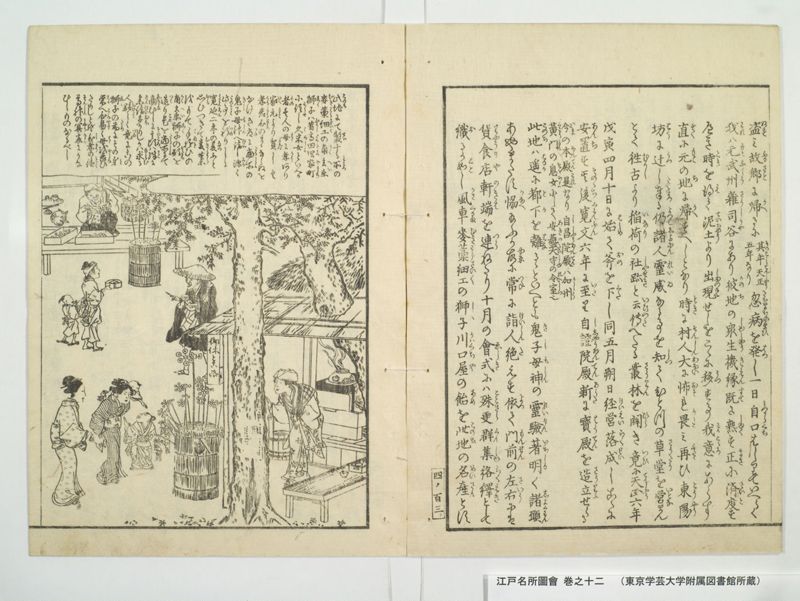
あやまたす恊(かなへ)給ふか故(ゆゑ)に常(つね)に詣人(けいしん)絶(た)えす依(よつ)て門前(もんせん)の左右(さいう)には
貨食店(りやうりや)軒端(のきは)を連(つら)ねたり十月の會式(ゑしき)には殊更(ことさら)群集(くんしゆ)絡繹(らくえき)として
織(お)るか如(こと)し風車(かさくるま)麥藁細工(むきわらさいく)の獅子(しゝ)川口屋(かはくちや)の飴(あめ)を此地(このち)の名産(めいさん)とす
【左丁】
此地(このち)にて製(せい)する所(ところ)の
麥藁細工(むきわらさいく)の角兵衛(かくへい)
獅子(しゝ)は昔(むかし)《振り仮名:高田四ッ家町|たかたよ やまち》
に住(ちうせ)し久米女(くめしよ)といへる
者(もの)壱人の母(はゝ)に孝(かう)あり
家(いへ)元(もと)より貧(まづ)しく
孝養(かうよう)心(こゝろ)のまゝならぬを
なけき常(つね)に當所(たうしよ)の
鬼子母神(きしもしん)へ詣(けい)し深(ふか)く
此事(このこと)を祈(いの)りしに
寛延(くわんえん)二年の夏(なつ)ふと
思(おも)ひつきて麦藁(むきわら)
をもて手遊(てあそ)ひの
角兵衛獅子(かくへいしゝ)の形(かたち)を
造(つく)り是(これ)を當所(たうしよ)にて
商(あきな)ひしに其頃(そのころ)は殊(こと)に
参詣(さんけい)多(おほ)かりしかは求(もとむ)る
人 夥(おひたゝ)しく竟(つゐ)にこの
獅子(しゝ)の為(ため)にその身(み)
栄(さか)へ心易(こゝろやす)く母(はゝ)を養(やしな)ひ
たりしとそ至孝(しかう)の徳(とく)
尊神(そんしん)の冥慮(みやうりよ)にかな
ひしものなるべし
現代語訳
【右丁】
(その年、天正五年のことである。)盗んで故郷に帰ると、たちまち病を発し、ある日、自ら口走っていうには、
「我はもと武州雑司ヶ谷にあり。かの地の衆生の機縁はすでに熟している。まさに済度すべき時を得て、泥土の中より出現したのに、ここへ移したのは我が心ではない。直ちにもとの地へ帰すべきである。」
とのことであった。時に村人たちは大いに恐れ畏まり、再び東陽坊へお移し申し上げた。よって諸人はその霊威なることを知り、一つの草堂を営もうとして、往古より稲荷の社跡と言い伝えられてきた叢林を開き、ついに天正六年戊寅四月十日に初めて斧を下し、同五月朔日に経営落成して、ここに安置した。その後、寛文六年に至り、自證院殿が新たに宝殿を造立された。
(今の本殿がこれである。自證院殿は加州黄門の息女にして、安芸大守の令室なり。)
この地は遥かに都下を離れているといえども、鬼子母神の霊験は著しく、諸願を誤りなく叶え給うゆえに、常に詣でる人が絶えない。よって門前の左右には料理屋が軒端を連ねている。十月の会式には殊更に群集絡繹として、織るがごとくに人が押し寄せる。風車、麦藁細工の獅子、川口屋の飴をこの地の名産とする。
---
【左丁】
この地にて製する所の麦藁細工の角兵衛獅子は、昔、高田四ッ家町に住んでいた久米女(くめじょ)という者が、一人の母に孝行であった。家はもともと貧しく、孝養を心のままにできないことを嘆き、常に当所の鬼子母神へ詣でて、深くこのことを祈っていた。すると寛延二年の夏、ふと思いつき、麦藁をもって手遊びの角兵衛獅子の形を造り、これを当所にて商ったところ、その頃は殊に参詣が多かったので、求める人が夥しく、ついにこの獅子のために身が栄え、心やすく母を養ったとのことである。至孝の徳が尊神の冥慮にかなったものであろう。
英語訳
**[Right folio]**
(This was in the fifth year of the Tenshō era.) Upon returning to his hometown with the stolen [statue], he suddenly fell ill, and one day spoke aloud of his own accord, saying:
"I originally resided in Zoshigaya in Musashi Province. The karmic conditions of the sentient beings in that place are already ripe. I appeared from out of the mud at precisely the right moment to deliver them from suffering, yet my removal to this place was not of my own will. I must be returned at once to my original location."
Upon hearing this, the villagers were overcome with awe and reverence, and once again transferred [the statue] back to Tōyōbō. Thereupon, all the people came to know of the deity's divine power, and resolved to build a modest sanctuary. They cleared a grove of trees that had been handed down since ancient times as the former site of an Inari shrine, and in the sixth year of Tenshō (1578), on the tenth day of the fourth month in the year of the *tsuchinoe-tora*, they first raised their axes [to fell the trees]. The construction was completed on the first day of the fifth month of the same year, and the [statue] was enshrined there.
Subsequently, in the sixth year of Kanbun (1666), Jishōin-dono had a new *hōden* (treasure hall/main shrine building) constructed.
(This is the present main hall. Jishōin-dono was the daughter of the lord of Kaga Province and the consort of the lord of Aki Province.)
Although this place is situated far from the city below, the miraculous efficacy of Kishimojin is evident and renowned, and she grants all petitions without fail. For this reason, worshippers never cease to visit. Accordingly, on both sides of the temple gate, restaurants and eateries line up their eaves in a row. During the *e-shiki* festival in the tenth month, the crowds stream in one after another like an unbroken thread, as though woven together. Pinwheels (*kazaguruma*), wheat-straw lion figurines (*mugiwara zaiku no shishi*), and the sweets of Kawaguchiya are counted among the famous local products of this place.
---
**[Left folio]**
The wheat-straw *Kakuhei Shishi* (lion figurines) manufactured in this place have the following origin: Long ago, there lived in Takata Yottsuya-machi a person called Kumejo, who was devoted in filial piety to her mother. Her household had always been poor, and she lamented that she could not care for her mother as fully as her heart desired. She regularly made pilgrimages to the Kishimojin of this place, praying earnestly about this matter. Then, in the summer of the second year of Kan'en (1749), she suddenly had an idea: she fashioned the shape of a *Kakuhei Shishi* — a toy lion figure — out of wheat straw, and began selling these at this very place. As pilgrimages to the temple were particularly numerous at that time, there were a great many people seeking to purchase them. In the end, thanks to these lion figures, her own circumstances flourished, and she was able to care for her mother with peace of mind. It must be that the virtue of her supreme filial devotion found favor with the divine will of the venerable deity.