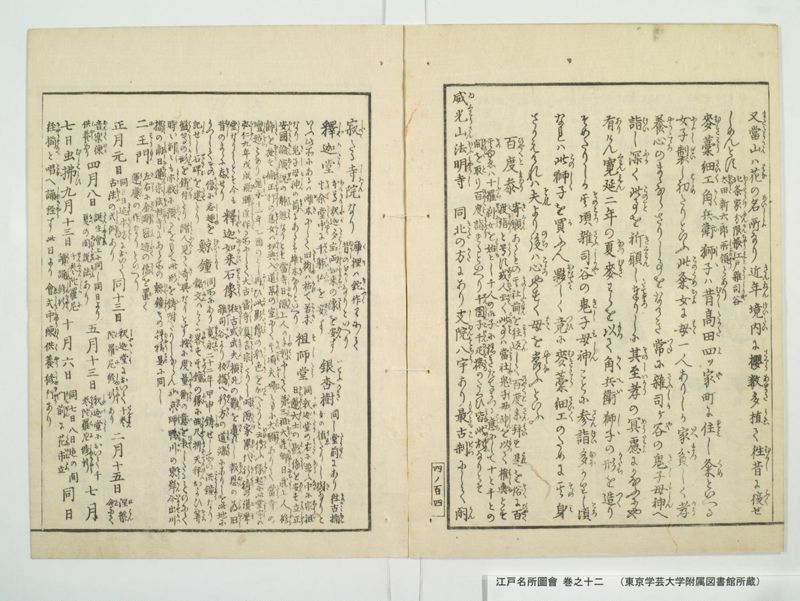
翻刻
【右丁】
又(また)當山(たうさん)は花(はな)の名所(めいしよ)なり近年(きんねん)境内(けいたい)に櫻(さくら)数多(あまた)植(うゑ)て往昔(むかし)に復(ふく)せ
しめんとす《割書:北条家分限帳(ほうてうけふんけんちやう)江戸(えと)雜司谷(さうしかや) |太田新六郎(おほた ) 所領(しよりやう)とあり》
麥藁細工(むきわらさいく)角兵衛獅子(かくへいしゝ)は昔(むかし)《振り仮名:髙田四ッ家町|たかたよ や 》に住(すみ)し粂(くめ)といへる
女子(によし)製(せい)し初(はしめ)たりといふ此(この)粂女(くめちよ)に母(はゝ)一人ありしか家(いへ)貧(まつ)しく孝(かう)
養(やう)心(こゝろ)のまゝならさりし事をなけき常(つね)に《振り仮名:雜司ヶ谷|さふしかや》の鬼子母神(きしもしん)へ
詣(けい)し深(ふか)く此事(このこと)を祈願(きくわん)し奉(たてまつ)りしに其(その)至孝(しいかう)の冥慮(めうりよ)にかなふにや
有(あり)けん寛延(くわんえん)二年の夏(なつ)麥(むき)わらを以(もつ)て角兵衛獅子(かくへいしゝ)の形(かたち)を造(つく)り
そめたりしか其頃(そのころ)雑司谷(さふしかや)の鬼子母神(きしもしん)ことに参詣(さんけい)多(おほ)かりし頃(ころ)
なれは此(この)獅子(しゝ)を買(か)ふ人 夥(おひたゝ)しく竟(つひ)に麥藁細工(むきわらさいく)のために其身(そのみ)
さかえけれは夫(それ)より後(のち)は心(こゝろ)やすく母(はゝ)を養(やしな)ふといふ
百度参(ひやくとまゐり)《割書:寄願(きくわん)あるもの其(その)社前(しやせん)を往返(わうへん)して百度(ひやくと)参拜(さんはい)す是(これ)を俗(そく)に百(ひやく)|度詣(とまゐり)と号(かう)す或人(あるひと)云(いは)く此事(このこと)は當社(たうしや)鬼子母神(きしもしん)を以(もつ)て権輿(はしめ)とす》
《割書:其(その)ゆゑは十羅刹女(しふらせつによ)を始(はしめ)とし千人の御子( こ)に祝きたてまつる意(こゝろ)にして十と千との|間(あひた)を取(と)り百度詣(ひやくとまゐり)するといへり千團子(せんたんこ)千疋猿(せんひきさる)のたくひ皆(みな)此故(このゆゑ)なりとそ》
威光山(ゐくわうさん)法明寺(ほふみやうし) 同 北(きた)の方(かた)にあり支院(しゐん)八宇(はちう)あり最(もつとも)古刹(こせつ)にして閑(かん)
【左丁】
寂(しやく)たる寺院(しゐん)なり《割書:庫裡(くり)は鉈作(なたつく)りにて|昔(むかし)のまゝなりといへり》
釋迦堂(しやかたう)《割書:本尊(ほんそん)釈迦(しやか)多宝(たはう)両如来(りやうによらい)の像(さう)を安(あん)す|其余(そのよ)堂中(たうちゆう)に千躰仏(せんたいふつ)を安(あん)す》銀杏樹(いてふのき)《割書:同し堂前(たうせん)にあり往古(そのかみ)楠(なん)|女の植(うゑ)たりし樹(き)なりと》
《割書:いふ此所にあるは雌木(めき)にして旧樹(きうしゆ)は枯(かれ)て若木(わかき)|なり鬼子母神(きしもしん)の前(まへ)にあるは雄木(をき)なりといへり》祖師堂(そしたう)《割書:同 釈迦堂(しやかたう)の右(みき)に並(なら)ふ中(なか)に宗祖(しうそ)|日蓮大士(にちれんたいし)の影像(えいさう)を安(あん)す立正(りつしやう)》
《割書:安國論(あんこくろん)演説(ゑんせつ)の躰想(ていさう)なりとそ當寺(たうし)日源上人(にちけん )の手刻(しゆこく)にして弟三祖(たいさんそ)大蔵卿(おほくらきやう)日蔵上人(にちさう )修(しゆう)|飾(しよく)を施(ほとこ)す楠正行(くすのきまさつら)の息女(そくちよ)は妙典入道(めうてんにふたう)某(それかし)の室(しつ)にて其頃(そのころ)夫婦(ふうふ)ともに大願(たいくわん)ありて當寺(たうし)の》
《割書:檀越(たんをつ)となり應永(おうえい)十二年乙酉のとし再(ふたゝ)ひ此(この)影像(えいさう)の彩色(さいしき)を加(くは)へたりと云傳(いひつた)ふ縁起(えんき)に此 堂宇(たうう)は|弘仁(こうにん)九年戊戌 飛騨匠(ひたのたくみ)作(つく)る所にして大古(たいこ)當寺(たうし)真言宗(しんこんしう)たりし時(とき)源家(けんけ)累代(るいたひ)祈祷(きたう)の護摩(こま)》
《割書:堂(たう)なりしとそ今も|昔(むかし)のまゝに存(そん)せり》釋迦如来石像(しやかによらいせきさう)《割書:往古(そのかみ)或(ある)武夫(ものゝふ)横死(わうし)の難(なん)を遁(のか)れし報恩(ほふおん)の為(ため)旧(むかし)|雜司谷(さふしかや)より板橋(いたはし)へ行方(ゆくかた)の道端(みちはた)にありしを此地に》
《割書:うつしてその傍(かたはら)に志趣(ししゆ)を|記(しる)せし石碑(せきひ)を建(たて)たり》鯨鐘(けいしよう)《割書:同所にあり寛永(くわんえい)二十二年甲申 鋳(しゆ)せし所の洪鐘(こうしよう)なり|銘文(めいふん)はこゝに畧(りやく)す其鐘(そのかね)の縁(ふち)に曲尺(かねしやく)桝(ます)天秤(てんひん)およひ筭(そろ) 》
《割書:盤(はん)等(とう)の形(かたち)を鋳付(いつけ)たり諸人(しよにん)見(み)て奇異(きい)なりとす按(あんする)に度量衡(とりやうかう)の意(い)を表(ひやう)したるものにて|時々刻々(しゝこく〳〵)も亦(また)数(かす)に預(あつか)るをもて此形( かたち)を鋳(い)附たりしならん欤(か)京師(けいし)鴨川(かもかは)の東岸(とうかん)今出川(いまてかは)》
《割書:橋(はし)の南(みなみ)日蓮宗(にちれんしう)法性寺(ほふしやうし)にある所の鯨鐘(けいしよう)その摸様(もやう)是(これ)に同し》
二王門(にわうもん)《割書:左右(さいう)に金剛密迹(こんかうみつしやく)の像(さう)を置(お)く|運慶(うんけい)の作(さく)なりといへり》
正月元日《割書:同三日 迠(まて)本坊(ほんはう)において|古法(こほふ)の式例(しきれい)あり》同十三日《割書:釈迦堂(しやかたう)において千巻(せんくわん)|陀羅尼修行(たらにしゆきやう)あり》二月十五日《割書:涅槃(ねはん)|會(ゑ)にて》
《割書:音楽(おんかく)練(ねり)|供養(くやう)あり》四月八日《割書:誕生會(たんしやうゑ)上に同し同日より|夏(なつ)の間(あひた)説法(せつほふ)あり》五月十三日《割書:釈迦堂(しやかたう)において千|巻陀羅尼修行(くわんたらにしゆきやう)》七月
七日 虫拂(むしはらひ)九月十三日《割書:千巻陀羅尼(せんくわんたらに)|讀誦修行(とくしゆしゆきやう)》十月六日《割書:同七日八日迠の間|門前(もんせん)に花市立(はないちたつ)》同日
経揃(きやうそろへ)と唱(とな)へ誦経(しゆきやう)す此日より會式中(ゑしきちゆう)練供養修行(ねりくやうしゆきやう)あり
現代語訳
【右丁】
また当山は花の名所である。近年、境内に桜を数多く植えて、往昔の姿に復させようとしている。(北条家分限帳に「江戸雑司谷、太田新六郎所領」とある。)
麦藁細工の角兵衛獅子は、昔、高田四ッ家町に住んでいた粂(くめ)という女子が製し始めたという。この粂女には母が一人いたが、家が貧しく、孝養を心のままにできないことを嘆き、常に雑司ヶ谷の鬼子母神へ詣でて、深くこのことを祈願申し上げていたところ、その至孝の心が冥慮にかなったのであろうか、寛延二年の夏、麦藁をもって角兵衛獅子の形を造り始めたところ、その頃雑司谷の鬼子母神への参詣がことに多かった頃であったため、この獅子を買う人が夥しく、ついに麦藁細工のためにその身が栄えたので、それより後は心やすく母を養ったという。
百度参り(寄願のある者がその社前を往返して百度参拝する。これを俗に百度詣りと号す。ある人が言うには、このことは当社鬼子母神をもって権輿(はじめ)とするという。その理由は、十羅刹女をはじめとして千人の御子を祝き奉る意にして、十と千との間を取り百度詣りするといえり。千団子・千匹猿の類は皆この故なりとぞ。)
---
威光山法明寺 同じく北の方にある。支院八宇あり。最も古刹にして閑
【左丁】
寂たる寺院である。(庫裡は鉈作りにて、昔のままなりといえり。)
釈迦堂(本尊として釈迦・多宝両如来の像を安置する。その他、堂中に千体仏を安置する。) 銀杏の木(同じく堂前にあり。往古、楠女の植えたる木なりという。この所にあるのは雌木にして、旧樹は枯れて若木なり。鬼子母神の前にあるのは雄木なりといえり。) 祖師堂(同じく釈迦堂の右に並ぶ。中に宗祖日蓮大士の影像を安置する。立正安国論演説の体想なりとぞ。当寺日源上人の手刻にして、第三祖大蔵卿日蔵上人が修飾を施す。楠正行の息女は妙典入道某の室にて、その頃夫婦ともに大願ありて当寺の檀越となり、応永十二年乙酉の年、再びこの影像の彩色を加えたりと言い伝ふ。縁起にこの堂宇は弘仁九年戊戌、飛騨の匠の作る所にして、大古、当寺が真言宗たりし時、源家累代祈祷の護摩堂なりしとぞ。今も昔のままに存せり。)
釈迦如来石像(往古、ある武士が横死の難を遁れし報恩のため、旧、雑司谷より板橋へ行く道端にありしを、この地に移して、その傍らに志趣を記せし石碑を建てたり。)
鯨鐘(同所にあり。寛永二十二年甲申に鋳せし所の洪鐘なり。銘文はここに略す。その鐘の縁に曲尺・枡・天秤および算盤等の形を鋳付けたり。諸人見て奇異なりとす。按ずるに、度量衡の意を表したるものにて、時々刻々も亦数に預かるをもってこの形を鋳付けたりしならんか。京師鴨川の東岸、今出川橋の南、日蓮宗法性寺にある所の鯨鐘は、その模様これに同じ。)
二王門(左右に金剛密迹の像を置く。運慶の作なりといえり。)
正月元日(同三日まで本坊において古法の式例あり。) 同十三日(釈迦堂において千巻陀羅尼修行あり。) 二月十五日(涅槃会にて音楽練供養あり。) 四月八日(誕生会、上に同じ。同日より夏の間、説法あり。) 五月十三日(釈迦堂において千巻陀羅尼修行。) 七月七日 虫払い 九月十三日(千巻陀羅尼読誦修行。) 十月六日(同七日・八日までの間、門前に花市立つ。) 同日、経揃えと唱えて誦経す。この日より会式中、練供養修行あり。
英語訳
**[Right folio]**
Furthermore, this mountain temple is a celebrated spot for flowers. In recent years, many cherry trees have been planted within the precincts with the aim of restoring the beauty of former times. (The *Hōjō-ke Funken-chō* [the Hōjō clan's register of retainer stipends] records: "Edo Zoshigaya — fief of Ōta Shinrokuō.")
It is said that the wheat-straw *Kakuhei Shishi* [lion figurines] were first made by a woman called Kume who lived in Takata Yottsuya-machi long ago. This woman Kume had a sole mother to care for, but as the household was poor, she lamented that she could not provide for her as fully as her heart desired. She regularly made pilgrimages to the Kishimojin of Zoshigaya, praying earnestly about this matter. Whether because her supreme filial devotion found favor with the divine will [of the deity], in the summer of the second year of Kan'en (1749) she began shaping the form of a *Kakuhei Shishi* out of wheat straw. As pilgrimages to the Kishimojin of Zoshigaya were especially numerous at that time, there were a great many people purchasing these lion figures, and in the end, thanks to these wheat-straw crafts, her circumstances flourished, and thereafter she was able to care for her mother with ease of mind.
*Hyakudo-mairi* [Hundredfold pilgrimage]: (Those who have a petition walk back and forth before the shrine, making a hundred acts of worship. This is commonly called *hyakudo-mairi*. One person says that this custom originated with the Kishimojin of this shrine. The reason is said to be that in honor of the Ten Rākshasī (*Jū Rasetsunyo*) and a thousand children, one takes the midpoint between ten and a thousand and performs a hundred visits. The *Sento-dango* [thousand dumplings] and *Senbiki-zaru* [thousand monkeys] are all of this same significance, it is said.)
---
**Ikōzan Hōmyōji Temple** — Located to the north in the same direction. It has eight sub-temples (*shiin*). It is an exceptionally ancient temple, and a place of quiet
**[Left folio]**
seclusion. (It is said that the *kuri* [priests' living quarters/kitchen] was built in the *nata-zukuri* style and remains as it was in former times.)
**Shakadō** [Hall of Śākyamuni]: (The principal icons enshrined are images of both Śākyamuni and Prabhūtaratna [Tahō] Tathāgata. In addition, a thousand Buddha images are enshrined within the hall.) **Ginkgo Tree**: (Located in front of the same hall. It is said to be a tree planted by a woman called Kusunoki long ago. The tree standing here is a female tree; the original old tree has withered and this is a young one. The tree standing before the Kishimojin is said to be a male tree.)
**Soshidō** [Founder's Hall]: (Situated to the right of the Shakadō, in the same precinct. Within it is enshrined an effigy of the sect founder, the Great Master Nichiren, depicted in the posture of delivering the *Risshō Ankoku Ron* [Treatise on Establishing the Correct Teaching for the Peace of the Land]. It was carved by hand by the Venerable Nichigen of this temple, and the third patriarch, Dazōkyō [the Great Treasurer] — the Venerable Nichizō — applied the finishing embellishments. The daughter of Kusunoki Masatsura became the wife of a certain Myōten Nyūdō, and at that time both husband and wife harbored a great vow and became patrons (*danotsu*) of this temple. In the twelfth year of Ōei (1405), the year of *kinoto-tori*, it is handed down that they had the coloring of this effigy renewed once more. According to the temple's founding legend, this hall was built in the ninth year of Kōnin (818), the year of *tsuchinoe-inu*, by a craftsman from Hida Province. It is said that in ancient times, when this temple belonged to the Shingon sect, it served as the *goma* [ritual fire] hall for the prayers of successive generations of the Minamoto clan. It remains to this day as it was in former times.)
**Stone Image of Śākyamuni Tathāgata**: (Long ago, a certain warrior, in gratitude for having escaped the peril of a violent or sudden death, had [this image], which had originally stood by the roadside on the route from Zoshigaya to Itabashi, moved to this location, and erected a stone monument beside it recording the circumstances.)
**Kei-shō** [Great Bell]: (Located in the same precinct. It is a great bell (*kōshō*) cast in the twenty-second year of Kan'ei (1645), the year of *kinoe-saru*. The inscription is omitted here. On the rim of the bell are cast the forms of a carpenter's square (*kanejaku*), a measuring box (*masu*), a balance scale (*tenbin*), and an abacus (*soroban*), among other things. All who see it consider this most curious. Upon reflection, these represent the meaning of weights and measures, and as time itself — moment by moment — is also subject to numerical measure, these forms were probably cast [upon the bell] for this reason. The great bell at Hōshōji Temple of the Nichiren sect, located to the south of Imadegawa Bridge on the eastern bank of the Kamo River in the capital [Kyoto], has a design identical to this one.)
**Niōmon** [Two Kings Gate]: (Images of the *Kongō Misshaku* [Vajra-wielding guardians] are placed to the left and right. They are said to be the work of Unkei.)
**New Year's Day, First Month**: (Ceremonies according to ancient rites are held in the main temple through the third day.) **Thirteenth day of the same month**: (A thousand-scroll *dhāraṇī* recitation practice is held at the Shakadō.) **Fifteenth day of the Second Month**: (A *nehan-e* [Nirvāṇa ceremony] is held, with a ceremonial procession with musical accompaniment.) **Eighth day of the Fourth Month**: (A *tanjō-e* [birth celebration], same as above. From the same day through the summer, Dharma teachings are given.) **Thirteenth day of the Fifth Month**: (A thousand-scroll *dhāraṇī* practice at the Shakadō.) **Seventh day of the Seventh Month**: *Mushiharai* [insect-clearing ritual]. **Thirteenth day of the Ninth Month**: (Thousand-scroll *dhāraṇī* recitation practice.) **Sixth day of the Tenth Month**: (A flower market is held in front of the gate through the seventh and eighth days.) On the same day, a sutra recitation known as *kyō-soroe* [sutra assembly] is performed. From this day onward, during the *e-shiki* festival, a *neri-kuyō* [ceremonial procession with offerings] practice is held.