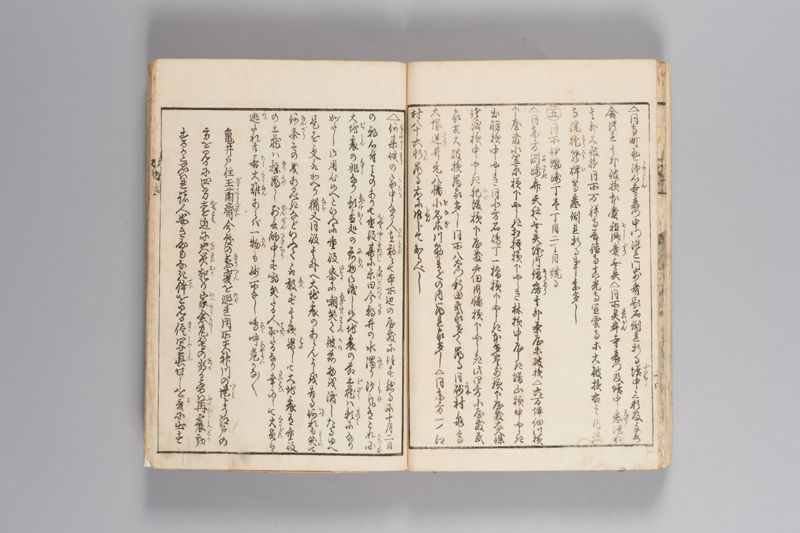
翻刻
【右丁】
△同寺町通 浄心(じやうしん)寺表門中門潰れ門前看題石倒れ折る塔中(だつちう)三軒及手水
舎潰れ其外破損本堂 祖師堂(そしだう)無異△同所 霊岸(れいがん)寺表門及塔中 悉(こと〴〵く)潰れ
其外大破損同所万祥寺善徳寺真光寺宜雲寺等大破損右之内諸
寺院 灯籠(とうろう)碑(ひ)等悉倒れ折る事甚多し
㊄同所伊勢崎丁壱丁目二丁目焼る
△同東方 洲崎(すさき)弁天社無異境内 僧房(そうばう)其外茶屋等破損△六万坪細川様
下屋敷小笠原様下やしき相模様下やしき林様中やしき増山様中やしき
出羽様中やしき同北方石島丁一橋様下やしき本多豊前様下屋敷大久保
佐渡様中やしき肥後(ひご)様下屋敷戸田因幡様下やしき此四方に屋敷民
家共大破損崩家多し同所八右衛門新田民家多く崩る同 砂(すな)村亀高
大塚 逆(さかさ)幷元八幡 小名木(をなぎ)川筋までの内崩れ家多し△同東方一ノ江
村八十六 軒(けん)崩る右に准(じゆん)じて知るべし
【左丁】
△何某候(なにがしこう)の家中(かちう)なる人 在勤(ざいきん)にて本所辺の屋敷に住す然るに十月二日
の朝心付ことのありて重役(ぢゆうやく)某(それがし)に示(しめして)曰(いはく)今朝(けさ)井の水 濁(にご)り汐気(しほけ)有これ必(かならず)
大 地震(ぢしん)の兆(しるし)なり預置(あづけおく)処の荷物(にもつ)御渡し候へ地震の節 土蔵(どざう)は頼(たのみ)になり
がたし御用心候へといふに重役 密(ひそか)に嘲笑(あざけりわらい)て彼(かの)荷物を渡したるゆへ
是を受取かへり猶(なほ)又同役其外へ大地震のあらんよしを告る何(いづ)れも笑(わらつ)て
何条(なんでう)その義あるべきなどいふて取 敢(あへ)ず其夜 果(はた)して大地震有重役
の土蔵は揺崩(ゆりくづ)し前言(ぜんげん)的中(てきちう)す嘲笑たる人 恥(はぢ)たるなり幸(さいはひ)にして火災(くわざい)は
逃(のが)たれ共 若(もし)火難(くわなん)あらば一 物(もつ)も残所なし嗚呼(あゝ)危(あやうい)かな〳〵
亀井戸住 玉蘭斎(ぎよくらんさい)今度の急変(きうへん)を逃(のが)れ同所天神川の堤(つゝみ)より江戸の
方を見るに四方 遠近(おちこち)に火災(くはさい)起(おこ)り家(いへ)倉(くら)瓦(かはら)等の崩(くづる)る音は再(ふたゝひ)震動(しんどう)
するかと思はれ諸人安き心もなき体(てい)を見る侭(まゝ)写真(しやしん)せしを爰(こゝ)に出す
現代語訳
【右丁】
△同寺町通り、浄心寺は表門・中門が潰れ、門前の看板石が倒れて折れ、塔中(境内の建物)三軒と手水舎が潰れ、その他も破損。本堂・祖師堂は異状なし。△同所、霊岸寺は表門および塔中がことごとく潰れ、その他も大破損。同所の万祥寺・善徳寺・真光寺・宜雲寺等も大破損。右の内、諸寺院の灯籠・碑等がことごとく倒れて折れた件は甚だ多し。
㊄同所伊勢崎町一丁目・二丁目が焼ける。
△同東方、洲崎弁天社は異状なく、境内の僧房その他茶屋等が破損。△六万坪、細川様下屋敷・小笠原様下屋敷・相模様下屋敷・林様中屋敷・増山様中屋敷・出羽様中屋敷。同北方、石島町・一橋様下屋敷・本多豊前様下屋敷・大久保佐渡様中屋敷・肥後様下屋敷・戸田因幡様下屋敷。この四方において屋敷・民家ともに大破損・崩れ家が多し。同所八右衛門新田では民家が多く崩れる。同砂村・亀高・大塚・逆井・並びに元八幡・小名木川筋までの内、崩れ家が多し。△同東方、一ノ江村では八十六軒が崩れる。右に準じて知るべし。
【左丁】
△何某侯の家中の人が、在勤にて本所辺の屋敷に住んでいた。然るに十月二日の朝、気になることがあり、重役某に示して言うには、「今朝、井戸の水が濁り、潮の気(塩気)がある。これは必ず大地震の兆しである。預けておいた荷物をお渡しいただきたい。地震の際、土蔵は頼りになりがたい。ご用心なさるがよい」と言った。重役はひそかに嘲り笑いながらも、その荷物を渡したので、これを受け取って帰り、さらにまた同役やその他の人々に大地震があるだろうということを告げた。誰もが笑って、「そんなことがあるものか」などと言って取り合わなかった。ところがその夜、果たして大地震があり、重役の土蔵は揺れ崩れ、前言が的中した。嘲り笑った人々は恥じ入った。幸いにして火災は逃れられたが、もし火難があれば一物も残るところはなかったであろう。ああ、危ないことよ、危ないことよ。
亀戸に住む玉蘭斎は、今度の急変を逃れ、同所天神川の堤より江戸の方を見ると、四方遠近に火災が起こり、家・蔵・瓦等の崩れる音は再び震動するかと思われるほどで、諸人に安き心もない様子を、見るままに写真(写生)したものを、ここに出す。
英語訳
**[Right Page]**
△ Along the same Teramachi thoroughfare: Jōshinji temple had its outer gate (*omotemon*) and inner gate (*nakamon*) destroyed; the stone signboard at the gate entrance toppled and broke; three structures within the precinct (*tatchū*) and the ablution pavilion (*temizusha*) collapsed; other damage was also sustained. The main hall (*hondō*) and the Patriarch's Hall (*soshidō*) were unharmed. △ In the same area, Reiganj temple had its outer gate and all precinct buildings utterly destroyed, with extensive damage throughout. In the same area, Manshōji, Zentokuji, Shinkōji, Giuunji, and other temples also suffered major damage. Among the foregoing, the number of cases in which stone lanterns, memorial steles, and the like at various temples toppled and broke was exceedingly great.
㊄ In the same area, Isezaki-chō 1-chōme and 2-chōme burned down.
△ To the east, the Susaki Benten Shrine was undamaged, though the monks' quarters and teahouses within its precincts were damaged. △ In the Rokumantsubo area: the lower residences of Lord Hosokawa, Lord Ogasawara, and Lord Sagami, and the middle residences of Lord Hayashi, Lord Masuyama, and Lord Dewa suffered damage. To the north of the same area: Ishijima-chō, the lower residence of Lord Hitotsubashi, the lower residence of Lord Honda Buzen, the middle residence of Lord Ōkubo Sado, the lower residence of Lord Higo, and the lower residence of Lord Toda Inaba — all of these quarters saw extensive damage to both samurai residences and commoners' houses, with many collapsed buildings. In Hachizaemon Shinden in the same area, many commoners' houses collapsed. Throughout Suna-mura, Kametaka, Ōtsuka, Sakasai, and extending to Motohachiman and along the Onagigawa waterway, there were many collapsed houses. △ To the east, in Ichinoe Village, eighty-six houses collapsed. The extent of damage in other areas should be understood by analogy with the above.
**[Left Page]**
△ A certain retainer of a certain lord (*nanigashi-kō*) was residing in a residence near Honjo while on duty rotation (*zaikin*). On the morning of the second day of the tenth month, having noticed something that concerned him, he went to a senior official (*jūyaku*) and said: "This morning the water in the well is turbid and has a briny taste. This is surely an omen of a great earthquake. Please return the goods I have left in your keeping — in the event of an earthquake, a storehouse (*dozō*) cannot be relied upon. Please take care." The senior official secretly laughed him to scorn, but nonetheless returned the goods. The man received them and returned home, and further went on to inform his colleagues and others that a great earthquake would occur. Everyone laughed and said things like, "How could such a thing happen?" — and paid him no heed. Yet that very night, a great earthquake did indeed strike. The senior official's storehouse crumbled in the shaking, and the man's earlier words proved exactly correct. Those who had mocked him were filled with shame. Fortunately, they escaped the fires — but had a conflagration broken out, not a single thing would have remained. Ah, how perilous, how perilous indeed!
Gyokuransai, a resident of Kameido, having escaped the sudden calamity, looked toward Edo from the embankment of the Tenjingawa River in the same area. Fires were breaking out near and far in every direction; the sounds of houses, storehouses, and roof tiles collapsing were such that one might have thought another tremor had struck. Seeing the state of the people — none with any peace of mind — he sketched the scene exactly as it appeared before him, and that sketch is presented here.