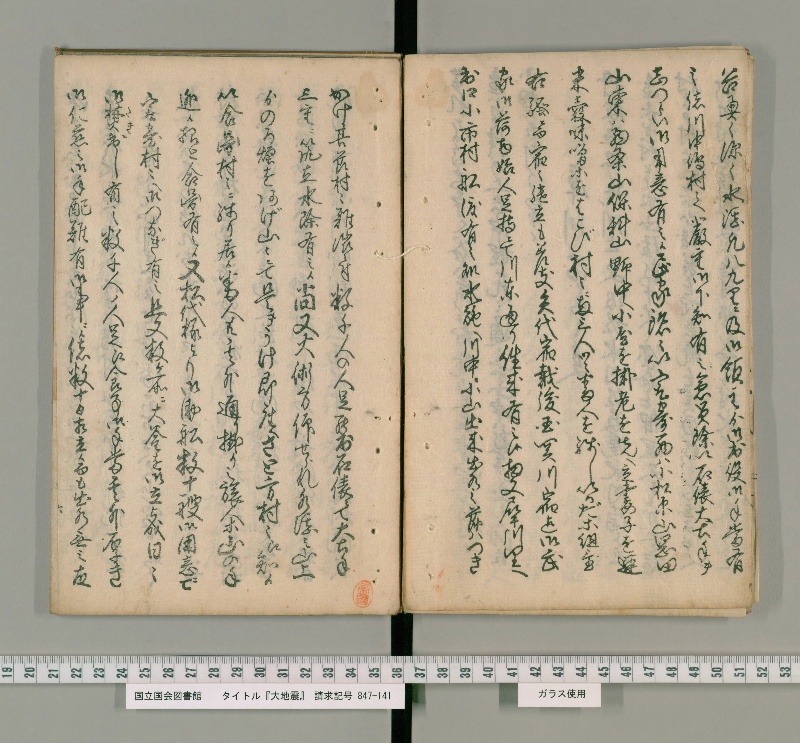
翻刻
谷奥く深く水湛凡八九里に及御領主より御出役御手当有
之偖川中嶋村々へ厳重御下知有之急災除以石俵大土手ヲ
しつらい御用意有之候民家銘々以最寄西は小松原山岡田
山東は西条山保科山野中へ小屋を掛老を先へ立妻子を連
米穀味噌等をはこび村々に両三人ツゝ番人を残しいかだ等組置
右騒にて宿々継立も差支矢代宿越後国関川宿迄御武
家御荷物始人足持にて川東通り往来有之候扨又犀川里へ
出口小市村船渡有之処水絶へ川中に小山出来出水之節はつき
かけ其節村々難渋に付数千人の人足罷出石俵にて大土手
三重に筑立水除有之候尚又火術方仰せられ水湛之山上
よりのろ煙をあげ山々にて是ヲうけ即座へさと方村々え知候
以合図村々に残り居候番人共其外通り掛り之旅人等山の手
逃候様と合図有之候又松代様より御助船数十艘御用意にて
最寄村々へ御つなぎ有之且又数ヶ所に大釜を御立被成日々
御 焚(たき)出し有之数千人之人足え食事御手当其外厚き
御仁恵之御手配難有御事に候偖数十日相立候ても出水無之故
現代語訳
谷の奥深くまで水がたまり、およそ八、九里にも及んだ。領主より役人が派遣され、手当てが行われた。さらに川中島の村々に対して厳重なお達しがあり、急いで災害を防ぐために、石俵を用いて大きな土手を設けてご用意された。民家の人々はそれぞれ、近くの、西は小松原山・岡田山、東は西条山・保科山の野中に小屋を掛け、老人を先に立て、妻子を連れ、米・穀物・味噌などを運び、村々に二、三人ずつ番人を残し、筏なども組んで置いた。この騒ぎにより、宿場の継立(荷物の継ぎ送り)も差し支えが生じ、矢代宿から越後国の関川宿まで、武家のお荷物をはじめ、人足が荷物を持って川の東側の道を通って往来した。さて、犀川が里へ出る出口にある小市村の渡し場では、水が絶えて川の中に小山ができてしまい、出水の際には突き掛けてくるため、その節、村々が難渋したことから、数千人の人足が出て、石俵で大きな土手を三重に築き立て、水除けとした。さらに火術方(のろし担当者)に命じて、水のたまった山の上からのろし煙を上げ、山々でこれを受けて、すぐに里方の村々へ知らせることとした。この合図によって、村々に残っている番人たちや、その他通り掛かりの旅人などが、山手(山の方)へ逃げるよう合図がなされた。また松代様より助け船数十艘をご用意いただき、近くの村々へつないでおかれた。さらに数ヶ所に大きな釜を立てられ、日々炊き出しをされ、数千人の人足へ食事のお手当をはじめ、その他厚いご仁恵のお手配をいただいたことは、まことにありがたいことであった。さて、数十日が経っても出水がなかったため(続く)。
英語訳
The water accumulated deep into the valleys, extending for approximately eight or nine ri. Officials were dispatched by the domain lord, and relief measures were carried out. Strict orders were further issued to the villages of Kawanakajima, and in preparation for emergency flood prevention, large embankments were constructed using stone-filled straw bales (ishidawara). The residents of the various households each went to nearby locations — to the west, the mountains of Komatsubara and Okada, and to the east, the mountains of Saijō and Hoshina — and set up shelters in the fields and fields. They sent the elderly ahead, took their wives and children with them, carried rice, grain, miso, and other provisions, left two or three watchmen in each village, and had rafts assembled and kept ready. Due to this upheaval, the relay transport system at the post stations was also disrupted; from Yashiro post station all the way to Sekikawa post station in Echigo Province, the luggage of samurai households and other goods were carried by porters along the road on the eastern bank of the river. Meanwhile, at the Koichi village ferry crossing — the point where the Sai River flows out toward the lowlands — the water had disappeared and a small hill had formed in the middle of the river, which would surge against things during flood surges, causing hardship for the surrounding villages. To address this, thousands of laborers turned out and erected triple-layered large embankments of stone-filled bales to serve as flood barriers. Furthermore, signal fire operators (noroshi) were ordered to send up smoke signals from the mountains above the water-filled valleys; these were received from mountain to mountain, and the news was immediately communicated to the villages in the lowlands. By means of these signals, the watchmen remaining in the villages, as well as travelers passing through, were warned to flee toward higher ground in the mountains. In addition, the lord of Matsushiro provided dozens of rescue boats, which were moored and kept ready at the nearby villages. Moreover, large cauldrons were set up at several locations and food was cooked and distributed daily; thousands of laborers were provided with meals and other generous forms of relief — all of which was a matter of profound gratitude. Now, even after several tens of days had passed without any flood occurring... (continued on next page).