翻刻
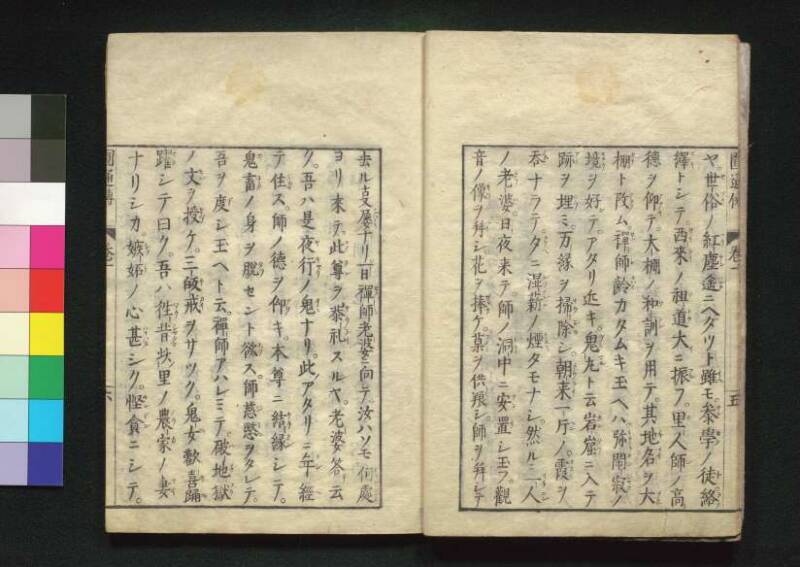
ヤ。《振り仮名:世⁻俗|セソク》ノ《振り仮名:紅⁻塵|コウチン》遥(ハルカ)ニヘダツト雖(イヘ)モ。参學(サンカク)ノ徒(ト)。絡(ラク)
繹(エキ)トシテ。《振り仮名:西⁻來|サイライ》ノ《振り仮名:祖⁻道|ソトウ》大《送り仮名:イ》ニ振(フル)フ。《振り仮名:里⁻人| 》師(シ)ノ高⁻
德ヲ仰(アヲキ)テ。大⁻棚ノ《振り仮名:和⁻訓|ワクン》ヲ用テ。其 地名(チメイ)ヲ大(ヲホ)
棚(タナ)ト𨸩(アラタ)ム。《振り仮名:禪⁻師|セシ#1シ》齡(ヨハイ)カタムキ玉ヘハ。弥(イヨ〳〵)《振り仮名:閑⁻寂|カンジヤク》ノ
境(キヤウ)ヲ好《送り仮名:ン》テ。アタリ近キ。《振り仮名:鬼₋丸|ヲニマル》ト云《振り仮名:岩⁻崫|カンクツ》ニ入テ
跡(アト)ヲ埋(ウツ)ミ。万⁻縁ヲ《振り仮名:掃⁻除|サウジヨ》シ。《振り仮名:朝⁻来|テウライ》《振り仮名:一⁻片| ヘン》ノ。霞(カスミ)ヲ
呑(ノム)ナラテ。夕(ユウヘ)ニ《振り仮名:湿⁻薪|シツシン》ノ煙(ケムリ)タモナシ。然ルニ《振り仮名:一⁻人|イチニン》
ノ《振り仮名:老⁻婆|ラフハ》。日⁻夜来テ。師ノ《振り仮名:洞⁻中|トウ 》ニ安置(アンチ)シ玉フ。觀
音ノ像(サウ)ヲ拜(ハイ)シ。花ヲ捧(サヽケ)ケ。菓(コノミ)ヲ供⁻羪シ。師ヲ拜シテ
【左丁】
去ル㕝 屡(シハ〳〵)ナリ。一⁻日《振り仮名:禪⁻師|センシ》老⁻婆ニ向テ。汝ハソモ何處(イツレノトコロ)
ヨリ來テ。《振り仮名:此尊󠄁|コノソン》ヲ《振り仮名:恭⁻礼󠄁|ケウライ》スルヤ。老⁻婆答 ̄テ云
ク。吾ハ是 夜行(ヤキヤウ)ノ鬼(ヲニ)ナリ。此《送り仮名:ノ》アタリニ年経(トシヘ)
テ住(ジウ)ス。師ノ德ヲ仰(アヲ)キ。本尊󠄁ニ《振り仮名:結⁻縁|ケチヱン》シテ。
鬼畜(キチク)ノ身ヲ脫(タツ)セント欲(ホツ)ス。師 慈愍(ジミン)ヲタレテ。
吾ヲ度(ド)シ玉ヘト云。禪⁻師アハレミテ。《振り仮名:破⁻地⁻獄|ハヂコク》
ノ文(モン)ヲ授(サヅ)ケ。《振り仮名:三⁻皈⁻戒| キカイ》ヲサツク。鬼⁻女《振り仮名:歡⁻喜| キ》踊(ユ)
《振り仮名:躍󠄁|ヤク》シテ曰ク。吾ハ《振り仮名:往⁻昔|ワウシヤク》。此 ̄ノ₋里ノ《振り仮名:農⁻家|ノウカ》ノ妻(サイ)
ナリシカ。《振り仮名:嫉⁻妬|シツト》ノ心 甚(ハナハタ)シク。悭貪(ケンドン)ニシテ。
現代語訳
【右丁】
(この地は)世俗の紅塵(こうじん)から遥かに隔たっているとはいえ、参学(さんがく)の徒が絶え間なく(絡繹として)訪れ、西来(さいらい)の祖道(そどう)が大いに振るった。里人は師の高徳を仰いで、「大棚(おおたな)」という和訓を用いて、その地名を「大棚」と改めた。禅師の齢が傾く(老いてゆく)につれ、いよいよ閑寂の境を好み、辺り近くにある「鬼丸」という岩窟(がんくつ)に入って跡を埋め(身を隠し)、万縁を掃除(一切の煩わしい縁を断ち)、朝には一片の霞を呑むにとどまり、夕べには湿薪(しっしん)の煙だてもなかった。そのような中、一人の老婆が、日夜来たっては、師の洞中に安置されておいでの観音の像を拝し、花を捧げ、果物を供養し、師を拝して
【左丁】
去ることが度々(しばしば)あった。ある日、禅師が老婆に向かって、「汝はそも、いずれの所よりやって来て、この尊(みこと)を恭礼(きょうらい)するのか」と問うた。老婆は答えて言った。「私は夜行(やぎょう)の鬼(おに)でございます。このあたりに長年住んでおります。師の徳を仰ぎ、本尊に結縁(けちえん)して、鬼畜(きちく)の身を脱しようと欲しております。師よ、慈愍(じみん)を垂れて、私を済度(どうか)してくださいますよう」と言った。禅師は哀れんで、破地獄(はじごく)の文(もん)を授け、三帰戒(さんきかい)を授けた。鬼女は歓喜踊躍(かんぎゆやく)して曰く、「私は往昔(おうしゃく)、この里の農家の妻でありましたが、嫉妬の心が甚だしく、慳貪(けんどん)にして……」
英語訳
[Right page]
Although this place was far removed from the red dust of the mundane world, students seeking the Way came in an unbroken stream, and the ancestral path of the transmission from the West flourished greatly. The village people, admiring the master's great virtue, adopted the Japanese reading "Ōtana" (great shelf) and renamed the place "Ōtana." As the Zen master grew old in years, he came to love ever more deeply a state of quietude and seclusion. He entered a rocky cave nearby called "Onimaru," concealed his whereabouts, and cut himself off from all worldly entanglements. In the mornings, he subsisted on nothing more than a wisp of mist, and in the evenings, there was not even a wisp of smoke from damp firewood. And yet, one elderly woman would come day and night to worship the image of Kannon enshrined within the master's cave, to offer flowers, to make offerings of fruit, and to pay her respects to the master —
[Left page]
— and this happened repeatedly. One day, the Zen master turned to the old woman and asked: "From whence do you come to pay reverence to this sacred image?" The old woman replied: "I am a demon that prowls the night (yakyō no oni). I have dwelt in this vicinity for many long years. I look up to the master's virtue, and I wish to form a karmic bond with the principal image so that I may be freed from this body of a demon-beast. I implore the master to extend his compassion and guide me toward liberation." Moved to pity, the Zen master bestowed upon her the text of the "Breaking of Hell" (Hajikokunomon) and administered the Three Refuges and Precepts (sankikai). The demon woman leaped up in joy and said: "Long ago, I was the wife of a farming family in this village. My jealousy was fierce, and I was greedy and miserly..."