翻刻
【コマ13】
【右丁】
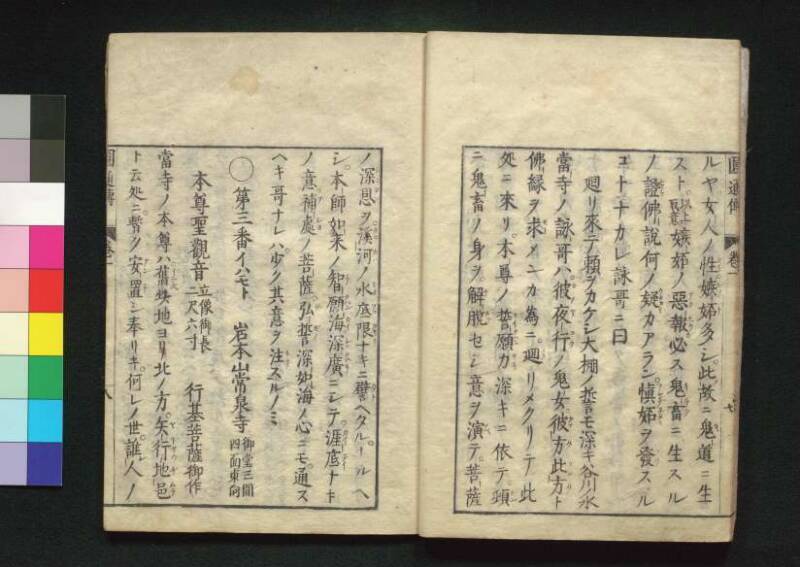
ルヤ。女⁻人ノ性(セイ)。《振り仮名:嫉⁻妬|シツト》多シ。此 ̄ノ₋故ニ《振り仮名:鬼⁻道|キ 》ニ生
スト。《割書:以上|取意》嫉⁻妬ノ《振り仮名:悪⁻報|アクホウ》。必ス《振り仮名:鬼⁻畜|キチク》ニ生スル
ノ證(シヤウ)佛⁻說何ノ疑(ウタカイ)カアラン。愼(ツヽシンデ)妬(ネタミ)ヲ發(ハツ)スル
コトナカレ詠哥ニ曰
𢌞リ來テ頼ヲカケシ大棚ノ誓モ深キ谷川ノ水
當⁻寺ノ詠⁻哥ハ。彼《振り仮名:夜⁻行|ヤコウ》ノ鬼⁻女。《振り仮名:彼₋方此₋方|カナタコナタ》ト
佛⁻縁ヲ求(モト)メンカ為ニ。廽(メク)リメクリテ此
処ニ來リ。本⁻尊ノ《振り仮名:誓⁻願⁻力|セイクハンリキ》深キニ依テ。頓(トン)
ニ鬼⁻畜ノ身ヲ。《振り仮名:解⁻脫|ケタツ》セシ意ヲ演(ノベ)テ。菩⁻薩
【左丁】
ノ深㤙(シンヲン)ヲ。《振り仮名:溪河|タニカハ》ノ水底(ミナソコ)限(カキリ)ナキニ譬(タト)ヘタル。ナルヘ
シ。本⁻師如⁻来ノ《振り仮名:智⁻願⁻海|チクハンカイ》。《振り仮名:深⁻廣|シンクハウ》ニシテ。《振り仮名:涯⁻底|カイテイ》ナキ
ノ意。《振り仮名:補⁻處|フシヨ》ノ菩⁻薩。《振り仮名:弘⁻誓|グゼイ》深⁻如⁻海ノ心ニモ。通ス
ヘキ哥ナレハ。少ク其意ヲ注(チウ)スルノミ
○第三番イハモト 岩本山常泉寺《割書:御堂三間|四面東向》
本尊󠄁聖觀音《割書:立像御長|二尺六寸》 行基菩薩御作
當寺ノ本尊󠄁ハ。《振り仮名:𦾔|イニシヘ》此地ヨリ北ノ方。《振り仮名:矢⁻行⁻地⁻邑|ヤキヤウヂムラ》
ト云処ニ。暫ク《振り仮名:安⁻置|アンチ》シ奉リキ。何レノ世。誰 ̄レ₋人ノ
現代語訳
【右丁】
るのか。女人の性(せい)は嫉妬(しっと)が多い。この故に鬼道に生まれるのである」と。(以上、取意)嫉妬の悪報(あくほう)は、必ず鬼畜に生まれるという証(しょう)、仏説に何の疑いがあろうか。慎んで妬みを発することなかれ。詠歌に曰く、
廻り来て 頼をかけし 大棚の 誓も深き 谷川の水
当寺の詠歌は、かの夜行(やこう)の鬼女が、あちらこちらと仏縁を求めんがために、巡り巡ってここに来たり、本尊の誓願力(せいがんりき)深きによって、速やかに鬼畜の身を解脱(げだつ)せしめた意を述べて、菩薩
【左丁】
の深恩(しんおん)を、谷川の水底(みなそこ)の限りなきに譬えたものであろう。本師如来の智願海(ちがんかい)は、深広(じんこう)にして涯底(がいてい)なき意、補処(ふしょ)の菩薩の弘誓深如海(ぐぜいじんにょかい)の心にも通ずべき歌であるから、少しくその意を注するのみである。
○第三番 岩本 岩本山常泉寺 【御堂三間四面、東向き】
本尊 聖観音 【立像、御長二尺六寸】 行基菩薩 御作
当寺の本尊は、いにしえ、この地より北の方、矢行地村(やきょうじむら)と云う処に、しばらく安置し奉っていた。いつの世、誰人の……
英語訳
[Right page]
"Why is this so? Women by nature are prone to jealousy and envy. For this reason, they are born into the realm of demons." (End of quoted passage, paraphrased.) The proof that the evil karmic retribution of jealousy necessarily leads to rebirth among demons and beasts is found in the Buddha's own words—what doubt could there be? Take heed, and refrain from giving rise to envy. The pilgrim verse for this temple reads:
*Megurikite / tanomi wo kakeshi / ōtana no / chikai mo fukaki / tanigawa no mizu*
(Wandering about and placing one's trust in Ōtana—the vow, like the depths of the valley stream, is profound.)
The pilgrim verse for this temple expresses the meaning that the demon woman who roamed the night, wandering here and there in search of a karmic connection to the Buddha, at last came to this place, and through the profound power of the principal image's vow was swiftly liberated from her body as a demon-beast—comparing the deep grace of the Bodhisattva
[Left page]
to the bottomless depths of the valley stream's waters. Since this verse also resonates with the spirit of the wisdom-and-vow ocean (*chigankei*) of the Original Teacher Tathāgata—so deep and vast that it has no shore or bottom—and with the heart expressed in the phrase "the vow of the Bodhisattva of the next birth is as deep as the ocean" (*guzei jin nyo kai*), I will add only a brief note on its meaning.
○ Temple No. 3: Iwamoto Iwamoto-san Jōsen-ji 【Hall: three ken on each of four sides, facing east】
Principal Image: Shō Kannon (Holy Avalokiteśvara) 【Standing image, height: 2 shaku 6 sun】 Carved by Bodhisattva Gyōki
The principal image of this temple was, in ancient times, enshrined for a period in a place to the north of here, called Yakyōji Village. In what era, by whose hand...
</translation_ja>