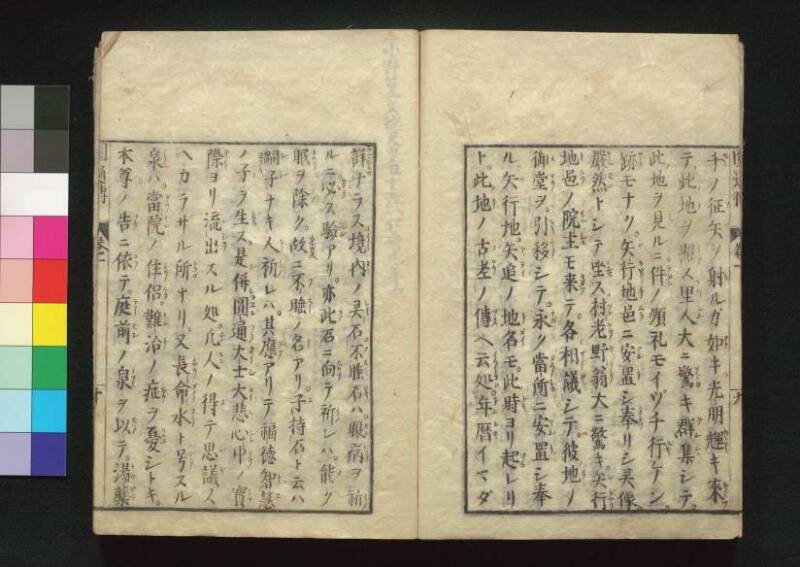
翻刻
【コマ15】
【右丁】
千(セン)ノ征矢(ソヤ)ヲ射(イ)ルガ如(コト)キ。光⁻明 輝(カヽヤ)キ來(キタツ)
テ。此 ̄ノ地(チ)ヲ照(テラ)ス。里人(リシン)大ニ驚(ヲトロ)キ群集(クンシユ)シテ。
此 ̄ノ地ヲ見(ミ)ルニ。件(クタン)ノ順礼モイヅチ行(ユキ)ケン。
跡(アト)モナク。《振り仮名:矢⁻行⁻地邑|ヤキヤウチムラ》ニ安置(アンチ)シ奉(タテマツ)リシ㚑像。
《振り仮名:嚴⁻然|ケンセン》トシテ㘴(マシマ)ス。《振り仮名:村⁻老|ソンロウ》《振り仮名:野⁻翁|ヤヲウ》大ニ驚キ。矢行(ヤギヤウ)
地邑(チムラ)ノ《振り仮名:院⁻主|インシユ》モ来(キタツ)テ。各《送り仮名:〱》相議(アイギ)シテ。彼 ̄ノ地(チ)ノ
御堂(ミタウ)ヲ。引移(ヒキウツ)シテ。永(ナガ)ク《振り仮名:當⁻所|タウシヨ》ニ安置(アシチ)シ奉
ル。矢行地(ヤ )。矢追(ヤヲイ)ノ地名(チメイ)モ。此 ̄ノ時(トキ)ヨリ起(ヲコ)レリ
ト。此 ̄ノ地(チ)ノ《振り仮名:古⁻老|コロウ》ノ傳(ツタ)ヘ云(イウ)処(トコロ)。《振り仮名:年⁻暦|ネンレキ》イマダ
【左丁】
詳(ツマヒラカ)ナラス。境内(ケイタイ)ノ《振り仮名:霊⁻石|レイ 》。不睡石(フスイセキ)ハ。眼病(カンヒヤウ)ヲ祈(イノ)
ルニ。必(カナラ)ズ驗(シルシ)アリ。亦 此石(コノ )ニ向(ムカツ)テ祈(イノ)レハ。能(ヨ)ク
眠(キムリ)ヲ除(ノゾ)ク。故(カルカユヘ)ニ《振り仮名:不⁻睡|フスイ》ノ名(ナ)アリ。《振り仮名:子₋持₋石|コ 》ト云ハ
嗣子(シシ|ヨツキ )ナキ人(ヒト)祈(イノ)レハ。其應( ヲフ)アリテ福⁻徳《振り仮名:智₋慧󠄁|チヱ》
ノ子(コ)ヲ生(シヤウ)ス。是 ̄レ併 ̄ラ。《振り仮名:圓⁻通大⁻士|ヱンツウタイシ》《振り仮名:大⁻悲|タイヒ》《振り仮名:心⁻中|シンチウ》ノ實(シツ)
際(サイ)ヨリ《振り仮名:流⁻出|ルシユツ》スル処。凢人(ホンニン)ノ得(ヱ)テ《振り仮名:思⁻議|シギ》ス
ヘカラザル所(トコロ)ナリ。又《振り仮名:長⁻命⁻水|チヤウメイスイ》ト号(ゴウ)スル
泉(イツミ)ハ。《振り仮名:當⁻院|タウイン》ノ《振り仮名:住⁻侶|シウリヨ》。《振り仮名:難⁻治|ナンチ》ノ症(シヤウ)ヲ憂(ウレヱ)シトキ。
本尊󠄁ノ告(ツケ)ニ依(ヨツ)テ。庭前(テイセン)ノ泉(イツミ)ヲ以(モツ)テ。湯藥(トウヤク)
現代語訳
【右丁】
千本の征矢(そや)を射るがごとき光明が輝き来たって、この地を照らした。里人は大いに驚き、群集して、この地を見るに、かの巡礼たちはどこへ行ったのか、跡もなく(姿を消していた)。矢行地村(やきょうちむら)に安置し奉っていた霊像が、厳然として(ここに)座しておられる。村老・野翁は大いに驚き、矢行地村の院主も来て、各々が相議して、かの地の御堂を引き移して、永くこの当所に安置し奉った。「矢行地(やきょうち)」「矢追(やおい)」の地名も、この時より起こったと、この地の古老の伝えるところ。年暦はいまだ
【左丁】
詳らかならず。境内の霊石、不睡石(ふすいせき)は、眼病を祈るに必ず験(しるし)あり。またこの石に向かって祈れば、よく眠りを除く。ゆえに「不睡」の名あり。子持石(こもちいし)というのは、嗣子(よつぎ)なき人が祈れば、その応(こたえ)ありて、福徳・智慧の子を生す。これらはみな、円通大士(えんつうたいし)の大悲の心中の実際より流出する処であって、凡人の得て思議(しぎ)すべからざるところなり。また長命水(ちょうめいすい)と号する泉は、当院の住侶(じゅうりょ)が難治の症を憂いた時、本尊の告げに依って、庭前の泉をもって湯薬(とうやく)……
英語訳
[Right page]
A radiant light, like a thousand arrows of *soya* (straight-fletched arrows) being loosed at once, came shining forth and illuminated this place. The villagers were greatly startled and gathered in a crowd. When they looked upon this spot, the pilgrims were nowhere to be found — they had vanished without a trace. The sacred image that had been enshrined in Yakyōchi Village stood there with solemn, majestic dignity. The village elders and rural old men were greatly astonished. The *in-shu* (resident monk) of Yakyōchi Village also came, and all deliberated together. They relocated the hall from that village and enshrined the image here permanently. It is said that the place names "Yakyōchi" (矢行地) and "Yaoi" (矢追) both originate from this very event — or so the oral tradition of the local elders holds. As for the exact date and year, it is not yet
[Left page]
clearly known. Among the sacred stones within the temple precincts, the *Fusui-seki* ("Sleepless Stone") is said to be invariably efficacious when one prays for relief from eye ailments. Furthermore, if one prays before this stone, it effectively drives away drowsiness — hence the name "Sleepless" (*fusui*). As for the *Komochi-ishi* ("Child-bearing Stone"), when those without an heir pray before it, their prayers are answered and they are blessed with a child endowed with merit, virtue, and wisdom. All of these wonders flow forth from the very substance of the Great Compassion dwelling in the heart of Kannon, the Great Being of Universal Penetration (*Entsū Daishi*) — they are things that ordinary people cannot fathom or comprehend. Furthermore, the spring known as the "Water of Long Life" (*Chōmei-sui*): when the resident monk of this temple was suffering from a difficult-to-cure illness, following a divine instruction from the principal image, he used the spring water in the garden to prepare medicinal decoctions (*tōyaku*)...
</translation_ja>