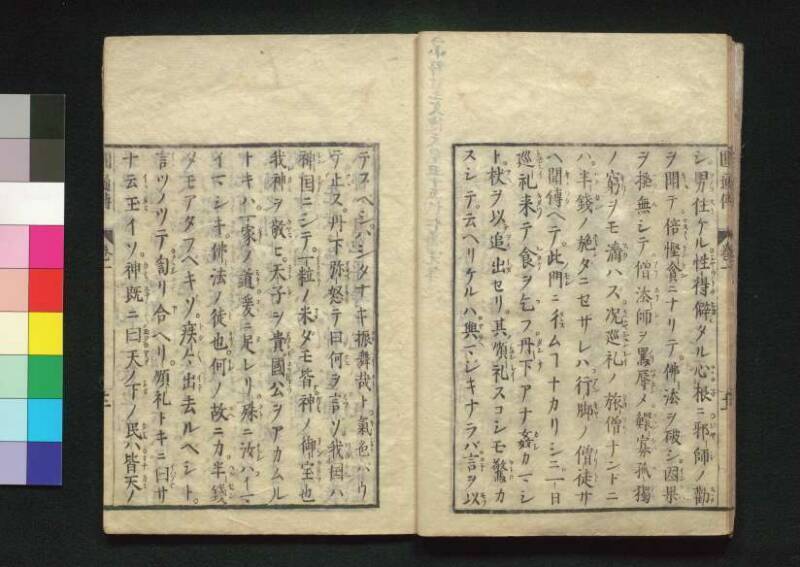
翻刻
【コマ17】
【右丁】
シ。男(ヲノコ)住(スミ)ケル。《振り仮名:性⁻得|シヤウトク》僻(ヒカ)《送り仮名:ミ》タル《振り仮名:心₋根|コヽロネ》ニ。《振り仮名:邪⁻師|ジヤシ》ノ勸(スヽメ)
ヲ聞(キヽ)テ。倍(マス〳〵)《振り仮名:慳⁻貪|ケントン》ニナリテ。佛⁻㳒ヲ破(ハ)シ。因果(インクハ)
ヲ撥無(ハツム)シテ。《振り仮名:僧|ソウ》《振り仮名:㳒⁻師|ホツシ》ヲ罵辱(ノリハツカシ)メ。《振り仮名:鰥⁻寡|クハンクハ》《振り仮名:孤⁻獨|コドク》
ノ窮(キウ)ヲモ濟(スク)#1ハズ。况(イハンヤ)巡礼(シユンレイ)ノ《振り仮名:旅⁻僧|リヨソウ》ナンドニ
ハ。《振り仮名:半⁻錢|ハンセン》ノ施(ホトコシ)ダニセザレハ。《振り仮名:行⁻脚|アンキヤ》ノ《振り仮名:僧⁻徒|ソウト》サ
ヘ聞傳(キヽツタ)ヘテ。此 ̄ノ門(モン)ニ彳(タヽス)ムヿナカリシニ。一⁻日
《振り仮名:巡⁻礼|シユンレイ》来(キタツ)テ食(シヨク)ヲ乞(コ)フ。《振り仮名:丹⁻下|タンケ》アナ姦(カシ)カマシ
ト。杖(ツヘ)ヲ以 ̄テ追出(ヲイイダ)セリ。其 ̄ノ《振り仮名:順⁻礼|シユンレイ》スコシモ驚(ヲトロ)カ
スシテ。云ヘリケルハ。與(アタヘ)マジキナラバ。言(コト)ヲ以(モツ)
【左丁】
テスベシ。ハシタナキ振舞哉(フルマイカナ)ト。氣色(キシヨク)バウ
テ止(ヤマ)ス。丹⁻下《振り仮名: 弥₋怒|イヨ〳〵イカリ》テ曰 ̄ク何(ナニ)ヲ言(イフ)ゾ。《振り仮名:我₋国|ワカクニ》ハ
《振り仮名:神⁻国|シンコク》ニシテ。《振り仮名:一⁻粒|イチリウ》ノ米(コメ)ダモ皆 ̄ナ。神(カミ)ノ《振り仮名:御₋宝|ヲンタカラ》也
我 ̄レ神(カミ)ヲ敬(ウヤマ)ヒ。《振り仮名:天⁻子|テンシ》ヲ貴(タツトヒ)。《振り仮名:國⁻公|コツコウ》ヲアガムル
トキハ。《振り仮名:一⁻家| ケ》ノ道(ミチ)。爰(コヽ)ニ足(タ)レリ。殊(コト)ニ汝(ナンシ)ハ。イマ
イマシキ。佛⁻法ノ徒(ト)也(ナリ)。何(ナン)ノ故(ユヘ)ニカ。《振り仮名:半⁻錢|ハンセン》
タモアタフベキゾ。《振り仮名:疾⁻々|トク 〳〵》出(イテ)去ルベシト。
言(イヽ)ツノツテ。訇(ノヽシ)リ合(ア)ヘリ。順⁻礼トキニ曰(イハク)。サ
ナ云玉(イヽタマ)イソ。神(カミ)既(ステ)ニ曰(ノ玉ク)。天(アメ)ノ下(シタ)ノ民(タミ)ハ。皆(ミナ)天(カミ)ノ
現代語訳
【右丁】
という男が住んでいた。生まれつき歪んだ心根に、邪師(よこしまな師)の勧めを聞いて、ますます慳貪(けちで欲深いこと)になり、仏法を破り、因果を撥無(否定)して、僧・法師を罵り恥辱し、鰥寡孤独(身寄りのない者・孤独な者)の窮乏をも救わなかった。ましてや巡礼の旅僧などには、半銭の施しすらしなかったため、行脚の僧徒でさえもそれを聞き伝えて、この門に立ち止まる者がいなかった。ところがある日、巡礼がやってきて食を乞うた。丹下は「やかましい」と、杖をもって追い出した。その巡礼はまったく驚く様子もなく、言いけるは、「与えまいというならば、言葉をもってすべきことである。無礼な振る舞いよ」と、気色ばんで(憤然として)止まなかった。
【左丁】
丹下はいよいよ怒りて曰く、「何を言うか。我が国は神国にして、一粒の米でさえも、みな神の御宝である。我れ神を敬い、天子を貴び、国公を崇めるときは、一家の道、ここに足れり。とりわけ汝は忌々しき仏法の徒である。何ゆえに半銭たりとも与えるべきか。とっとと出て去るがよい」と、言い募りて罵り合った。巡礼はその時に曰く、「そのようにおっしゃいますな。神もすでにのたまわく、『天の下の民は、みな天(神)の
英語訳
[Right page]
...a man who lived there. His innate disposition was crooked and perverse, and having listened to the promptings of a wicked teacher (*jashi*), he grew ever more miserly and greedy (*kentōn*). He rejected the Buddhist teachings, denied the principle of cause and effect (*inga*), heaped abuse and humiliation upon monks and priests, and refused to relieve the destitution of the widowed, the orphaned, and the solitary poor. To say nothing of giving alms to traveling pilgrim-monks — he would not offer so much as a half-coin — and word of this had spread so thoroughly among wandering monks that not one of them would so much as pause at his gate. However, one day a pilgrim came and begged for food. Tange, crying "What an impertinent nuisance!", drove him away with a staff. The pilgrim showed not the slightest sign of being startled, and said: "If you do not intend to give, you ought to say so with words. What a rude and shameful way to behave!" — and, flushed with indignation, did not let the matter rest.
[Left page]
Tange grew even more furious and declared: "What do you mean by this?! Our land is a divine land (*shinkoku*), and every single grain of rice is a treasure of the gods. When I revere the gods, honor the Emperor (*Tenshi*), and hold the lords of the realm (*kokkō*) in esteem, the way of one's household is perfectly fulfilled right here. Above all, you are a detestable follower of Buddhism. Why in the world should I give you so much as a half-coin?! Be gone with you at once!" — and so they continued to quarrel, trading angry words. The pilgrim then said: "Pray do not speak so. The gods themselves have already declared: 'All the people under heaven are...' "