翻刻
【コマ19】
【右丁】
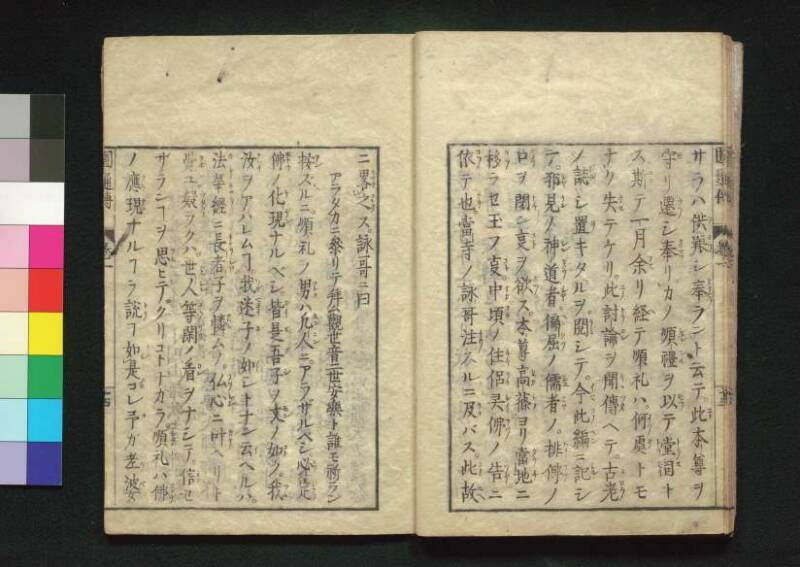
サラハ供羪(クヨウ)シ奉(タテマツ)ラント云テ。此(コノ)本⁻尊󠄁ヲ
守(モ)リ遷(ウツ)シ奉(タテマツ)リ。カノ《振り仮名:順⁻禮|シユンレイ》ヲ以(モツ)テ堂司(トウス|トウモリ )ト
ス。斯(カク)テ一⁻月 余(アマ)リ経(ヘ)テ順⁻礼ハ。何處(イヅク)トモ
ナク失(ウセ)テケリ。此(コノ)《振り仮名:討⁻論|トウロン》ヲ聞傳(キヽツタ)ヘテ。古老(コロウ)
ノ誌(シル)シ置(ヲ)キタルヲ。閱(ケミ)シテ。今(イマ)此編(コノヘン)ニ記(シル)シ
テ。邪見(シヤケン)ノ《振り仮名:神⁻道⁻者|シンタウシヤ》。《振り仮名:偏⁻屈|ヘンクツ》ノ儒者(シユシヤ)ノ。排佛(ハイブツ)ノ
口(クチ)ヲ閉(トチ)ン㕝(コト)ヲ欲(ホツ)ス。本⁻尊 《振り仮名:高⁻篠|タカシノ》ヨリ《振り仮名:當⁻地|タウチ》ニ
移(ウツ)ラセ玉フ㕝(コト)。中頃(ナカコロ)ノ住侶(チウリヨ)㚑佛(レイフツ)ノ告(ツゲ)ニ
依(ヨツ)テ也(ナリ)。當⁻寺ノ詠⁻哥 注(チウ)スルニ及(ヲヨ)バス。此故(コノユヘ)
【左丁】
ニ《振り仮名:畧_レ之|リヤク コレヲ》ス。詠哥ニ曰
アラタカニ参リテ拜ム觀世音二世安樂ト誰モ祈ラン
按(アン)ズルニ。順⁻礼ノ男(ヲトコ)ハ《振り仮名:凢⁻人|ホンニン》ニ。アラザルベシ。《振り仮名:必⁻定|ヒツジヤウ》
佛(ホトケ)ノ《振り仮名:化⁻現|ケゲン》ナルベシ。皆是吾子(カイゼゴシ)ノ文(モン)ノ如(コト)ク。我(ワレ)
汝(ナンヂ)ヲアハレムヿ。我(ワガ)迷子(マヨイゴ)ノ如(ゴト)シトナン云(イ)ヘルハ。
法蕐經(ホケキヤウ)ニ《振り仮名:長⁻者⁻子|チヤウシヤ 》ヲ憐(アハレ)ムノ。仏心(フツシン)ニ叶(カナ)ヘリト
覺(ヲボ)ユ。疑(ウタガフ)ラクハ。《振り仮名:世⁻人|セシン》等閑(ナラザリ)ノ看(カン)ヲナシテ。信(シン)ゼ
ザランヿヲ思(ヲモ)ヒテ。クリコトナガラ。《振り仮名:順⁻礼|シユンレイ》ハ佛(ホトケ)
ノ應現(ヲウケン)ナルヿヲ說(トク)ヿ如 ̄シ_レ是 ̄ノ。コレ予(ヨ)ガ老婆(ラウバ)
現代語訳
【右丁】
「それでは供養し奉らん」と言って、この本尊をお守りし遷し奉り、かの巡礼をもって堂司(堂守)とした。こうして一ヶ月余りが経つと、巡礼はいずこともなく姿を消してしまった。この(丹下との)討論を聞き伝えて、古老が書き記し置いたものを閲覧して、今この編に記し、邪見の神道者・偏屈な儒者の排仏の口を閉じさせんことを欲する。本尊が高篠よりこの当地へ移られたことは、中頃の住侶が霊仏のお告げによるものである。当寺の詠歌はここに注するには及ばない。この故に
【左丁】
これを略す。詠歌に曰く、
あらたかに参りて拝む観世音 二世安楽と誰も祈らん
按ずるに、巡礼の男は凡人ではあるまい。必定、仏の化現であるべし。「皆是吾子(みなこれわがこ)」の文のごとく、「われ、汝をあわれむこと、わが迷子のごとし」と言えるは、法華経に長者子を憐れむ仏心に叶えりと覚ゆ。疑うらくは、世人が等閑(なおざり)の見をなして信じないだろうことを思いて、くりこと(繰り言)ながら、巡礼は仏の応現であることを説くこと、かくのごとし。これ予が老婆
英語訳
[Right page]
"Then I shall make offerings in worship," he declared, and took care to enshrine and transfer this principal image (*honzon*), appointing that very pilgrim as the temple warden (*tōsu* / *tōmori*). And so, after a little more than a month had passed, the pilgrim vanished, without a trace of where he had gone. This debate (*tōron*) was handed down by oral transmission, and the author has here consulted the written records set down by elders of old, and now records it in this volume, with the desire to silence the anti-Buddhist (*haibutsu*) arguments of narrow-minded Shintō adherents and obstinate Confucianists. As for the matter of the principal image having been moved from Takashino to this present location — this came about in the middle period, through a revelation (*tsuge*) from the sacred Buddha. As for the devotional verse (*eika*) of this temple, there is no need to annotate it here. For this reason,
[Left page]
it is omitted. The devotional verse reads:
*Arataka ni mairi te ogamu Kanzeon — Nise anraku to dare mo inoran*
(Visiting with fervent faith and bowing in worship before Kanzeon — all shall pray for peace and ease in this world and the next.)
Upon reflection, the man who was the pilgrim could not have been an ordinary person. He was most certainly a manifestation (*kegen*) of the Buddha. His words — "I look upon you with compassion, as though you were a lost child of my own" — just as in the passage "all sentient beings are every one of them my children" (*kaize goshi*), seem to me perfectly in accord with the Buddha-mind (*busshin*) that takes pity on the son of the elder (*chōjashi*) in the Lotus Sutra. Fearing that people of the world might cast a careless eye upon this tale and refuse to believe it, I repeat myself (*kurikoto*) in explaining that the pilgrim was a manifestation (*ōken*) of the Buddha, as described above. This is the old woman's