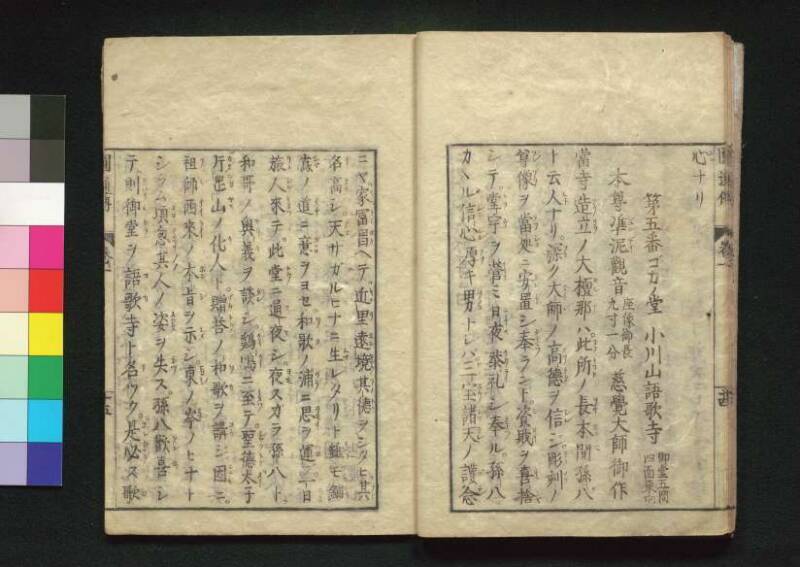
翻刻
【コマ20】
【右丁】
心(シン)ナリ
第五番ゴカノ堂 小川山語歌寺《割書:御堂五間|四面東向》
本尊󠄁 凖泥觀音(シユンデイ )《割書:𫝶像御長|九寸一分》 慈覺大師御作
當寺《振り仮名:造⁻立|ゾウリウ》ノ《振り仮名:大檀⁻那| タンナ》ハ。此所(コノトコロ)ノ長(ヲサ)《振り仮名:本⁻間孫⁻八|ホンマ 》
ト云 人(ヒト)ナリ。深(フカ)ク《振り仮名:大⁻師|ダイシ》ノ《振り仮名:高⁻德|コウトク》ヲ信(シン)ジ。《振り仮名:彫𠜇|テウコク》ノ
《振り仮名:尊󠄁像|ソンゾウ》ヲ《振り仮名:當⁻処|タウシヨ》ニ《振り仮名:安⁻置|アンヂ》シ奉(タテマツ)ラント。《振り仮名:資⁻財|シサイ》ヲ《振り仮名:喜⁻捨|キシヤ》
シテ。《振り仮名:堂⁻宇|トウウ》ヲ營(イトナ)ミ《振り仮名:日⁻夜|ニチヤ》《振り仮名:恭⁻礼|ケウライ》シ奉(タテマツ)ル。孫⁻八
カヽル《振り仮名:信⁻心|シンジン》厚(アツ)キ男(ヲノコ)ナレバ。《振り仮名:三⁻宝諸⁻天|サンホウシヨテン》ノ護念(ゴネン)
【左丁】
ニヤ。家(イヘ)富昌(トミサカ)ヘテ。《振り仮名:近⁻里|キンリ》《振り仮名:遠⁻境|ヱンキヤウ》《振り仮名:其₋德|ソノトク》ヲシタヒ。其(ソノ)
名(ナ)高(タカ)シ。天(アマ)サガルヒナニ生(ムマ)レタリト𨿽(イヘト)モ。鋪(シキ)
嶌(シマ)ノ道(ミチ)ニ意(コヽロ)ヲヨセ。和歌(ワカ)ノ浦(ウラ)ニ思(ヲモイ)ヲ運(ハヨ)ブ。一⁻日
旅人(リヨジン)來(キタツ)テ。此堂( トウ)ニ《振り仮名:通⁻夜|ツヤ》シ。夜(ヨモ)スガラ孫⁻八ト。
和哥ノ《振り仮名:奥⁻義|ヲウギ》ヲ談(ダン)シ。《振り仮名:鷄⁻鳴|ケイメイ》ニ至(イタツ)テ。聖徳太子(シヤウトクタイ )
《振り仮名:片₋罡₋山|カタヲカヤマ》ノ化人(ケ )ト。《振り仮名:贈⁻荅|ゾウトウ》ノ和歌(ワカ)ヲ講(コウ)ジ。因(チナミ)ニ。
祖師(ソシ)西來(サイライ)ノ本㫖(ホンシ)ヲ示(シメ)シ。東(ヒカシ)ノ岑(ミネ)ノヒナト
シラム頃(コロ)。忽(タチマチ)其人(ノノ )ノ姿(スカタ)ヲ失(シツ)ス。孫八 勸喜(クハンキ)シ
テ。則(スナハチ)御堂(ミトウ)ヲ語歌寺(コカ )ト名(ナ)ツク。是(コレ)必(カナラ)ス歌(カ)
現代語訳
【右丁】
(これ予が老婆)心なり
第五番の堂 小川山語歌寺《割書:御堂五間、四面東向》
本尊 准胝観音《割書:𫝶像、御長九寸一分》 慈覚大師御作
当寺造立の大檀那は、この所の長(おさ)、本間孫八という人である。深く大師の高徳を信じ、彫刻の尊像をこの当処に安置し奉らんとて、資財を喜捨して堂宇を営み、日夜恭礼し奉る。孫八はかかる信心の厚い男であるので、三宝・諸天の護念
【左丁】
によってか、家は富み栄えて、近里・遠境よりその徳を慕い、その名は高かった。「天下る鄙(ひな)に生まれたり」とはいえども、敷島の道に心を寄せ、和歌の浦に思いを運ぶ。ある日、旅人がやって来て、この堂に通夜し、夜もすがら孫八と和歌の奥義を談じ、鶏鳴に至って、聖徳太子と片岡山の化人(けにん)との贈答の和歌を講じ、ついで祖師西来の本旨を示し、東の峰がほのかに白む頃、たちまちその人の姿を消した。孫八は歓喜して、すなわち御堂を「語歌寺(ごかでら)」と名付けた。これは必ず歌(か)
英語訳
[Right page]
(This is the old woman's) sentiment of mine.
The Fifth Temple Ogawa-zan Goka-ji (*The hall measures five ken on a side, faces east on all four sides*)
Principal Image: Junrei Kannon (*Cundi Kannon*) (*Sculptured image, height nine sun one bu*) — Carved by the Great Master Jikaku
The chief patron (*daidan'na*) who founded this temple was the headman (*osa*) of this place, a man by the name of Honma Mōhachi [Mago-hachi]. Deeply believing in the eminent virtue of the Great Master [Jikaku Daishi], he donated his wealth (*kishu*) with a joyful heart in order to enshrine the carved sacred image here, built the temple hall, and paid reverent homage (*kyōrei*) to it day and night. Because Mago-hachi was a man of such profound faith, through the protective blessing (*gonen*) of the Three Treasures and the heavenly deities,
[Left page]
his household prospered and flourished, and people from near and far came to admire his virtue, so that his name became widely known. Although he was born in a rustic place "far from the capital," he devoted his heart to the Way of Shikishima (the art of Japanese poetry), and turned his thoughts toward the Bay of Waka (the realm of *waka* poetry). One day, a traveler came and spent the night (*tsuya*) in this hall, discussing the profound mysteries (*ōgi*) of *waka* poetry with Mago-hachi throughout the night. As the cock began to crow, he discoursed on the exchange of poems between Prince Shōtoku and the beggar of Kataokazan [the mysterious figure on Kataoka Hill], and then revealed the fundamental intent (*honshi*) of the Patriarch's coming from the West. When the eastern peaks began to grow faintly light, the man's figure suddenly vanished. Mago-hachi was overcome with joy and wonder, and thereupon named the hall "Goka-ji" (Temple of Recited Song). This was certainly because of the poem (*ka*) —