翻刻
【コマ21】
【右丁】
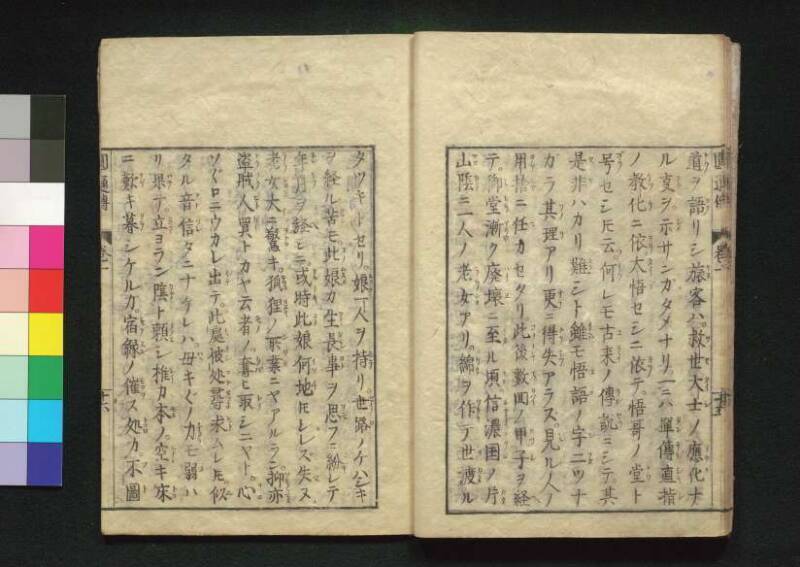
道(ドウ)ヲ語(カタ)リシ旅客(リヨ )ハ。《振り仮名:救⁻世大⁻士|クセタイシ》ノ《振り仮名:應⁻化|ヲウケ》ナ
ル㕝(コト)ヲ。示(シメ)サンガタメナリ。一ニハ單傳直指(タンテンシキシ)
ノ《振り仮名:教⁻化|ケウケ》ニ依(ヨリ)。《振り仮名:大⁻悟|タイゴ》セシニ依(ヨツ)テ。悟哥ノ堂(トウ)ト
号(ゴウ)セシ𪜈云 ̄フ。何(イツ)レモ古来(コライ)ノ傳說(テンセツ)ニシテ。其
是非(セヒ)ハカリ難(カタ)シト𨿽(イヘド)モ悟語(ココ)ノ字(シ)二(フタ)ツナ
ガラ其理(ソノリ)アリ更(サラ)ニ得失(トクシツ)アラズ。見(ミ)ル人ノ
《振り仮名:用⁻捨|ヨウシヤ》ニ任(マ)カセタリ。此後(コノノチ)數囬(スクハイ)ノ甲子(カツシ)ヲ経(ヘ)
テ。御堂(ミトウ)漸(ヤウヤ)ク廃壞(ハイヱ)ニ至(イタ)ル頃(コロ)。信濃国(シナノヽクニ)ノ片(カタ)
山陰(ヤマカケ)ニ一人ノ老女(ラウシヨ)アリ。綿(ワタ)ヲ作(ツクリ)テ世渡(ヨワタ)ル
【左丁】
タツキトセリ。娘(ムスメ)一⁻人ヲ持(モテ)リ。世路(セイロ)ノケハシキ
ヲ経ル苦(クルシ)モ。此娘(コノムスメ)カ生長事(ヲイタシコト)ヲ思(ヲモ)フニ紛(マキ)レテ
《振り仮名:年⁻月|ネンケツ》ヲ経(ヘ)シニ。或時(アルトキ)此娘(コノ )何地(イツチ)𪜈シレズ失(ウセ)ヌ。
《振り仮名:老⁻女|ラウジヨ》大《送り仮名:イ》ニ驚(ヲトロ)キ。狐狸(キツネタヌキ)ノ所業(シワサ)ニヤアルラン。抑(ソモ〳〵)亦(マタ)
《振り仮名:盗⁻賊|トウソク》《振り仮名:人⁻買|ヒトカイ》トカヤ云 者(モノ)ノ。奪(ウバ)ヒ取(トリ)シニヤト。《振り仮名:心|コ□ロ》
ソ〴〵ロニウカレ出(イテ)テ。《振り仮名:此₋處彼₋處|コ ヽ カシコト》尋求(タツネモト)ムレ𪜈。似(ニ)
タル音信(ヲトツレ)タニナケレハ。母(ハヽ)キヾノ力(チカラ)モ弱(ヨ)ハ
リ果(ハテ)テ。立(タチ)ヨラン陰(カケ)ト頼(タノミ)シ椎(シイ)カ本(モト)ノ。空(ムナシ)キ床(トコ)
ニ歎(ナゲ)キ暮(クラ)シケルガ。宿縁(シユクヱン)ノ催(モヨヲ)ス処(トコロ)カ。《振り仮名:不₋圖|フト》
現代語訳
【右丁】
道を語りし旅客は、救世大士(観世音菩薩)の応化(化身)であることを示さんがためであった。一つには、単伝直指の教化によって大悟したことによって、「悟歌の堂」と号したとも言う。いずれも古来の伝説であって、その是非は判じ難いとはいえども、「悟」と「語」の字、二つながらにそれぞれの理(ことわり)があり、さらに得失(優劣)はない。見る人の判断に任せたり。この後、数回の甲子(六十年)を経て、御堂がようやく廃壊に至る頃、信濃国のある山陰に一人の老女あり。綿を作って世を渡る
【左丁】
生業(なりわい)としていた。娘一人を持っていた。世路の険しさを経る苦しさも、この娘が成長することを思うにまぎれて、年月を経てきたが、ある時、この娘がどこへとも知れず失せてしまった。老女は大いに驚き、「狐狸の仕業であろうか、それとも盗賊・人買いとかいう者が奪い取ったのではないか」と、心はそぞろに浮かれ出て、あちこちと尋ね求めれども、似たような便りすらなければ、母は気力も弱り果てて、立ち寄るべき陰と頼みにした椎の木の根元の、空しき床(ところ)に嘆き暮らしていたが、宿縁の催すところか、ふと
英語訳
[Right page]
The traveler who had discoursed on the Way was an emanation (*ōke*, manifestation in this world) of Kuze Daishi (Kanzeon Bodhisattva, the Bodhisattva Who Saves the World), appearing in order to make this known. According to one account, the hall was named "Goka" (Temple of Enlightened Song) because [Mago-hachi] attained great enlightenment (*taigo*) through the direct teaching of single transmission (*tanden jikishi*). Both of these are ancient traditions, and though it is difficult to determine which is correct, both the characters "悟" (enlightenment/awakening) and "語" (speech/discourse) each carry their own meaning and logic, and there is no superiority or inferiority between them. The matter is left to the judgment of the reader. After this, several cycles of *kinoe-ne* (sixty-year periods) passed, and around the time when the hall had gradually fallen into ruin, in a mountain hollow in Shinano Province there lived an old woman. She made her living by cultivating cotton,
[Left page]
and supported herself thereby. She had one daughter. The hardships of life's difficult road were somehow borne by losing herself in thoughts of her daughter's growth, and so the years and months passed. But one day, the daughter disappeared without a trace, to no one knew where. The old woman was greatly alarmed, thinking: "Could this be the work of foxes and tanuki? Or perhaps thieves and slave traders have carried her off?" Her heart in turmoil, she wandered about searching here and there, but not even a rumor resembling any news of her could be found. The mother's strength and spirit grew utterly exhausted, and she spent her days lamenting, lying on the empty ground beneath a *shii* (chinquapin) tree — the very tree she had relied upon as shade and shelter. Then, perhaps stirred by the karmic bonds of a former life, she suddenly —