翻刻
【コマ23】
【右丁】
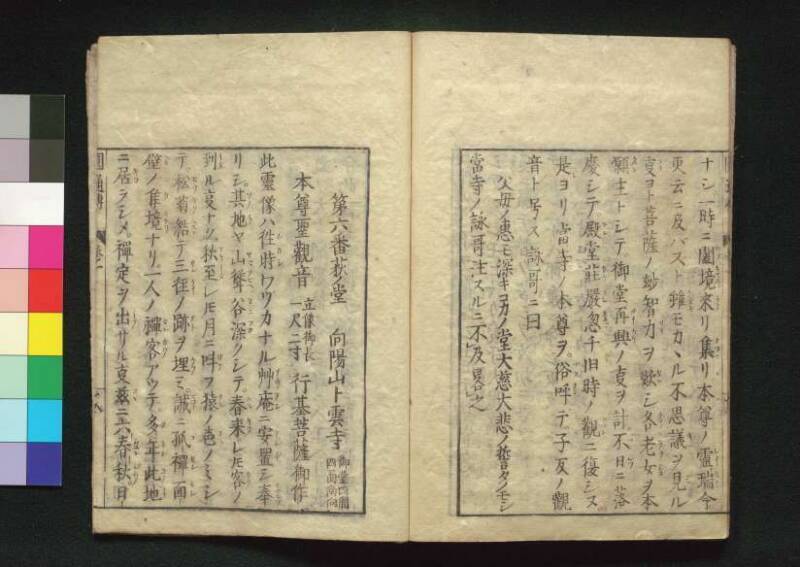
ナシ。一⁻時ニ闔境(カツキヤウ)來(キタ)リ集(アツマ)リ本⁻尊󠄁ノ《振り仮名:靈⁻瑞|レイスイ》今₋
更云ニ及バズト𨿽(イヘトモ)モ。力ヽル不思議( キ)ヲ見(ミ)ル
㕝(コト)ヨト。菩薩ノ玅智力(ミヤウ リキ)ヲ歎(タン)シ。各(ヲノ〳〵)老女(ラウシヨ)ヲ本
願主(クハン )トシテ。御堂 再興(サイカウ)ノ㕝ヲ計。不日(フシツ)ニ落
慶シテ。殿堂(テン )莊嚴(セウゴン)忽(タチマ)チ旧時ノ觀(クハン)ニ復シヌ。
是《送り仮名:レ》ヨリ當寺ノ本尊󠄁ヲ。俗呼(ゾクヨン)デ。子反ノ觀
音ト号ス詠哥ニ曰
父母ノ惠モ深キコカノ堂大慈大悲ノ誓タノモシ
當寺ノ詠哥注スルニ不_レ及畧_レ之
【左丁】
第六番荻ノ堂 向陽山卜雲寺《割書:御堂四間|四面南向》
本尊󠄁聖觀音《割書:立像御長|一尺二寸》 行基菩薩御作
此靈像ハ往時(ムカシ)ワヅカナル艸庵(ソウアン)ニ安置(アンヂ)シ奉(タテマツ)
リシ。其地(ソノチ)ヤ山聳谷深(ヤマソビヘタニフカ)クシテ。春来(ハルキタ)レ𪜈客(カク)ノ
到(イタ)ル㕝ナク。秋至(アキイタ)レ𪜈月ニ呌(サケ)フ猿(サル)ノ声(コヘ)ノミシ
テ。松菊(セウキク)結(ムスン)デ三徑(サンケイ)ノ跡(アト)ヲ埋(ウツ)ミ。誠(マコト)ニ《振り仮名:孤⁻禪|コセン》《振り仮名:面⁻|メン 》
壁(ヘキ)ノ《振り仮名:佳⁻境|カキヤウ》ナリ。一人ノ禪客(センカク)アツテ。多年(タネン)此地(コノチ)
ニ居(キヨ)ヲシメ。禪定ヲ出(イテ)ザル㕝 兹(コヽ)ニ《振り仮名:六⁻春⁻秋| シユンジウ》。日⁻
現代語訳
【右丁】
なし。一時に村中(かっきょう)の人々が来たり集まり、本尊の霊瑞は今さら申すまでもないとはいえ、かくも不思議なることを目の当たりにしたと、菩薩の妙智力を嘆称し、各々が老女を本願主として御堂再興のことを計り、程なくして落慶して、殿堂の荘厳はたちまちにして旧時の観に復した。これより当寺の本尊を、俗に呼んで「子返しの観音」と号す。詠歌に曰く、
父母の恵も深きこかの堂 大慈大悲の誓たのもし
当寺の詠歌は注するに及ばず、これを略す。
【左丁】
第六番 荻の堂 向陽山卜雲寺 (御堂 四間四面 南向き)
本尊 聖観音(立像 御長一尺二寸) 行基菩薩御作
この霊像は往時、わずかな草庵に安置申し上げていた。その地たるや、山聳え谷深くして、春来たれど客の到ることなく、秋至れど月に叫ぶ猿の声のみして、松や菊が結んで三径の跡を埋め、まことに孤禅・面壁の佳境なり。一人の禅客ありて、多年この地に居を占め、禅定を出ざること、ここに六春秋。日々――
英語訳
[Right page]
— and in an instant the entire community (*kakkō*) came together, and although the miraculous efficacy of the principal image was already beyond question, marveling that they had witnessed such an extraordinary wonder, they praised the Bodhisattva's wondrous power of wisdom. Together, they appointed the old woman as the chief patron (*honganzu*) and made plans to rebuild the hall. Before long the dedication ceremony was held, and the splendor of the hall was instantly restored to its former glory. From this time on, the principal image of this temple was popularly known as "Kogaeshi Kannon" — the Kannon Who Returns Children. The verse of praise (*eika*) reads:
*Chichi haha no / megumi mo fukaki / koka no dō / daiji daihi no / chikai tanomoshi*
(How deep the blessings of father and mother at this hall of returned children — how reassuring is the vow of great mercy and great compassion!)
The explanatory note for this temple's verse of praise is omitted here.
[Left page]
**The Sixth Sacred Site: Hagi no Dō — Kōyōzan Bokunji** *(The hall measures four *ken* on each of four sides, facing south)*
Principal Image: Shō Kannon *(standing image, height one *shaku* two *sun*)* — Carved by the Bodhisattva Gyōki
This sacred image was, in former times, enshrined in a small hermitage of grass and thatch. The location was such that the mountains soared high and the valleys plunged deep; though spring came, no visitors arrived; though autumn came, there was nothing but the sound of monkeys crying at the moon. Pine and chrysanthemum grew thick, burying the traces of the three garden paths, and it was truly a place of ideal seclusion for solitary Zen practice and wall-gazing meditation (*kōzen menpeki*). There was a single Zen practitioner who had taken up residence in this place for many years, not emerging from meditation — and this for six full springs and autumns. Day after day —