翻刻
【コマ24】
【右丁】
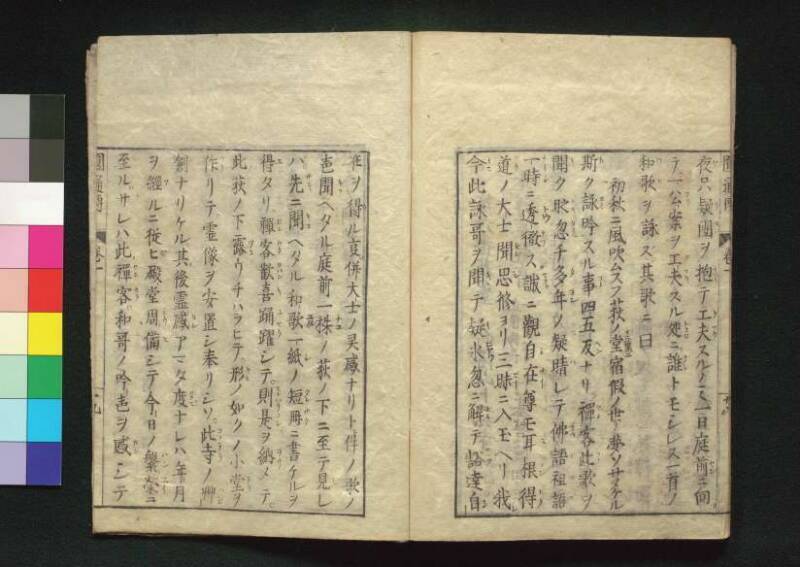
夜(ヤ)只 疑團(ギタン)ヲ《振り仮名:抱󠄁|イタイ》テ工夫(クフウ)スルノミ。一日 庭前( セン)ニ向 ̄ツ
テ。《振り仮名:一⁻公⁻案| コウ 》ヲ《振り仮名:工⁻夫|クフウ》スル処(トコロ)ニ。誰(タレ)トモシレス一首ノ
和歌(ワカ)ヲ詠ズ。其歌ニ曰
初秋ニ風吹ムスフ荻ノ堂(イニ葉ニ)宿假ノ世ノ夢ソサメケル
斯(カ)ク詠吟(ヱイ )スル事(コト)《振り仮名:四⁻五⁻反| ヘン》ナリ。禪客(セン )此歌(コノ )ヲ
聞(キ)ク時(トキ)#1忽(タチマ)チ多年(タネン)ノ疑 晴(ハ)レテ佛語(フツゴ)祖語(ソゴ)
《振り仮名:一⁻時|イチシ》ニ《振り仮名:透⁻徹|トウテツ》ス。誠(マコト)ニ《振り仮名:觀自在尊󠄁| シサイ 》モ耳根(ニコン)得(トク)
道(ドウ)ノ大⁻士 聞思修(モンシ )ヨリ三昧( マイ)ニ入 ̄リ玉ヘリ我 ̄レ
今(イマ)此詠哥ヲ聞(キヽ)テ疑氷(キヒヤウ)忽ニ解(トケ)テ豁達(クハツ )《振り仮名:自⁻|シ 》
【左丁】
在ヲ得(ウ)ル㕝。併大⁻士ノ㚑感ナリト。件ノ歌ノ
声 聞(キコ)ヘタル。庭前 一株( チユ| エダ )ノ荻ノ下ニ至テ見(ミ)レ
バ。先(サキ)ニ聞(キコ)ヘタル和⁻歌《振り仮名:一⁻紙| シ》ノ《振り仮名:短⁻冊|タンサク》ニ書ケルヲ
得(ヱ)タリ。禪客(センカク)歡喜踊躍(クハンキユヤウ)シテ。則(ストハチ)是(コレ)ヲ納(ヲサ)メテ。
此 ̄ノ荻ノ下露( ツユ)ウチハラヒテ。形(カタ)ノ如クノ小堂( トウ)ヲ
作(ツク)リテ。霊像ヲ安置シ奉リシソ。此寺(コノテラ)ノ《振り仮名:艸⁻|ハジ 》
創(メ)ナリケル。其 ̄ノ後《振り仮名:霊⁻感| カン》アマタ度(タビ)ナレハ。年⁻月
ヲ經(フ)ルニ従ヒ殿⁻堂《振り仮名:周⁻備|シウヒ》シテ今⁻日ノ《振り仮名:繁⁻營|ハンヱイ》ニ
至ル。サレハ此 ̄ノ禪客(センカク)。和哥ノ吟⁻声ヲ感(カン)シテ
現代語訳
【右丁】
夜ただ疑団を抱きて工夫するのみ。ある日、庭前に向かって一つの公案を工夫するところに、誰とも知れず一首の和歌を詠ずる声あり。その歌に曰く、
初秋に風吹き結ぶ荻の堂 葉に宿仮の世の夢ぞ覚めける
かく詠吟すること四、五反なり。禅客この歌を聞く時、たちまちに多年の疑い晴れて、仏語・祖語、一時に透徹す。まことに観自在尊も、耳根得道の大士として、聞・思・修より三昧に入り給えり。我れ今この詠歌を聞きて、疑氷たちまちに解けて豁達
【左丁】
自在を得ること、併せて大士の霊感なりと。件の歌の声聞こえたる、庭前一株の荻の下に至りて見れば、先に聞こえたる和歌が一紙の短冊に書けるを得たり。禅客、歓喜踊躍して、すなわちこれを納めて、この荻の下の露を打ち払いて、形のごとくの小堂を作りて、霊像を安置し奉りしぞ。この寺の草創なりける。その後、霊感あまた度なれば、年月を経るに従い殿堂周備して、今日の繁栄に至る。されば、この禅客、和歌の吟声を感じて――
英語訳
[Right page]
— night and day, he did nothing but hold fast to his *gidan* (ball of doubt) and apply himself to *kūfu* (meditative effort). One day, as he was working on a *kōan* while facing the garden, a voice — he knew not whose — recited a waka poem. The poem read:
*Hatsuaki ni / kaze fuki musubu / ogi no dō / ha ni yado kari no / yo no yume zo samekeru*
(In early autumn, the wind blows and binds together the reeds of the hall — upon the leaves, the dream of this temporary world of lodging is at last awakened from.)
This poem was chanted four or five times. The moment the Zen practitioner heard this poem, many years of doubt instantly cleared away, and both the words of the Buddha and the words of the patriarchs pierced through him all at once. Indeed, even Kanzizai (Avalokiteśvara), as the great bodhisattva who attained the Way through the faculty of hearing, entered samādhi through the process of hearing, contemplating, and practicing. "Now I, having heard this verse, have had the ice of my doubt instantly melt, and have attained unobstructed
[Left page]
freedom — and this, too, is the miraculous inspiration of the Great Bodhisattva." Following the direction from which the voice of the poem had come, he went to the base of a single stalk of *ogi* (reed grass) in the garden and found, written on a *tanzaku* (poem slip) on a single sheet of paper, the very waka that he had just heard. The Zen practitioner leapt for joy, and straightaway preserved this slip. He then swept away the dew from beneath this reed grass, built a small hall of fitting form, and enshrined the sacred image therein. This was the founding of the temple. Thereafter, miraculous efficacies occurred many times over, and as the years and months passed, the hall and buildings grew to full completion, arriving at the flourishing state of today. Thus, this Zen practitioner, moved by the sound of the chanted poem —