翻刻
【コマ25】
【右丁】
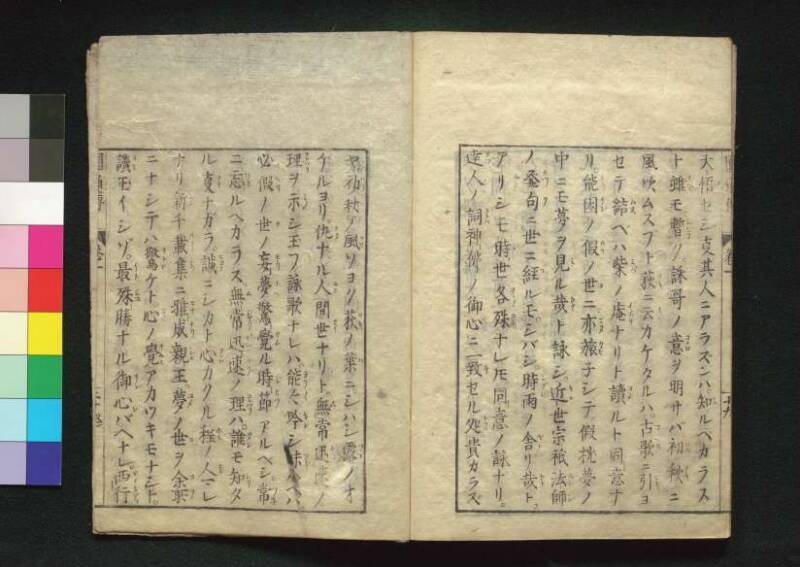
《振り仮名:大⁻悟| コ》セシ㕝。其人ニアラズンハ。知(シ)ルベカラス
ト《振り仮名:𨿽|イヘト》モ。暫(シハラ)ク。詠哥ノ意(コヽロ)ヲ明サバ。初秋(ハツアキ)ニ
風吹ムスブト荻(ヲキ)ニ云(イヽ)カケタルハ。古歌(コカ)ニ引(ヒキ)ヨ
セテ結(ムス)ベハ柴(シバ)ノ庵(イホリ)ナリト。讀(ヨメ)ルト同⁻意ナ
リ。能因(ノウイン)ノ假(カリ)ノ世(ヨ)ニ。亦(マタ)旅(タヒ)ネシテ。假枕夢ノ
中ニモ夢ヲ見(ミ)ル哉(カナ)ト詠シ。《振り仮名:近⁻世|キン 》《振り仮名:宗⁻祇法⁻師| ホウシ》
ノ発句(ホツク)ニ世ニ經(フ)ルモ。シバシ。時雨(シグレ)ノ舎(ヤト)リ哉(カナ)ト。
アリシモ。《振り仮名:時⁻世|ジ 》各(ヲノ〳〵)殊(コト)ナレ𪜈。同⁻意ノ詠ナリ。
《振り仮名:達人|タツ 》ノ詞(コトハ)神⁻佛ノ御心ニ一致( チ)セル処(トコロ)。貴カラズ
【左丁】
ヤ。初秋(ハツ )ノ風(カセ)ソヨク荻(ヲキ)ノ葉(ハ)ニ。シハシ露(ツユ)ノオ
ケルヨリ。仇(アタ)ナル《振り仮名:人間世|ニン セイ》ナリト。《振り仮名:無⁻常|ム 》《振り仮名:迅⁻速|ヂン 》ノ
理(コトハリ)ヲ示(シメ)シ玉フ詠歌ナレハ。能々(ヨク〳〵)吟(キン)シ味(アヂ)ハヘバ。
必 ̄ス假(カリ)ノ世(ヨ)ノ《振り仮名:妄⁻夢|モウム》。《振り仮名:驚₋覚| サム》ル《振り仮名:時⁻節|ジセツ》アルベシ。常(ツネ)
ニ忘(ワス)ルベカラス。《振り仮名:無⁻常|ムジヤウ》《振り仮名:迅⁻速|ヂンソク》ノ理(コトハリ)ハ。誰(タレ)モ知(シリ)タ
ル㕝(コト)ナガラ。誠(マコト)ニシカト心(コヽロ)カクル程(ホト)ノ人(ヒト)マレ
ナリ。新千載集(シン サイシウ)ニ《振り仮名:雅₋成親⁻王|マサナリシン 》。夢(ユメ)ノ世(ヨ)ヲ余所(ヨソ)
ニナシテハ驚(ヲトロ)ケド。心(コヽロ)ノ覺(サムル)アカツキモナシト。
讀(ヨミ)玉イシゾ。最(イト)《振り仮名:殊⁻勝|シユ 》ナル《振り仮名:御心 ̄ロ|ヲン 》バヘナレ。《振り仮名:西⁻行|サイキヤウ》
現代語訳
【右丁】
大悟したこと、その人にあらずんば知るべからずとはいえども、しばらく詠歌の意(こころ)を明らかにすれば――「初秋に風吹き結ぶ荻」と詠みかけたるは、古歌に引き寄せて「結べば柴の庵なり」と詠めるのと同意なり。能因の「仮の世に、また旅寝して、仮枕、夢の中にも夢を見るかな」と詠じ、近世、宗祇法師の発句に「世に経るも しばし、時雨の宿りかな」とありしも、時世それぞれ異なれど、同意の詠なり。達人の言葉が神仏の御心に一致するところ、貴からずやあらめ。
【左丁】
初秋の風そよぐ荻の葉に、しばし露の置けるより、はかなき人間世なりと、無常迅速の理を示し給う詠歌なれば、能々吟じ味わえば、必ず仮の世の妄夢に驚き覚める時節あるべし。常に忘るべからず。無常迅速の理は、誰もが知ったることながら、まことにしかと心を掛くる程の人は稀なり。新千載集に雅成親王が「夢の世を余所になしては驚けど、心の覚むる暁もなし」と詠み給いしぞ、いとも殊勝なる御心ばえなれ。西行――
英語訳
[Right page]
That he attained great enlightenment through this — none but the person himself could truly know. Yet let us briefly illuminate the meaning of the poem. The phrase "in early autumn, the wind blows and binds the reeds (*ogi*)" is a poetic association (*hikiyose*) drawn from an old poem, sharing the same sentiment as "if you bind them together, it becomes a brushwood hermitage." Nōin's verse — "In this transient world, again I sleep in travel, resting on a borrowed pillow; even within a dream I dream another dream" — and the hokku of the monk Sōgi of recent times, "To pass through this world is but a brief lodging in a rain-shower" — though composed in different ages, all share the same sentiment. Is it not noble indeed, the way the words of those who have truly attained mastery accord with the very heart of the gods and buddhas?
[Left page]
In the early autumn wind that rustles softly through the reed leaves, a brief dew settles — and from this image, the poem shows us the truth of the fleeting and illusory nature of human existence, and the swift passage of all things. If one chants and savors it deeply, surely there will come a time when one will be startled awake from the deluded dream of this provisional world. One must never forget this. The truth that all things are impermanent and pass with swift urgency is something everyone knows — and yet those who truly take it genuinely to heart are rare indeed. In the *Shinchokusen-shū* [*New Chokusen Anthology*], Prince Masanari composed the verse: "I am startled when I think of the world as a dream from afar — yet there is no dawn at which my heart truly awakens." How supremely admirable is the spirit of mind expressed therein. Saigyō —