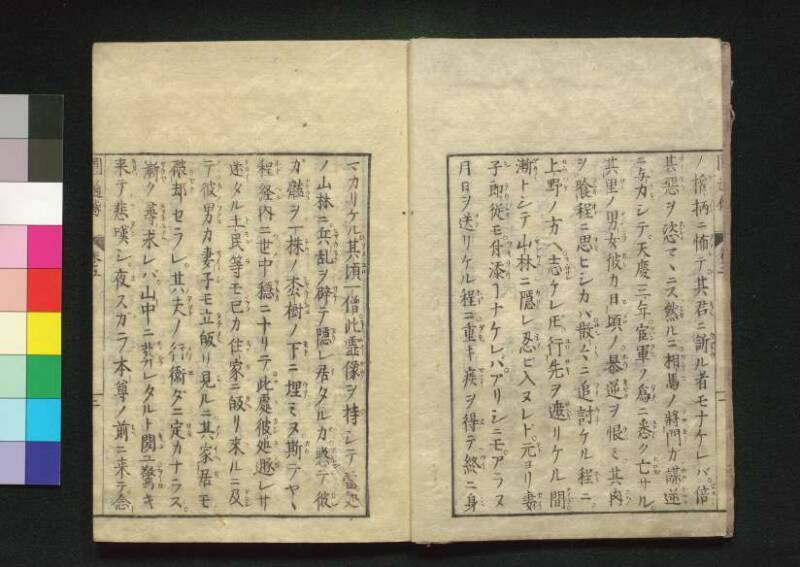
翻刻
【コマ30】
【右丁】
ノ《振り仮名:權⁻抦|ケンヘイ》#1ニ怖(ヲソレ)テ。其 君(キミ)ニ訴(ウツトウ)ル者モナケレバ。倍(マス〳〵)
其惡(ソノアク)ヲ恣(ホシイ)マヽニス。然(シカ)ルニ。《振り仮名:相⁻馬|サウマ》ノ《振り仮名:將₋門|マサカト》ガ。《振り仮名:謀⁻逆|ボウギヤク》
ニ《振り仮名:与⁻力|ヨリキ》シテ。天⁻慶三⁻年。宦軍(クハンクン)ノ爲(タメ)ニ悉(コト〳〵)ク亡(ホロボ)サル。
《振り仮名:其₋里| サト》ノ《振り仮名:男⁻女|ナンニヨ》彼(カレ)カ《振り仮名:日₋頃|ヒゴロ》ノ。暴逆(ホウキヤク)ヲ恨(ウラ)ミ。其肉( ニク)
ヲ《振り仮名:喰₋程|クラウホド》ニ思(ヲモ)ヒシカバ。《振り仮名:散⁻々|サン 〳〵 》ニ追討(ヲイウチ)ケル程(ホト)ニ。
《振り仮名:上₋野|カウツケ》ノ方ヘ。志(コヽロザシ)ケレ𪜈#2。《振り仮名:行₋先|ユクサキ》ヲ遮(サヘギ)リケル間(アイダ)。
漸(ヤウ〳〵)トシテ《振り仮名:山⁻林|サンリン》ニ𨼆(カク)レ忍(シノ)ビ入ヌレド。元(モト)ヨリ《振り仮名:妻⁻|サイ 》
子(シ)《振り仮名:郎⁻従|ラウジウ》モ。付添(ツキソウ)ヿナケレバ。アリシニモ。アラヌ
月日ヲ送(ヲク)リケル程(ホド)ニ。重(ヲモ)キ疾(ヤマイ)ヲ得(ヱ)テ。終(ツイ)ニ身(ミ)
【左丁】
マカリケル。《振り仮名:其₋頃|ソノコロ》一⁻僧。此(コノ)《振り仮名:霊⁻像|レイサウ》ヲ持(ジ)シテ當⁻処
ノ山林ニ。《振り仮名:兵⁻乱|ヒヤウラン》ヲ辟(サケ)テ𨼆(カク)レ居(イ)タルガ。愍(アハレン)デ彼(カレ)
ガ■(ナキカラ)#3ヲ。《振り仮名:一⁻株| チウ》ノ《振り仮名:枩⁻樹|シヤウシユ》ノ下(モト)ニ埋(ウツ)ミヌ。斯(カク)テヤヽ
程(ホド)経(ヘシ)内ニ。世 ̄ノ中 𥡷(ヲタカ)ニナリテ。《振り仮名:此₋處彼₋處|コヽカシコ》遯(ノガ)レサ
迷(マヨイ)タル《振り仮名:土⁻民等|トミンラ》モ。巳(ヲノ)カ《振り仮名:住⁻家|スミカ》ニ皈(カヘ)リ來(ク)ルニ及(ヲヨン)
デ。彼男(カノヲノコ)カ《振り仮名:妻⁻子|サイシ》モ立皈(タチカヘ)リ見(ミ)ルニ。其(ノノ)《振り仮名:家₋居|イヘヰ》モ
《振り仮名:破⁻却|ハキヤク》セラレ。其 ̄ノ夫(ヲツト)ノ行衞(ユクヱ)ダニ定(サタ)カナラズ。
漸(ヤウヤ)ク《振り仮名:尋₋求|タツネモトム》レバ。山⁻中ニ《振り仮名:葬|ホ□ムラ》レタルト聞(キコ)ユ。驚(ヲトロ)キ
来(キタツ)テ。悲嘆(ヒタン)シ。夜(ヨ)スガラ。本⁻尊󠄁ノ前(マヘ)ニ来テ。念⁻
現代語訳
(前頁より続き)その権柄(けんぺい)を恐れて、君主に訴え出る者もいなかったので、ますますその悪事を好き勝手にふるまった。ところが、相馬の将門(平将門)が謀反を起こすと、これに与力して、天慶三年(940年)、官軍によって悉く滅ぼされた。
その里の男女は、彼が日頃行っていた暴逆を恨み、その肉を食らいたいほどに思っていたので、散々に追い討ちをかけた。(その武将は)上野(こうずけ)の方へ逃げようとしたが、行く先を遮られたため、ようやくのことで山林に身を隠し忍び入った。しかし、もとより妻子も郎従(家来)も付き従う者もなく、かつてのような境遇でもなく、むなしく月日を送るうちに、重い病を得て、ついに身まかった(亡くなった)。
その頃、一人の僧が、この霊像を持って当地の山林に兵乱を避けて隠れ住んでいたが、哀れに思い、彼の亡骸を一株の松の木の下に埋めた。こうして、しばらく時が経つうちに、世の中が穏やかになり、あちこちへ逃げ惑っていた土民たちも、それぞれの住処に帰り来るに及んで、あの男の妻子も立ち帰ってみると、その家居も破却されており、夫の行方さえも定かではなかった。ようやく尋ね求めると、山中に葬られたと聞こえてきた。(妻子は)驚き来たって悲嘆し、夜もすがら本尊の前に来て、念(仏を唱え)……
英語訳
(Continued from previous page) People were so afraid of his abuse of power that no one would bring complaints to their lord, and so he grew ever more brazen in his wickedness. However, when Soma no Masakado (Taira no Masakado) raised a rebellion, this man sided with him, and in the third year of Tengyō (940 CE), he was utterly destroyed by the imperial forces.
The men and women of the village had so deeply resented his daily outrages and tyranny that they wished they could devour his very flesh, and so they pursued him mercilessly. He attempted to flee toward Kōzuke province, but his path was cut off. Managing only with great difficulty to hide himself in the mountain forests, he had neither wife, children, nor retainers to accompany him. Living in conditions far removed from his former state, he passed his days in misery until he contracted a grave illness and finally breathed his last.
Around that time, a monk who had been hiding in the mountain forests of that area with this sacred image, seeking refuge from the war, took pity on the man and buried his remains beneath a single pine tree. As time passed, the world gradually grew peaceful again, and the common people who had fled and wandered here and there began returning to their homes. When the dead man's wife and children returned and looked about, they found their home in ruins, and even the whereabouts of the husband were uncertain. After making inquiries, they learned that he had been buried somewhere in the mountains. Shocked, they came and grieved, and throughout the night they came before the principal image of the Buddha and recited nenbutsu prayers…