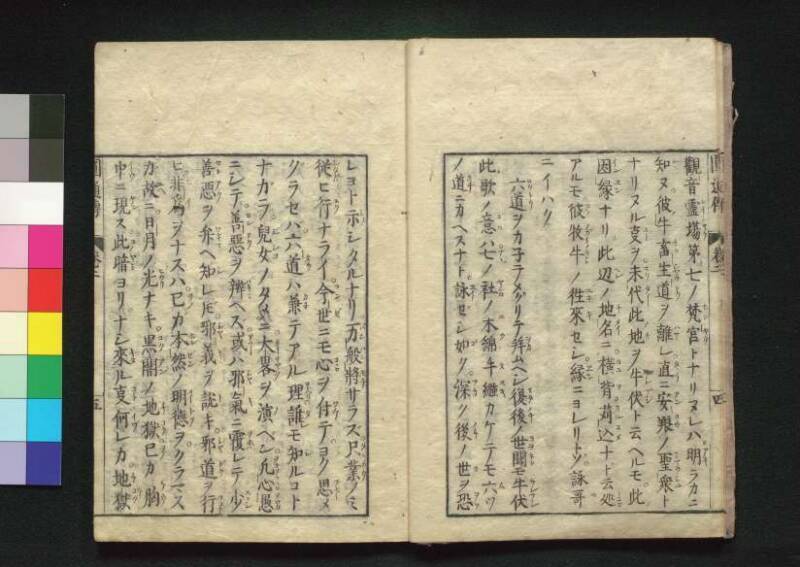
翻刻
【コマ33】
【右丁】
《振り仮名:観⁻音靈⁻塲第⁻七| レイシヤウ 》ノ《振り仮名:梵⁻宮|ホンキウ》トナリヌレバ。明(アキ)ラカニ
知(シン)ヌ。彼 ̄ノ₋牛《振り仮名:畜⁻生⁻道|チクシヤウトウ》ヲ離(ハナ)レ。直(タヽチ)ニ《振り仮名:安⁻羪|アンヨウ》ノ《振り仮名:聖⁻衆|シヤウシユ》ト
ナリヌル㕝(コト)ヲ。《振り仮名:未⁻代|マツタイ》#1此 ̄ノ地(チ)ヲ牛伏(ウシブシ)ト云ヘルモ。此 ̄ノ
《振り仮名:因⁻縁|インヱン》ナリ。此辺( ヘン)ノ《振り仮名:地⁻名|チメイ》ニ。《振り仮名:横₋背|ヨコセ》。《振り仮名:苅₋込|カルコメ》ナド云 処(トコロ)
アルモ。彼(カノ)牧牛(ノガイノウシ)ノ往來(ユキキ)セシ。縁(ヱン)ニヨレリトゾ。詠哥
ニイハク
六道(ロクトウ)ヲカネテメグリテ拜(ヲカ)ムヘシ復(マタ)後(ノチ)ノ世(ヨヲ)聞(キク)モ牛伏(ウシフシ)
此歌 ̄ノ《振り仮名:意|コ□ロ》ハ。七(ナヽ)ノ社(ヤシロ)ノ木綿手繦(コウタスキ)カケテモ六(ム)ツ
ノ道(ミチ)ニカヘスナト。詠(ヱイ)ゼシ《振り仮名:如|ゴ□》ク。深(フカ)ク後(ノチ)ノ世(ヨ)ヲ恐(ヲソ)
【左丁】
レヨト示(シメ)シタルナリ。《振り仮名:万⁻般₋將|バンハンモチ》サラズ。只(タヽ)業(ガウ)ノミ
従(シタガ)ヒ行(ユク)ナライ。《振り仮名:今⁻世|コンゼ》ニモ心(コヽロ)ヲ付(ツケ)テ。ヨク思(ヲモイ)メ
グラセバ。《振り仮名:六⁻道| タウ》ハ兼(カネ)テアル理(コトハリ)。誰(タ)《送り仮名:レ》モ知(シ)ルコト
ナガラ。兒女(ジシヨ)ノタメニ。《振り仮名:大⁻畧|タイリヤク》ヲ演(ノ)ベン。《振り仮名:凡₋心₋愚|ヲヨソコヽロヲロカ》
ニシテ。《振り仮名:善⁻惡|センアク》ヲ辨(ハキマ)ヘズ。或(アルイ)ハ《振り仮名:邪⁻氣|シヤキ》ニ䨱(ヲホハ)#2レテ。少(スコシ)
《振り仮名:善𢙣|センアク》ヲ弁(ワキマ)ヘ知(シ)レ𪜈#3。《振り仮名:邪⁻義|シヤキ》ヲ說(ト)キ。邪道(シヤドウ)ヲ行(ヲコナ)
ヒ。《振り仮名:非⁻爲|ヒイ》ヲナスハ。己(ヲノ)ガ《振り仮名:本⁻然|ホンゼン》ノ《振り仮名:明⁻德|メイトク》ヲ。クラマス
ガ故(ユヘ)ニ。日⁻月ノ光(ヒカリ)ナキ。《振り仮名:黒⁻闇|コクアン》ノ地獄(チコク)。已(ヲノ)カ胸(ケウ)
中(チウ)ニ現(ケン)ス。此暗(コノヤミ)ヨリ。ナシ來(キタ)ル㕝(コト)。何(イヅ)レカ。《振り仮名:地⁻獄|チゴク》
現代語訳
(前ページより続き)
観音霊場第七番の梵宮(仏堂)となったのである。これにより明らかに知られた——かの牛は畜生道を離れ、ただちに安養(極楽浄土)の聖衆となったことを。末代にわたってこの地を「牛伏」と呼ぶのも、この因縁によるものである。この辺りの地名に「横瀬」・「苅込」などと呼ばれる場所があるのも、あの牧場の牛が往来した縁によるものだという。詠歌にいわく、
六道をかねてめぐりて拝むべし また後の世を聞くも牛伏
この歌の意味は、「七つの社(やしろ)の木綿襷(ゆうだすき)をかけても、六つの道(六道)に帰すなかれ」と詠じたように、深く後の世を恐れよと示したものである。
万般(あらゆるもの)は持ち去ることができない。ただ業(ごう)のみが(死後も)従いて行くものである。現世においても心を付けてよくよく思いめぐらせば、六道はあらかじめ(この世に)あるという道理——誰もが知っていることながら、読者(児女)のために大略を述べよう。
およそ心が愚かにして、善悪を弁えず、あるいは邪気に覆われて、少しは善悪を弁えわかっていても、邪義を説き、邪道を行い、非為(ひい/よくないこと)をなすのは、己が本然の明徳を暗ましてしまうがゆえに、日月の光なき黒闇の地獄が、己の胸中に現れる。この暗闇より生じてくることは、いずれが地獄(で)あるか……(次ページへ続く)
英語訳
(Continuing from the previous page)
It thus became the sacred hall (梵宮, *bonkyū*) of the Seventh Site of the Kannon Pilgrimage. From this, it became clearly known that the aforementioned cow had departed from the realm of animals (畜生道) and had immediately become one of the sacred beings (聖衆) of Anyō—the Pure Land of Ultimate Bliss. The fact that this place has been called "Ushifushi" (牛伏, "Cow's Rest") throughout all ages likewise stems from this very karmic connection. It is also said that the place names in this vicinity, such as "Yokose" (横瀬) and "Karukome" (苅込), derive from the karmic connection of the pasture cow having traveled to and fro through those places. The commemorative verse reads:
*Rokudō wo kanete megurite ogamu beshi / mata nochi no yo wo kiku mo Ushifushi*
("One should bow in prayer, knowing that the six realms of rebirth are all around us; even what we hear of the world to come leads us back to Ushifushi.")
The meaning of this verse is: just as it was composed to say, "Even with the sacred hemp-cord sashes of the seven shrines draped about you, do not return to the six paths (of rebirth)"—it instructs us to deeply fear the world to come.
Nothing of this world can be taken along with us. It is only our karma (業, *gō*) that follows us after death. Even in this present life, if one pays careful attention and reflects deeply, one will understand the principle that the six realms of rebirth already exist within this very world. Though this is something everyone knows, I shall outline it briefly for the benefit of readers (literally, "children and women"):
When the mind is foolish and unable to distinguish between good and evil—or when one is shrouded in wicked influences and, though knowing somewhat of good and evil, still preaches false doctrines, engages in wrongful conduct, and commits harmful deeds—this darkens and obscures one's innately possessed luminous virtue (明徳, *meitoku*). As a result, a hell of utter darkness, devoid of the light of the sun and moon, manifests within one's own heart. Of the things that arise from this darkness, which is it that is hell...? (Continues on the next page)