翻刻
【コマ34】
【右丁】
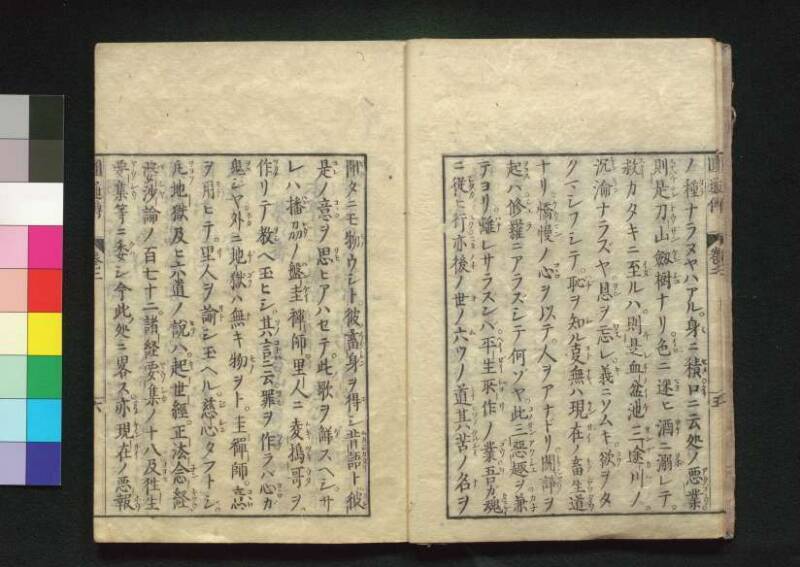
ノ種(タネ)ナラヌヤハアル。身(ミ)ニ積(セメ)。口(クチ)ニ云処ノ《振り仮名:𢙣⁻業|アクゴウ》。
《振り仮名:則₋是|スナハチコレ》《振り仮名:刀⁻山劔樹|トウザンケンシユ》ナリ。色(イロ)ニ迷(マヨ)ヒ酒(サケ)ニ溺(ヲボ)レテ。
救(スクイ)ガタキニ至(イタ)ルハ。則 ̄チ₋是 ̄レ《振り仮名:血₋盆₋池|チノイケ》《振り仮名:三⁻途₋川|サンヅカハ》ノ。
沉淪(チンリン)ナラズヤ。㤙(ヲン)ヲ忘(ワス)レ。義(キ)ニソムキ。欲(ヨク)ヲタ
クマシフシテ。恥(ハヂ)ヲ知(シ)ル㕝無(コトナキ)ハ現在(ケンザイ)ノ畜生道(チクシヤウタウ)
ナリ。《振り仮名:憍⁻慢|ケウマン》ノ心(コヽロ)ヲ以テ。人ヲアナドリ。《振り仮名:闘⁻諍|トウシヤウ》ヲ
《振り仮名:起󠄁|ヲコス》ハ。修羅(シユラ)ニアラズシテ何ゾヤ。此(コノ)《振り仮名:三⁻惡⁻趣|サンアクシユ》ヲ。兼(カネ)
テヨリ。離(ハナ)レサラズンバ。《振り仮名:平⁻生|ヘイゼイ》《振り仮名:所⁻作|シヨサ》ノ業(ゴウ)。吾(ワ)ガ魂(タマシイ)
ニ従(シタガ)ヒ行(ユク)。亦(マタ)後(ノチ)ノ世(ヨ)ノ六(ム)ツノ道(ミチ)。其(ソノ)苦(クルシミ)ノ名(ナ)ヲ
【左丁】
聞(キク)ダニモ物(モノ)ウシト。彼 ̄ノ《振り仮名:畜⁻身|チクシン》ヲ得(エ)シ《振り仮名:昔₋語|ムカシカタリ》ト。《振り仮名:彼₋|カレ 》
是(コレ)ノ意(コヽロ)ヲ思(ヲモ)ヒアハセテ。此 ̄ノ歌ヲ觧(ゲ)スヘシ。サ
レハ播刕(ハンシウ)ノ《振り仮名:盤⁻圭禪⁻師|ハンケイ 》。里⁻人ニ《振り仮名:夌₋搗₋哥|ムキツキウタ》#3ヲ。
作(ツク)リテ教(ヲシ)ヘ玉ヒシ。其言(ソノコトハ)ニ云。罪(ツミ)ヲ作(ツク)ラバ心(コヽロ)ガ
鬼(ヲニ)ジヤ。外(ホカ)ニ《振り仮名:地⁻獄|ヂゴク》ハ無(ナ)キ物(モノ)ヲト。圭⁻禪⁻師。意(コヽロ)
ヲ用(モチ)ヒテ。里人(リ )ヲ諭(サト)シ玉ヘル。《振り仮名:慈⁻心|ジシン》タフトシ。
凡(ヲヨソ)地⁻獄及ヒ六⁻道ノ說(セツ)ハ。《振り仮名:起󠄁⁻世⁻經|キ 》。《振り仮名:正⁻㳒⁻念⁻經| ネンキヤウ》。
《振り仮名:婆⁻沙⁻論|バシヤ 》ノ百七十二。《振り仮名:諸⁻経要⁻集| ヤウシウ》ノ十八。及(ヲヨヒ)往⁻生
《振り仮名:要⁻集|ヤウシウ》等ニ委(クハ)シ今此 ̄ノ処ニ畧ス。亦(マタ)《振り仮名:現⁻在|ケンザイ》ノ《振り仮名:𢙣⁻報| ホウ》
現代語訳
(前ページより続き)
……地獄の種(たね)でないものがあろうか。身に積み、口に言う悪業(あくごう)は、すなわちこれ刀山剣樹(とうざんけんじゅ)である。色(いろ)に迷い、酒に溺れて、救いがたい状態に至るのは、すなわちこれ血の池・三途の川の沈淪(ちんりん)ではないか。恩を忘れ、義にそむき、欲を逞しくして、恥を知ることのないのは、現在の畜生道(ちくしょうどう)である。驕慢(きょうまん)の心をもって人を侮り、闘諍(とうじょう)を起こすのは、修羅(しゅら)でなくして何であろうか。
この三悪趣(さんあくしゅ)をあらかじめ離れなければ、平生(へいぜい)の所作(しょさ)の業(ごう)は、わが魂に従いて行く。また後の世の六つの道、その苦しみの名を聞くだにも煩わしいと思うならば、かの畜身(ちくしん)を得た昔語りと、それこれの意を思い合わせて、この歌を解すべきである。
さすれば、播州(ばんしゅう)の盤珪禅師(ばんけいぜんじ)が、里人に向搗歌(むきつきうた)を作りて教え給いしことがある。その言葉にいわく、「罪を作らば心が鬼じゃ。外(ほか)に地獄はない物を」と。盤珪禅師が、心を用いて里人を諭し給えるその慈心(じしん)、尊いことである。
およそ地獄および六道の説については、『起世経(きせきょう)』・『正法念経(しょうぼうねんきょう)』・『婆沙論(ばしゃろん)』の第百七十二巻・『諸経要集(しょきょうようじゅ)』の第十八巻、および『往生要集(おうじょうようじゅ)』等に詳しい。今ここではこれを略す。また現在の悪報(あくほう)については……(次ページへ続く)
英語訳
(Continuing from the previous page)
...Is there anything that is not a seed of hell? The evil deeds (悪業, *akugō*) that one accumulates in body and speaks with mouth are, in themselves, none other than the Mountains of Blades and the Forests of Swords (刀山剣樹, *tōzan kenju*). To be so lost in sensual passion and so drowned in drink as to become beyond saving—is this not the very sinking and drowning (沈淪, *chinrin*) of the Blood Pond (血の池) and the Sanzu River (三途の川)? To forget the kindnesses one has received, to turn one's back on righteousness, to indulge one's desires without limit, and to feel no shame—this is the realm of animals (畜生道, *chikushōdō*) in the present world. To treat others with contempt out of arrogance and pride, and to stir up strife and conflict—what is this, if not the realm of Asuras (修羅, *shura*)?
Unless one removes oneself from these Three Evil Realms (三悪趣, *san'akushu*) beforehand, the karma of one's lifelong conduct will follow one's soul after death. If, moreover, one finds it wearisome merely to hear the names of the sufferings in the six realms of the next life, then one should reflect upon the old tale of that cow who came to inhabit an animal body, and, combining the meaning of that story with these reflections, interpret this poem accordingly.
In this regard, the Zen Master Bankei (盤珪禅師) of Banshū (播州) once composed a *mukitsuki-uta* (向搗歌, a type of folk song) to teach the common people. His words ran: "If you commit sins, your own heart is the demon. There is no hell anywhere else." That the Zen Master Bankei took such care to gently instruct the common people, with such a compassionate heart—how truly admirable and worthy of reverence.
Concerning the doctrine of hell and the six realms in general, it is treated in detail in such texts as the *Kisekikyō* (起世経, *Sūtra on the Origin of the World*), the *Shōbōnenkyō* (正法念経, *Sūtra of Mindfulness of the True Dharma*), the *Basharon* (婆沙論, *Mahāvibhāṣā*) at fascicle 172, the *Shokyō Yōjū* (諸経要集, *Collected Essentials of the Sutras*) at fascicle 18, and the *Ōjō Yōshū* (往生要集, *Essentials of Rebirth in the Pure Land*), among others. I shall omit these here. As for the evil retributions of the present world... (Continues on the next page)