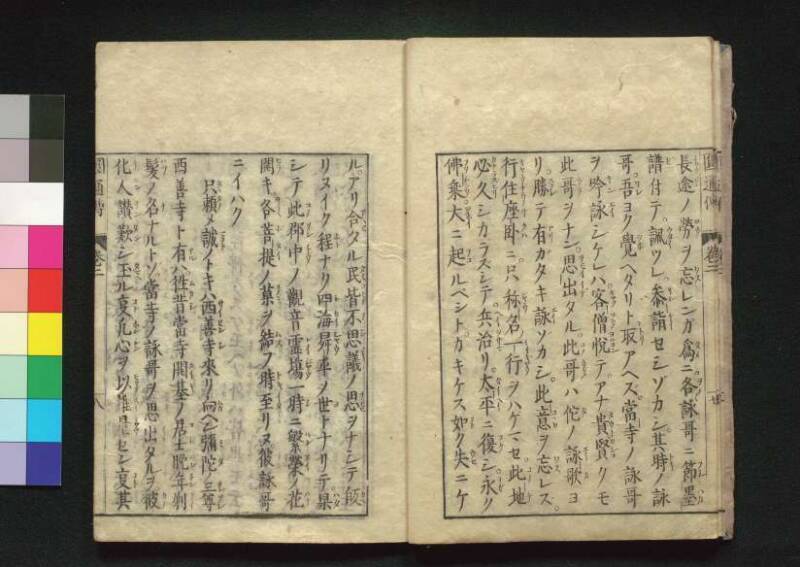
翻刻
【コマ36】
【右丁】
長途(チヤウド)ノ勞(ロウ)ヲ忘(ワス)レンガ爲(タメ)ニ。各(ヲノ〳〵)詠哥ニ《振り仮名:節-墨-|フシハカ 》
譜(セ)付テ。《振り仮名:𧩠|ウタイ》ツレ。《振り仮名:参-詣|サンケイ》セシゾカシ。其時( トキ)ノ詠
哥。吾(ワレ)ヨク覺(ヲボ)ヘタリト。取(トリ)アヘズ。当-寺ノ詠哥
ヲ吟詠(キンエイ)シケレハ。《振り仮名:客-僧|キヤクソウ》悅(ヨロコン)テ。アナ貴(タウト)。賢(カシコ)クモ
此哥( ウタ)ヲナン。《振り仮名:思-出|ヲモイイデ》タル。此哥(コノウタ)ハ佗(タ)ノ《振り仮名:詠-歌|エイカ》ヨ
リ。勝(スクレ)テ有(アリ)ガタキ詠(エイ)ゾカシ。《振り仮名:此-意| コヽロ》ヲ忘(ワス)レズ。
《振り仮名:行住-𫝶-卧|キヤウヂウサクハ》ニ。只 《振り仮名:称-名 ̄ノ|シヤウ 》《振り仮名:一-行|イチギヤウ》ヲハゲマセ。《振り仮名:此-地|コノチ》
必(カナラズ)久(ヒサ)シカラズシテ。兵(ヘイ)治(ヲサマ)リ。《振り仮名:太-平|タイヘイ》ニ復(フク)シ。永(ナガ)ク
《振り仮名:佛-乘|フツシシウ》。大(ヲホイ)ニ《振り仮名:起󠄁|ヲコ》ルベシト。カキケス如(コト)ク失(ウセ)ニケ
【左丁】
ル。アリ合(アハセ)タル民(タミ)。皆(ミナ)不思議(フシギ)ノ思(ヲモヒ)ヲナシテ皈(カヘ)
リヌ。イク程(ホト)ナク《振り仮名:四-海昇-平|シカイシヤウ 》ノ世(ヨ)トナリテ。果(ハタ)#1
シテ此(コノ)郡中(クンチウ)ノ《振り仮名:觀音霊-塲| レイジヤウ》一時( シ)ニ繁榮(ハンヱイ)ノ花(ハナ)
開(ヒラ)キ。各(ヲノ〳〵)《振り仮名:菩-提|ボタイ》ノ菓(コノミ)ヲ結(ムス)ブ時(トキ)至(イタ)リヌ。彼詠哥
ニイハク
只(タヽ)頼(タノ)メ誠(マコト)ノトキハ西善寺(サイセンシ)來リ向(ムカ)ヘン彌陀(ミタ)ノ《振り仮名:三尊󠄁|サンソン》
西善寺ト有(アル)ハ。《振り仮名:往-昔|ムカシ》當寺 開基(カイキ)ノ居士(コシ)。晩年(ハンネン)剃(テイ)
髪(ハツ)ノ名(ナ)ナルトゾ。當寺ノ詠哥ヲ思出( イテ)タルヲ。彼(カノ)
化人(ケニン)讃歎(サンタン)シ玉(タマヘ)ル㕝(コト)。凢心(ホンシン)ヲ以(モツテ)推量(スイリヤウ)セン㕝(コト)其
現代語訳
(前ページより続く)
……長途の労(ろう)を忘れんがために、おのおの詠歌に節(ふし)を付けて歌いながら、参詣したものだ。その時の詠歌を、私はよく覚えておりますと言って、とりあえず当寺の詠歌を吟詠(ぎんえい)したところ、客僧(きゃくそう)は喜んで、「ああ、尊い、よくもこの歌を思い出してくださった。この歌は他の詠歌よりも、格別に有り難い詠(えい)である。この心を忘れず、行住坐臥(ぎょうじゅうざが)に、ただ称名(しょうみょう)の一行(いちぎょう)を励め。この地は必ずや、ほどなく兵乱が治まり、太平の世に復し、永く仏乗(ぶっしょう)が大いに興るであろう」と言って、かき消すように姿を消してしまった。
居合わせた民(たみ)は皆、不思議の思いをなして帰った。いくほどもなく四海昇平(しかいしょうへい)の世となって、果たしてこの郡中(ぐんちゅう)の観音霊場は一時(いっとき)に繁栄の花が開き、おのおの菩提(ぼだい)の果(このみ)を結ぶ時が至った。かの詠歌に言うには、
ただ頼め まことのときは 西善寺 来り向かえん 弥陀の三尊
「西善寺」とあるのは、往昔(むかし)、当寺の開基(かいき)の居士の、晩年に剃髪(ていはつ)した後の名(な)であるとのことである。当寺の詠歌を思い出したことを、かの化人(けにん)が讃嘆(さんたん)し給えること、凡心(ぼんしん)をもって推量すべきことではなく……(次ページへ続く)
英語訳
(Continuing from the previous page)
...In order to forget the weariness of the long journey, pilgrims would each set the *eika* (詠歌, pilgrim's verse) to a melody and sing as they made their way to worship. I remember the *eika* of this temple very well," and with that, the elder recited the *eika* of this temple. The wandering monk was delighted and exclaimed: "How wonderful! How admirable that you have recalled this poem. This verse surpasses all other *eika* in the preciousness of its meaning. Do not forget the spirit of these words; in all your daily activities — walking, standing, sitting, and lying down — devote yourself solely to the single practice of reciting the nenbutsu (称名, the name of Amida Buddha). Surely, before long, the fighting in this land will be quelled, peace will be restored, and the Buddha's teaching will flourish greatly for a long time to come." With these words, he vanished as if melting into thin air.
The villagers who had been present were all left with a profound sense of wonder as they returned to their homes. And indeed, before long, an era of peace and prosperity descended upon the realm (四海昇平, *shikai shōhei*, "the four seas at peace"), and the Kannon pilgrimage sites throughout this district all at once burst into full bloom like flowers of prosperity, and the time came for each pilgrim to bear the fruit of enlightenment (*bodai*). The *eika* of this temple reads:
*Tada tanome / makoto no toki wa / Saizenji / kitari mukaen / Mida no sanzon*
(ただ頼め まことのときは 西善寺 来り向かえん 弥陀の三尊)
"Only place your trust [in Amida]; when that true moment comes, at Saizenji, the Amida Triad shall come forth to welcome you."
As for the name "Saizenji" (西善寺) that appears in the poem, it is said to be the Buddhist name taken by the lay founder (*kaiki*, 開基) of this temple when he shaved his head and took the tonsure in his later years. That the wandering monk — a manifested being (*ke-nin*, 化人) — should have praised the elderly villager so fervently for remembering this temple's *eika* is something beyond the capacity of an ordinary mind to fathom fully... (Continues on the next page)