翻刻
【コマ37】
【右丁】
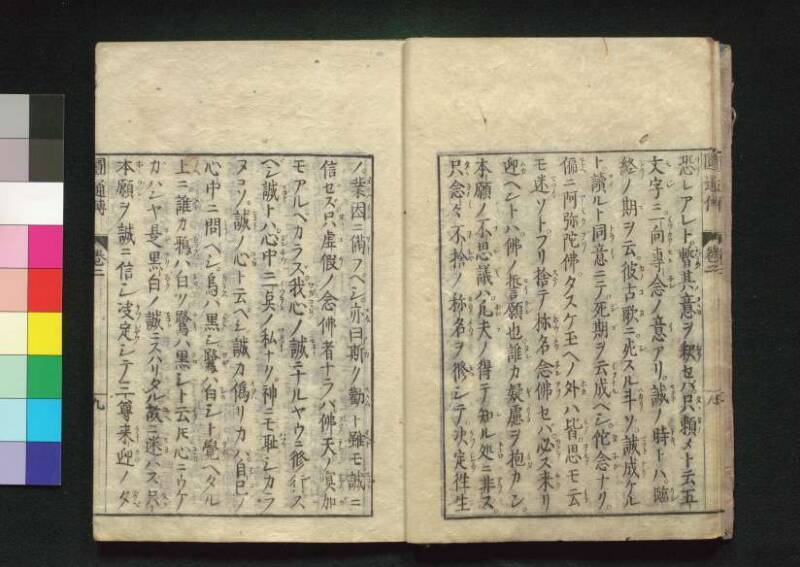
恐(ヲソ)レアレド。暫(シバラク)其 ̄ノ意(コヽロ)ヲ釈(シヤク)セバ。只(タヽ)頼(タノ)メト云五-
文字(モジ)ニ。《振り仮名:一-向|イツカウ》《振り仮名:專-念|センネン》ノ意(イ)アリ。誠(マコト)ノ時(トキ)トハ。臨(リン)
終(ジウ)ノ期(ゴ)ヲ云。彼(カノ)古歌(コカ)ニ。死(シ)スル斗(ハカリ)ゾ。誠成(マコトナリ)ケル
ト讀(ヨメ)ルト同意(トウイ)ニテ。死期(シゴ)ヲ云成(イフナル)ベシ。佗念(タネン)ナク。
偏(ヒトヘ)ニ阿弥陀佛(アミタブツ)。タスケ玉ヘノ外(ホカ)ハ皆(ミナ)。思(ヲモフ)モ云(イフ)
モ迷(マヨイ)ゾト。フリ捨(ステ)テ称名念佛(シヤウメウネンフツ)セバ。必(カナラ)ズ来(キタ)リ
迎(ムカ)ヘントハ。佛ノ誓願(セイグハン)也。誰(タレ)カ疑慮(ギリヨ)ヲ《振り仮名:抱󠄁|イタ》カン。
本-願ノ《振り仮名:不-思議|フシギ》ハ。凢夫(ボンフ)ノ得テ知(シ)ル処(トコロ)ニ非(アラ)ズ。
只(タヽ)《振り仮名:念-々|ネン 〳〵 》《振り仮名:不-捨|フシヤ》ノ《振り仮名:称-名|セウメウ》ヲ修(シユ)シテ。《振り仮名:决定往-生|ケツシヤウ 》
【左丁】
ノ。《振り仮名:業因|ゴウイン》#1ニ備(ソナ)フベシ。亦(マタ)曰 ̄ノ。斯(カ)ク勸(スヽム)ト雖(イヘト)モ。誠(マコト)ニ
信ゼズ。只(タヽ)《振り仮名:虗-假|コケ》ノ念-佛者ナラバ。《振り仮名:佛天|ブツテン》ノ冥加(ミヤウガ)
モアルベカラズ。我心(ワガコヽロ)ノ誠(ニコト)ニナルヤウニ修行ス
ベシ誠(マコト)トハ。心中(シンチウ)ニ《振り仮名:一-奌|イツテン》#2ノ私(ワタクシ)ナク。神ニモ耻(ハツカ)シカラ
ヌコソ。誠(マコト)ノ心(コヽロ)ト云ベシ。誠カ僞(イツハ)リカハ。《振り仮名:自-已|シコ》#3ノ
心-中ニ問(トフ)ベシ。烏(カタス)ハ黒(クロ)シ。鷺(サギ)ハ白(シロ)シト覺(ヲボ)ヘタル
上(ウヘ)ニ。誰(タレ)カ鴉(カラス)ハ白(シロ)ク。鷺(サキ)ハ黒(クロ)シト云(イフ)𪜈。心(コヽロ)ニウケ
ガハンヤ是(コレ)《振り仮名:黒-白|コクビヤク》ノ誠(マコト)ニスハリタル故(ユヘ)ニ迷(マヨ)ハズ。《振り仮名:只-|タヽ 》
本願(ホングハン)ヲ誠ニ信シ《振り仮名:𣲺定|ケツジヤウ》シテ三-尊󠄁《振り仮名:来-迎|ライカウ》ノ夕(ユウベ)
現代語訳
(前ページより続き)
……恐れはあるが、しばらくその意味を解釈するならば、「ただ頼め」という五文字に、一向専念(いっこうせんねん)の意がある。「誠のとき」とは、臨終の期(ご)のことを言う。かの古歌に、「死するばかりぞ、誠なりける」と詠まれているのと同じ意味で、死期(しご)のことを言うのであろう。他念なく、ひとえに「阿弥陀仏よ、助け給え」という思い以外は、思うことも言うことも皆、迷いであるとして、振り捨てて称名念仏すれば、必ず来り迎えようというのは、仏の誓願である。誰が疑いを抱こうか。本願の不思議は、凡夫(ぼんぷ)の知り得るところではない。ただ念々不捨(ねんねんふしゃ)の称名を修して、決定往生(けつじょうおうじょう)の業因(ごういん)に備えるべきである。
また曰く、このように勧めるとはいえ、誠に信じることなく、ただ虚仮(こけ)の念仏者であるならば、仏天の冥加(みょうが)もあるはずがない。我が心が誠になるように修行すべきである。「誠」とは、心中に一点の私(わたくし)もなく、神にも恥ずかしくないことこそ、誠の心と言うべきである。誠か偽りかは、自己の心中に問うべきである。烏は黒く、鷺は白いと知った上で、誰が「烏は白く、鷺は黒い」と言っても、心に受け入れることができようか。これは黒白の誠にすわりたる(定まっている)ゆえに迷わないのである。ただ本願を誠に信じ決定(けつじょう)して、三尊来迎(さんぞんらいごう)の夕べ……(次ページへ続く)
英語訳
(Continuing from the previous page)
...Though one may feel some trepidation in venturing this interpretation, let us briefly explain the meaning. In the five characters "*tada tanome*" (ただ頼め, "only trust and rely"), there lies the meaning of *ikkō sennen* (一向専念)—single-minded, exclusive devotion. "The time of sincerity (*makoto no toki*)" refers to the moment of one's final hour, the time of death. This is the same meaning as the ancient poem that reads: "*shisuru bakari zo, makoto narikeru*" ("Only death is true sincerity")—it must refer to the moment of death. Casting aside all other thoughts, if one, with singleminded devotion, abandons everything one thinks or says as delusion, holding only to the prayer "Amida Buddha, save me!" and recites the nembutsu, then the Buddha shall surely come forth to receive one. This is the Buddha's vow (*seigan*). Who could harbor any doubt? The mystery of the Original Vow (*hongan*) is not something that ordinary, unenlightened beings (*bonpu*) can grasp through their own understanding. One should simply practice the recitation of the Buddha's name without ever abandoning it (*nen-nen fusha no shōmyō*), and thereby prepare the karmic cause (*gōin*) for assured rebirth in the Pure Land (*ketsujō ōjō*).
Furthermore, it is said: even though we encourage this practice, if one does not truly believe, and is merely a practitioner of hollow, insincere nembutsu (*koke no nenbutsu-sha*), then one cannot expect to receive the divine grace (*myōga*) of the Buddhas and heavenly beings. One must practice and cultivate one's mind so that it becomes truly sincere. "Sincerity (*makoto*)" means having not a single trace of self-serving thought (*watakushi*) in one's heart, such that one need feel no shame even before the gods. This is what should be called a sincere heart. Whether one is sincere or deceitful, one must ask within one's own heart. Knowing full well that crows are black and herons are white, even if someone were to say "crows are white and herons are black," could anyone's heart truly accept such a claim? This is because the truth of black and white is firmly settled and unmovable—therefore one is not led astray. In the same way, one should truly believe and be firmly settled (*ketsujō*) in the Original Vow, and on the evening when the Amida Triad comes to receive one (*sanzōn raigō*)... (Continues on the next page)