翻刻
【コマ40】
【右丁】
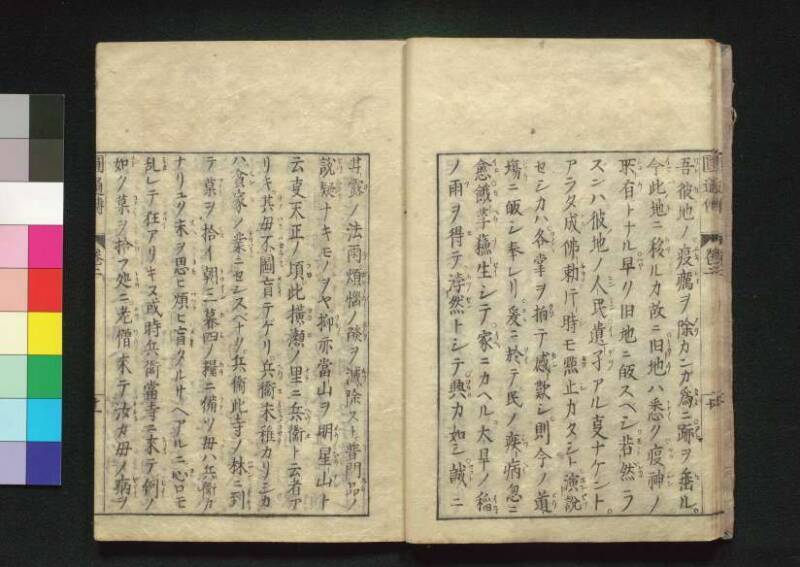
吾(ワレ)《振り仮名:彼 ̄ノ地|カ 》ノ。《振り仮名:疫-癘|ヱキレイ》ヲ除(ノソ)カンガ為(タメ)ニ。跡(アト)ヲ埀(タ)ル。
今(イマ)《振り仮名:此 ̄ノ地| チ》ニ移(ウツ)ルカ故ニ。《振り仮名:旧-地|キウチ》ハ悉(コト〳〵)ク。《振り仮名:疫-神|ヤクシン》ノ
《振り仮名:所-有|シヨウ》トナル。早(ハヤ)ク旧地ニ皈スベシ。《振り仮名:若-然|モシシカ》ラ
ズンハ。彼 ̄ノ地ノ《振り仮名:人-民|ニンミン》。《振り仮名:遺-孑|イゲツ》アル㕝ナケント
アラタ成(ナル)《振り仮名:佛-勅| チヨク》。《振り仮名:片-時| シ》モ㸃止(モタシ)ガタシト。《振り仮名:演-說|ヱンセツ》
セシカハ。各(ヲノ〳〵)掌ヲ拍(ウツ)テ《振り仮名:感-歎|カン 》シ。則今ノ《振り仮名:道-|□ウ 》
塲(ジヤウ)ニ皈シ奉レリ。爰(コヽ)ニ於(ヲイ)テ。民ノ《振り仮名:疾-病|シツヘイ》忽ニ
愈(イヱ)。《振り仮名:餓-莩|ガベウ》《振り仮名:蘓-生|ソセイ》シテ。家(イヘ)ニカヘル。大-旱ノ稲(イネ)
ノ《振り仮名:雨|ア□》ヲ得(ヱ)テ。《振り仮名:浡-然|ホツゼン》トシテ。興(ヲコル)カ如シ。誠(マコト)ニ
【左丁】
《振り仮名:甘-露| ロ》ノ《振り仮名:法-雨| ウ》。《振り仮名:煩-惱|ボンノウ》ノ燄(ホノウ)ヲ《振り仮名:滅-除|メツ 》スト。普門品(フ ホン)ノ
說(セツ)疑(ウタカイ)ナキモノヲヤ。抑(ソモ〳〵)亦當-山ヲ《振り仮名:明星-山|メウシヤウサン》ト
云㕝。天-正ノ頃(コロ)。此《振り仮名:横-瀬|ヨコセ》ノ里(サト)ニ《振り仮名:兵-衞|ヘウエ》ト云者ア
リキ。其母(ソノハヽ)《振り仮名:不-圖|ハカラス》盲(メシイ)テゲリ。兵衞(ヘウエ)未稚(イマタヲサナ)カリシカ
ハ。貧家(ヒンカ)ノ業(ナリハイ)ニセンスベナク。兵-衞此-寺ノ林(ハヤシ)ニ到(イタツ)
テ菓(コノミ)ヲ拾(ヒロ)イ《振り仮名:朝-三暮-四|テウサンホ シ 》ノ糧ニ備(ソナヘ)ツ母(ハヽ)ハ兵-衞ガ
ナリユク末(スヘ)ヲ思(ヲモ)ヒ煩(ワツラ)ヒ盲(メシイ)タルサヘアルニ心(コヽ)ロモ
乱(ミタ)レテ狂(クルイ)アリキヌ。或時兵衞當寺ニ來(キタツ)テ例(レイ)ノ
如(コト)ク菓(コノミ)ヲ拾(ヒロ)フ処(トコロ)ニ。老僧(ロウソウ)來テ汝(ナンチ)ガ母ノ病(ヤマイ)ヲ
現代語訳
【コマ40】
【右丁】
「われはかの地の疫癘(えきれい)を除かんがために、跡を垂れた。今この地に移ったがゆえに、旧地はことごとく疫神の所有となってしまう。早く旧地に帰るべきである。もしそうしなければ、かの地の人民に遺孑(いけつ)のあることはあるまい」と、新たなる仏勅(ぶっちょく)は片時も留め置きがたいと演説されると、各々掌を打って感嘆し、すなわち今の道場へと帰り奉った。ここにおいて、民の疾病はたちまち癒え、餓えて倒れていた者も蘇生して家に帰った。大旱(たいかん)の中の稲が雨を得て、勃然(ぼつぜん)として興るがごとくであった。誠に
【左丁】
甘露(かんろ)の法雨(ほうう)が煩悩の炎を滅除すると、普門品(ふもんぼん)に説かれることは、疑いのないものであろう。
そもそもまた、当山を明星山(みょうじょうさん)と呼ぶことについて。天正の頃、この横瀬の里に兵衛(ひょうえ)という者があった。その母がはからずも盲目となってしまった。兵衛はまだ幼かったので、貧しい家の暮らしを立てるすべもなく、兵衛はこの寺の林に来て木の実を拾い、朝三暮四(ちょうさんぼし)のような乏しい糧として備えた。母は兵衛の行く末を思い煩い、盲目であるうえに心も乱れて狂い歩いた。ある時、兵衛が当寺に来て、いつものように木の実を拾っていたところ、老僧が来て「汝の母の病を
英語訳
[Frame 40]
[Right page]
"I have bestowed my presence upon that land in order to rid it of pestilence. Now that I have moved to this place, the old land has fallen entirely into the possession of the plague deity. You must return quickly to the old land. If you do not, there shall not be a single soul left alive among the people of that land." This divine proclamation was so urgent it could not be stayed even for a moment. Upon hearing this sermon, everyone clapped their hands in admiration and reverently returned to the former place of worship. Thereupon, the people's illnesses were immediately healed, those who had collapsed from starvation were revived and returned to their homes. It was as if rice crops withered in a great drought had suddenly sprung back to life upon receiving rain. Truly,
[Left page]
the sweet-dew dharma-rain extinguishes the flames of worldly passions — as expounded in the Fumon-bon (Universal Gateway chapter), this is beyond all doubt.
Now, regarding why this mountain is called Myōjō-zan (Star Mountain): Around the Tenshō era, in the village of Yokose, there lived a man called Hyōe. His mother had unexpectedly lost her sight. As Hyōe was still a young child, he had no means of sustaining the livelihood of their impoverished household, and so he would come to the forest of this temple to gather nuts and berries, scraping together the most meager of rations day by day. His mother, tormented by worry over what would become of Hyōe's future, and already afflicted with blindness, became distraught in mind and wandered about in a state of madness. One day, Hyōe came to this temple as usual to gather nuts, when an old monk appeared and said: "Regarding your mother's illness —"