翻刻
【コマ41】
【右丁】
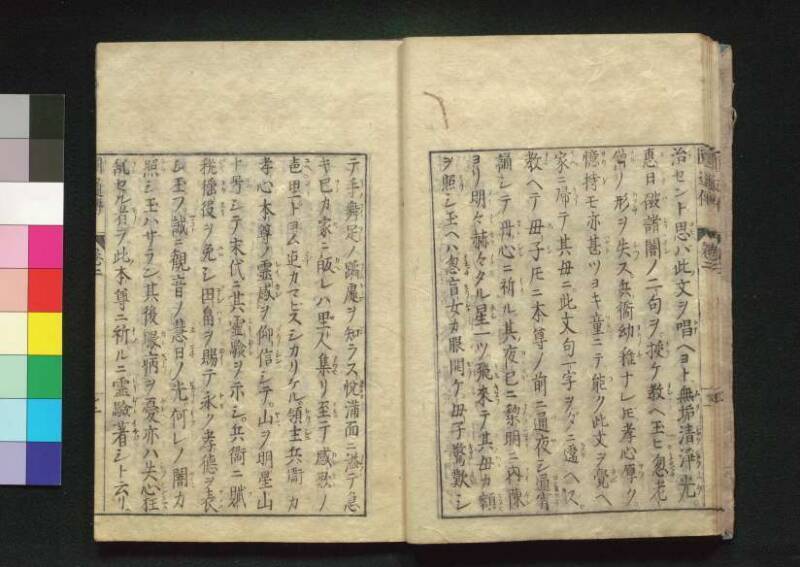
治(チ)セント思(ヲモハ)バ此 ̄ノ文ヲ唱(トナ)ヘヨト無垢清浄光(ムクシヤウジヨウクハウ)。
惠日破諸闇(エニチハシヨアン)ノ二-句ヲ。授(サツ)ケ教(ヲシ)へ玉ヒ。忽(タチマチ)老-
僧(ソウ)ノ形(カタチ)ヲ失(シツ)ス。兵-衞 幼稚(ヨウチ)ナレ𪜈#1。孝心 厚(アツ)ク。
憶持(ヲクヂ)モ亦 甚(ハナハタ)ツヨキ童(ワラハ)ニテ能(ヨ)ク此-文ヲ覺(ヲボ)へ
家(イヘ)ニ帰(カヘリ)テ其母ニ。此文-句一-字ヲダニ違(タガ)ヘズ。
教(ヲシ)ヘテ《振り仮名:母-子|ホシ》𪜈ニ本-尊󠄁ノ前ニ《振り仮名:通-夜|ツヤ》シ通宵(ヨモスカラ)
誦シテ《振り仮名:丹-心|タンシン》ニ祈(イノ)ル。《振り仮名:其 ̄ノ夜| ヨ》已(スデ)ニ《振り仮名:黎-明|アクルコロホイ》ニ内陳(ナイヂン)
ヨリ明々赫々(メイ〳〵カク〳〵 )タル星(ホシ)一ツ。飛來(トビキタツ)テ《振り仮名:其 ̄ノ母| ハヽ》カ額(ヒタヒ)
ヲ照(テラ)シ玉ヘハ。忽(タチマチ)《振り仮名:盲-女|モウジヨ》カ眼 開(ヒラ)ケ。母-子《振り仮名:驚歎󠄃|キヤウタン》シ
【左丁】
テ手舞(テノマイ)《振り仮名:足ノ蹈|アシ フム》處ヲ知(シ)ラス。悅(ヨロコヒ)滿面ニ溢(アフレ)テ急
キ巳(ヲノ)カ家(ヤ)ニ皈(カヘ)レハ里-人 集(アツマ)リ至(イタツ)テ《振り仮名:感-歎|カンタン》ノ
声(コヘ)。里(サト)ドヨム迠(マデ)カマビスシカリケル。領主(レウシユ)兵-衞カ
孝-心本-尊󠄁ノ《振り仮名:霊-感|レイカン》ヲ《振り仮名:仰-信|ゴウシン》シテ。山(ヤマ)ヲ明-星-山
ト号(ゴウ)シテ末代ニ其《振り仮名:靈-驗|レイゲン》ヲ示シ。兵衞ニ《振り仮名:賦-|フ 》
稅(ゼイ)《振り仮名:徭-役|ヨウヱキ》ヲ免(ユル)シ《振り仮名:田-畠|デンハタ》ヲ賜(玉イ)テ永(ナガ)ク孝-德ヲ表(アラハ)
シ玉フ。誠(マコト)ニ観-音ノ《振り仮名:慧󠄁-日|ヱニチ》ノ光(ヒカリ)。何(イツ)レノ闇(ヤミ)カ
照(テラ)シ玉ハザラン。其-後《振り仮名:眼-病|カンビヤウ》ヲ憂(ウレヘ)。亦ハ《振り仮名:失-心|シツシン》狂(キヤウ)
乱(ラン)セル者(モノ)ヲ。此|ノ本-尊󠄁ニ祈(イノ)ルニ。霊驗(レイゲン)著(イチジル)シト云リ。
現代語訳
【コマ41】
【右丁】
「(母の病を)治したいと思うならば、この文句を唱えよ」と言い、「無垢清浄光(むくしょうじょうこう)、慧日破諸闇(えにちはしょあん)」の二句を授け教えてくださると、たちまち老僧の姿は消えてしまった。兵衞は幼いながらも、孝心が厚く、また記憶力もはなはだ強い子どもであったので、よくこの文句を覚え、家に帰ってその母に、この文句を一字も違えずに教えた。そして母子ともに本尊の前で夜通し誦(じゅ)して、丹心(たんしん)をもって祈った。その夜すでに夜明けのころ、内陣(ないじん)より明々赫々(めいめいかくかく)たる星が一つ飛んできて、その母の額(ひたい)を照らすと、たちまち盲女(もうじょ)の眼が開いた。母子は驚き歎(なげ)いて、
【左丁】
手の舞い、足の踏むところを知らないほどであった。悦びが満面にあふれ、急いでおのが家に帰ると、里人が集まり至って感嘆の声が、里中がどよめくほどにかまびすしかった。領主は、兵衞の孝心と本尊の霊感(れいかん)を仰ぎ信じて、山を「明星山(みょうじょうさん)」と号して末代(まつだい)までその霊験を示し、兵衞に賦税(ふぜい)・徭役(ようえき)を免(ゆる)し、田畠(でんはた)を賜って、永く孝徳(こうとく)を表してくださった。まことに観音の慧日(えにち)の光は、いかなる闇をも照らしてくださらないことがあろうか。その後、眼病を患う者や、また失心(しっしん)して狂乱した者が、この本尊に祈ると、霊験著しいと言い伝えられている。
英語訳
[Frame 41]
[Right page]
"If you wish to cure [your mother's illness], recite these words"—and with that, the elderly monk conferred and taught the two phrases: *Muku shōjō kō* ("the pure and undefiled light") and *Enichi ha sho'an* ("the sun of wisdom that breaks through all darkness"). Instantly, the monk's form vanished. Though Hyōe was young, he was a child of deep filial devotion and remarkably retentive memory, and he committed the phrases perfectly to heart. Returning home, he taught his mother every single word of the phrases without error. Mother and son then spent the entire night before the principal image in worship, reciting the phrases and praying with wholehearted sincerity. That very night, as dawn was already approaching, a single brilliantly blazing star flew forth from within the inner sanctum and illuminated the mother's forehead. Instantly, the blind woman's eyes opened. Mother and son were so astonished and overcome with joy that
[Left page]
they could not contain themselves—they danced and stamped their feet without knowing what they were doing. Their faces overflowed with joy, and when they hurried home, the villagers gathered from all around, and the sounds of their amazement and admiration filled the whole village with a great clamor. The local lord, revering and believing in Hyōe's filial devotion and the miraculous power of the principal image, named the mountain "Myōjō-san" (Bright Star Mountain) to demonstrate its miracles to all future generations, and he granted Hyōe exemption from taxes and corvée labor, and bestowed upon him rice fields and gardens, thus commemorating his filial virtue in perpetuity. Truly, is there any darkness that the light of Kannon's sun of wisdom cannot illuminate? It is said that thereafter, those who suffered from eye ailments, as well as those who had lost their minds and fallen into madness, prayed to this principal image and found its miraculous power to be manifest and remarkable.