翻刻
【コマ42】
【右丁】
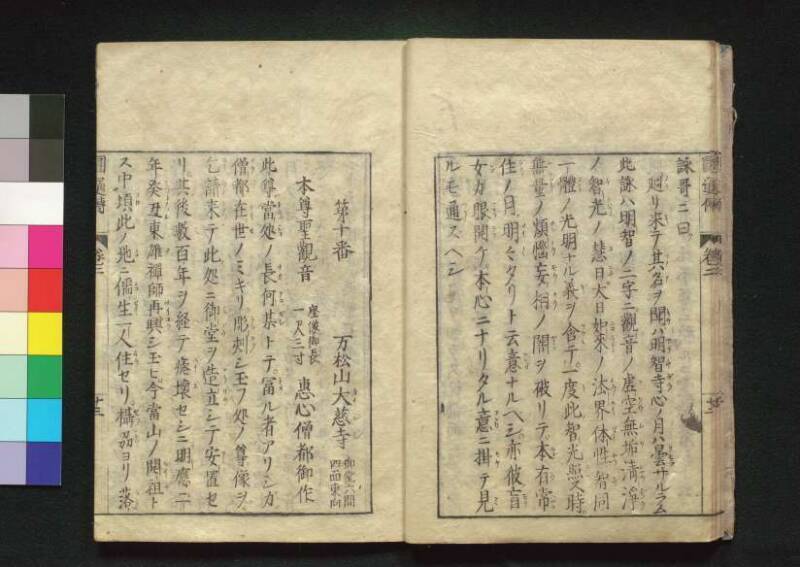
詠哥ニ曰 ̄ク
《振り仮名:𢌞|メク》リ来(キ)テ其名(ソノナ)ヲ聞(キケ)バ明智寺(アケチデラ)心ノ月ハ曇(クモラ)ザルラム
此詠ハ明-智ノ二字ニ。觀-音ノ《振り仮名:虗-空無-垢淸-淨|コクウムクシヤウジヨウ》
ノ《振り仮名:智-光|チクハウ》ノ《振り仮名:慧󠄁日|エニチ》。《振り仮名:大-日如-來| ニヨライ》ノ《振り仮名:㳒-界体-性-智|ホウカイタイシヤウチ》同-
《振り仮名:一-體| タイ》ノ光-明ナル義(ギ)ヲ含(フクミ)テ。一度( ト)此 ̄ノ智-光 照(テラ)ス時。
《振り仮名:無-量|ムリヤウ》ノ《振り仮名:煩-惱|ホンノウ》《振り仮名:妄-相|モウサウ》ノ闇(ヤミ)ヲ破リテ。本有常(ホンウジヤウ)
住(ヂウ)ノ月。明々(メイ〳〵)タリト云 意(コヽロ)ナルベシ。亦彼 ̄ノ盲(モウ)
女(ジヨ)カ《振り仮名:眼-開|マナコヒラ》ケ。本-心ニナリタル意(コヽロ)ニ掛(カケ)テ見(ミ)
ルモ。通(ツウ)ズヘシ
【左丁】
第十番 万松山 大慈寺(タイジシ)《割書:御堂六閒|四面東向》
本尊󠄁聖觀音 《割書:𫝶像御長|一尺三寸》惠心僧都御作
此-尊󠄁《送り仮名:ハ》《振り仮名:當-処|トウシヨ》ノ長(ヲサ)《振り仮名:何-某|ナニガシ》トテ。冨(トメ)ル者アリシガ
《振り仮名:僧-都|ソウヅ》《振り仮名:在-世|サイセ》ノミギリ。《振り仮名:彫-𠜇|テウコク》シ玉フ処ノ尊󠄁-像ヲ。
乞(コイ)請来(ウチキタツ)テ此 ̄ノ処ニ《振り仮名:御-堂|ミドウ》ヲ《振り仮名:造-立|ソウリウ》シテ《振り仮名:安-置|アン 》セ
リ。其 ̄ノ後《振り仮名:數百-年|ス 》ヲ経(ヘ)テ癈壞(ハイヱ)セシニ。明-應二-
年 癸丑(ミツノトノウシ)《振り仮名:東-雄禪-師| ヲ 》再興(サイコウ)シ玉ヒ。今當山ノ《振り仮名:開-祖|カイソ》ト
ス。中頃( コロ)此ノ地(チ)ニ《振り仮名:儒-生|シユセイ》一-人 住(ヂウ)セリ。攝刕(セツシウ)ヨリ《振り仮名:落-|ラク 》
現代語訳
【コマ42】
【右丁】
詠歌に曰く、
めぐり来てその名を聞けば明智寺 心の月は曇らざるらむ
この詠歌は「明智」の二字に、観音の虚空無垢清浄の智光(ちこう)の慧日(えにち)、すなわち大日如来の法界体性智(ほうかいたいしょうち)と同一体の光明であるという義(ぎ)を含んで、ひとたびこの智光が照らすとき、無量の煩悩・妄想の闇を破って、本有常住(ほんうじょうじゅう)の月が明々と輝くという意味であろう。また、かの盲女が眼が開いて、本心に立ち返った意味にかけて見るとも、通じるはずである。
【左丁】
第十番 万松山 大慈寺(たいじじ) 《割書:御堂六間 四面東向》
本尊 聖観音 《割書:木像 御長一尺三寸》 恵心僧都御作
この尊像は、当処の長(おさ)である某(なにがし)という富める者があって、恵心僧都ご在世のみぎり、彫刻なさった尊像を請い迎えてきて、この地に御堂を造立して安置した。その後、数百年を経て廃壊(はいかい)したが、明応二年癸丑(みずのとのうし)に東雄禅師(とうゆうぜんじ)が再興なさり、今の当山の開祖としている。中ごろ、この地に儒生(じゅせい)一人が住んでいた。摂州(せっしゅう)より落ち(……)
英語訳
[Frame 42]
[Right page]
The verse reads:
*Meguri kite / sono na wo kikeba / Akechidera / kokoro no tsuki wa / kumorazaru ramu*
(Having made the pilgrimage round and heard its name—Akechi Temple—the moon of the heart shall surely never be obscured.)
This verse contains within the two characters "Akechi" (明智, "bright wisdom") the meaning of the radiant sun of wisdom (*enichi*) of Kannon's pure and undefiled light of wisdom (*chikō*) of the void—being the same light and illumination as the Dharmadhātu-svabhāva wisdom (*hōkai taisei chi*) of Dainichi Nyorai—and conveys the idea that once this light of wisdom shines forth, it breaks through the darkness of immeasurable afflictions and delusive thoughts, and the moon of original, ever-abiding nature shines brilliantly. One may also read it as alluding to the meaning of the blind woman's eyes having opened and her returning to her true mind—that interpretation, too, holds perfectly well.
[Left page]
**Tenth Station Banshō-zan Daiji-ji Temple**
*(Hall: six *ken* on each side, facing east)*
**Principal Image: Shō Kannon**
*(Wooden image, one *shaku* three *sun* in height; carved by the Venerable Eshin Sōzu)*
This sacred image came about because a wealthy man, the local headman of this place, during the lifetime of Eshin Sōzu, besought and brought back a sacred image that the Sōzu had carved, erected a hall here, and enshrined it. Thereafter, several hundred years passed and [the hall] fell into ruin and decay. In the second year of Meiō, the year *mizunoto-ushi* [1493], the Zen Master Tōyū restored it, and he is regarded as the founding patriarch of the present temple. Some time later, a Confucian scholar came to live in this place. Falling [here] from Settsu Province... [text continues]