翻刻
【コマ43】
【右丁】
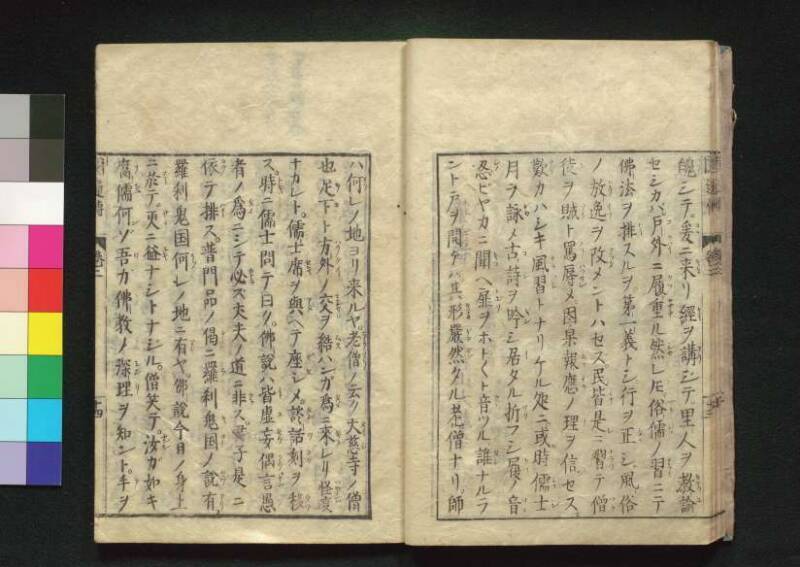
魄(ハク)シテ。爰(コヽ)ニ来(キタ)リ經(ケイ)ヲ講(コウ)ジテ。里-人ヲ《振り仮名:教-諭|キヤウユ》
セシカバ。《振り仮名:戸-外|コクハイ》ニ《振り仮名:履-重|クツカサナ》ル然(ッシカ)レ𪜈#1。《振り仮名:俗-儒|ゾクジユ》ノ習(ナライ)ニテ
佛-㳒ヲ排(ハイ)スルヲ。第-一-義トシ。行ヲ正(タヽ)シ。風-俗
ノ《振り仮名:放-逸|ハウイツ》ヲ𨸩(アラタ)メントハセズ。民 皆(ミナ)是《送り仮名:レ》ニ《振り仮名:習󠄁|ナラツ》テ僧(ソウ)
徒(ト)ヲ賊(ゾク)ト罵辱(ノリハツカシ)メ。《振り仮名:因-果報-應| ホウヲウ》ノ理(リ)ヲ信《送り仮名:ン》セス。
歎(ナゲ)カハシキ《振り仮名:風-習󠄁|ナラハシ》トナリケル処ニ。或 ̄ル時 儒士(シユシ)
月ヲ詠(ナカ)メ古詩(コシ)ヲ吟(ギン)シ居(イ)タル折(ヲリ)フシ履(クツ)ノ音(ヲト)
忍(シノ)ビヤカニ聞(キコ)ヘ扉(トボリ)ヲホト〳〵ト音(ヲト)ツル。誰(タレ)ナルラ
ント戸ヲ開(ヒラ)ケハ。其形( カタチ)嚴然(ゲンゼン)タル老-僧ナリ。師
【左丁】
ハ何(イツ)レノ地ヨリ来ルヤ。《振り仮名:老-僧|ラウソウ》ノ云ク大慈寺(タイジ )ノ僧
也 足下(ソコ)ト《振り仮名:方-外|ハウク□イ》ノ交(マシワリ)ヲ𦀽(ムス)ハンガ爲(タメ)ニ來(キタ)レリ怪(アヤシム)㕝
ナカレト。儒-士 席(セキ)ヲ與(アタ)ヘテ𫝶(ザセ)シメ。《振り仮名:談-話|タンワ》刻(コク)ヲ移(ウツ)
ス。時(トキ)ニ儒士問テ曰ク。佛-說ハ皆(ミナ)虚妄(コモウ)偶言(クウゲン)愚(ク)
者ノ爲(タメ)ニシテ必(カナラ)ズ丈夫ノ道ニ非(アラ)ス。君子是ニ
依(ヨツ)テ排(ハイ)ス。普門品ノ偈(ケ)ニ《振り仮名:羅刹鬼国|ラ□□キコク》#2ノ說(セツ)有(アリ)。
羅利鬼国 何(イツ)レノ地ニ有(アリ)ヤ。佛-說今日ノ身上
ニ於(ヲイ)テ。更(サラ)ニ益(エキ)ナシトナジル。僧𥬇#3テ。汝(ナンシ)ガ如キ
《振り仮名:腐-儒|フジユ》何《送り仮名:ン》ゾ吾(ワ)ガ佛-教ノ《振り仮名:深-理|シンリ》ヲ知ント。手(テ)ヲ
現代語訳
【コマ43】
【右丁】
(摂州より落魄して)ここに来て経を講じて、里人を教諭していたので、門外には履(くつ)が重なるほどであった。しかしながら、俗儒の習いとして仏法を排することを第一義とし、行いを正しくし風俗の放逸を改めようとはせず、民はみなこれに倣って僧徒を賊と罵辱し、因果応報の理を信じなかった。嘆かわしい風習となっていたところ、ある時、儒士が月を眺め古詩を吟じていた折ふし、忍び足の履の音が聞こえ、扉をほとほとと叩く音がした。誰であろうかと戸を開けると、その姿が厳然たる老僧であった。
【左丁】
「師はいずれの地よりおいでか」と問えば、老僧が言うには、「大慈寺の僧である。あなたと方外の交わりを結ばんがために来たのです。怪しまれますな」と。儒士は席を与えて座らせ、談話しばらく刻を移した。その時、儒士が問うて曰く、「仏説はすべて虚妄の空言(くうげん)にして、愚者のためのものであって、必ずしも丈夫(ますらお)の道ではない。君子はこれゆえに排するのだ。普門品の偈に羅刹鬼国(らせつきこく)の説がある。羅刹鬼国はいずれの地にあるのか。仏説は今日の身の上において、さらに益なし」となじった。僧は笑って、「汝のような腐儒(ふじゅ)に、どうして我が仏教の深理を知ることができようか」と言いながら、手を……
英語訳
[Frame 43]
[Right page]
…having fallen into reduced circumstances (from Settsu Province) and come here, he lectured on the Confucian classics and instructed the villagers, so that sandals piled up outside his gate (such was the number of his visitors). Yet, as is the custom of worldly Confucianists, he made it his chief principle to repudiate Buddhism, and made no effort to correct improper conduct or reform the dissolute customs of the people. The common people all followed his example, reviling monks as bandits and scoundrels, and refusing to believe in the principle of karmic cause and effect. This had become a most lamentable state of affairs. Then, one evening, at a moment when the Confucian scholar was gazing at the moon and reciting ancient Chinese verses, he heard the sound of stealthy footsteps, followed by a gentle rapping at his door. Wondering who it could be, he opened the door, and there stood a monk of imposing and dignified bearing.
[Left page]
"From what place have you come, Master?" he asked. The elderly monk replied, "I am a monk of Daiji-ji. I have come to forge a bond of friendship with you that transcends the boundary between monk and layman. Please, do not be alarmed." The Confucian scholar offered the monk a seat and bade him sit, and for a time they conversed, the hours passing by. At that point, the Confucian scholar posed a question, saying: "The teachings of the Buddha are all empty falsehoods and hollow words, suited only for fools, and are by no means the way of a true man of virtue. It is for this reason that the gentleman-scholar rejects them. In the gāthā of the Fumon-bon (*Universal Gateway* chapter), there is the teaching concerning the Land of Rākṣasa demons. Just where is this Land of Rākṣasa demons to be found? The Buddhist teachings are of absolutely no benefit whatsoever for one's circumstances in this present life." The monk laughed and said: "How could a decayed, pedantic Confucianist such as yourself ever come to understand the profound truths of our Buddhist teaching?" And with that, raising his hand…