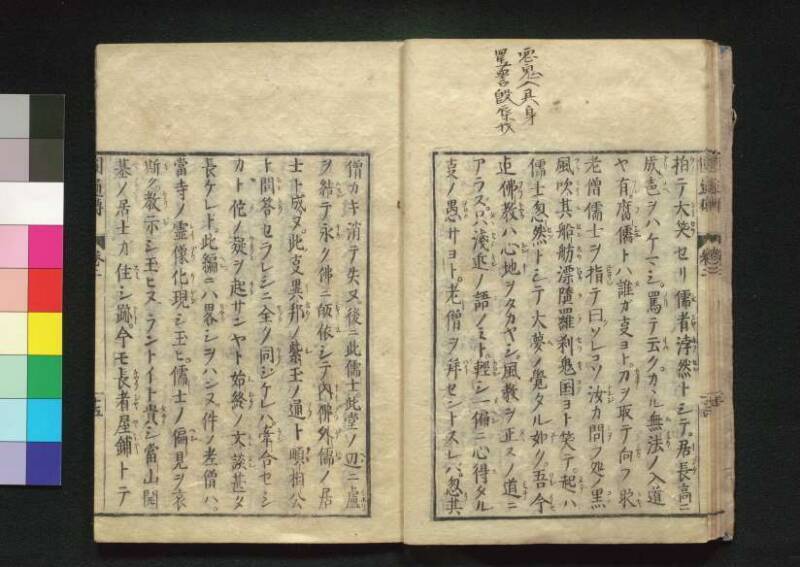
翻刻
【コマ44】
【右丁】
拍(ウツ)テ《振り仮名:大-𥬇|タイセウ》セリ儒者(シユシヤ)悖然(ホツセン)トシテ。居長(イダケ)高ニ
成(ナリ)。声(コヘ)ヲハケマシ。罵(ノリ)テ云(イハ)ク。カヽル《振り仮名:無-法|ムホウ》ノ入道
ヤ有(アル)。《振り仮名:腐-儒|フシユ》トハ誰(タ)ガ㕝ヨト。刀(カタナ)ヲ取テ向(ムカ)フ時(トキ)
老僧儒士ヲ指(ユヒサシ)テ曰《送り仮名:ク》ソレコソ汝(ナンジ)カ問(トヲ)フ処ノ黒(コク)
《振り仮名:風吹-其船-舫漂墮羅刹鬼国|フウスイユセンホウヒヤウタラセツキコク》ヨト𥬇テ。《振り仮名:起󠄁|タテ》ハ
儒士《振り仮名:忽-然| セン》トシテ《振り仮名:大-夢| ム》ノ覺タル如(ゴト)ク。吾(ワレ)今(イマ)
迠《振り仮名:佛-教|フツキヤウ》ハ心地(シンチ)ヲタカヤシ。風-教ヲ正(タヽ)スノ道(ミチ)ニ
アラズ。只(タヽ)淺近(センキン)ノ語(コ)ノミト。輕(カロン)シ一偏( ヘン)ニ心得( エ)タル。
㕝ノ愚(ヲロカ)サヨト。老-僧ヲ拜(ハイ)セントスレバ。忽 ̄チ其
【左丁】
僧カキ消󠄁テ失ヌ。後ニ此儒-士。此堂ノ辺(ヘン)ニ盧(イホリ)#1
ヲ結(ムスン)テ永(ナカ)ク佛ニ皈依(キヱ)シテ《振り仮名:内-佛外-儒|ナイブツゲジユ》ノ居
士ト成《送り仮名:リ》ヌ。此 ̄ノ㕝《振り仮名:異-邦󠄁|イホウ》ノ《振り仮名:紫-玉|シ 》ノ通(ツウ)ト《振り仮名:頔-相-公|テキ 》#2
ト問答(モントウ)セラレシニ全(マツタ)ク同(ヲナ)ジケレハ。《振り仮名:牽-合|ケン 》セシ
カト佗(タ)ノ疑(ウタカイ)ヲ《振り仮名:起󠄁|ヲコ》サンヤト《振り仮名:始-終|シジウ》ノ《振り仮名:文-談|モンタン》甚タ
長ケレド。此編( ヘン)ニハ畧(リヤク)シヲハンヌ。件ノ𦒳僧ハ。
當寺ノ霊像《振り仮名:化-現|ケゲン》シ玉ヒ。儒-士ノ《振り仮名:偏-見|ヘン 》ヲ哀
斯(カ)ク。《振り仮名:教-示|ケウジ》シ玉ヒヌラントイト貴(タウト)シ當-山開
基ノ居-士ガ住(スミ)シ跡(アト)。今モ長者屋鋪(チヤウジヤヤシキ)トテ
【枠外】
𢙣鬼入具󠄁身
罵詈毀辱我
現代語訳
【コマ44】
【右丁】
手を打って大笑いした。儒者はむっとして、居丈高になり、声を荒げて罵って言うには、「このような無法な入道がいるものか。腐儒とは誰のことだと言うのか」と、刀を取って向かおうとした時、老僧は儒士を指差して言った。「それこそが、そなたが問うところの『黒風その船の舫(もや)いを吹き飛ばし、羅刹鬼国に漂い堕ちる』というものだ」と笑って立ち上がると、儒士はたちまち大きな夢から覚めたかのように、「自分はこれまで、仏教は心地を耕し、風教を正す道ではなく、ただ浅近の語のみだと軽んじ、一方的に思い込んでいた。なんと愚かなことよ」と思い、老僧を礼拝しようとしたところ、たちまちその
【左丁】
僧はかき消えて姿が見えなくなった。後に、この儒士はこの堂の辺りに庵を結び、永く仏に帰依して、内に仏、外に儒の居士となった。この一件は、異邦の紫玉と頔相公との問答とまったく同じであったので、「(この話を)引き合わせて(創作し)たのではないか」と他の者が疑いを起こすかもしれないと思い、始終の文談は甚だ長いけれど、この編には略した。件の老僧は、当寺の霊像が化現なさり、儒士の偏見を哀れんでこのようにお示しになったのであろうと、まことに尊いことである。当山開基の居士が住んだ跡は、今も長者屋敷と呼ばれて
【枠外】
悪鬼、身に入り具わり、
我を罵詈毀辱す
英語訳
[Frame 44]
[Right page]
...clapped his hands and burst into great laughter. The Confucian scholar, bristling with indignation, drew himself up haughtily, raised his voice, and rebuked the monk, saying, "What manner of lawless priest is this? Who are you calling a 'decadent pedant'?"—and reached for his sword to confront him. At that moment, the old monk pointed at the Confucian scholar and declared: "That very state you are in right now—*that* is what you asked about: 'the black wind that tears a ship from its moorings and sends it drifting down into the Land of Rākṣasa Demons.'" He laughed and rose to his feet, and suddenly the Confucian scholar felt as if he had awakened from a profound dream. He reflected: "Until now I have dismissed Buddhist teaching as mere shallow and superficial words—something that neither cultivates the mind nor corrects social morality, and not the true path. How foolish of me." He was about to prostrate himself before the old monk in reverence, when suddenly the
[Left page]
monk vanished without a trace. Afterward, this Confucian scholar built a hermitage near this hall, took lasting refuge in the Buddha, and became a lay practitioner (*koji*) who held Buddhism inwardly and Confucianism outwardly. This episode was entirely identical to the recorded dialogue between Ziyü (*紫玉*) and Lord Di Xiangong (*頔相公*) from a foreign land, and fearing that readers might suspect the account had been fabricated by drawing on that source, the full exchange—though quite lengthy—has been omitted from this volume. The elderly monk in question must have been a manifestation (*kegen*) of the sacred image enshrined at this temple, who took pity on the Confucian scholar's one-sided prejudice and instructed him in this manner—truly a most awe-inspiring and sacred thing. The site where the lay founder of this mountain once lived is still known to this day as the "Chōja Yashiki" (the Elder's Residence), and...
[Outside the frame]
Evil demons enter and possess one's very body,
Reviling and humiliating me with abuse.