翻刻
【コマ46】
【右丁】
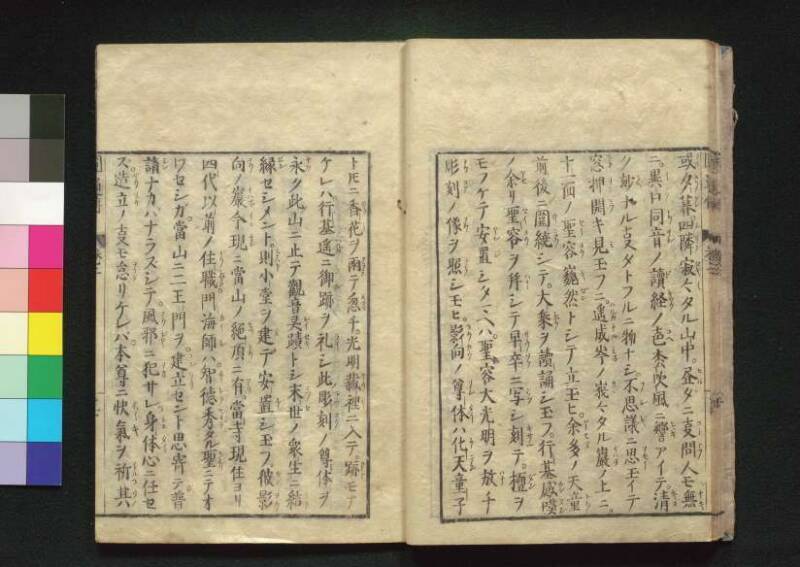
或(アル)《振り仮名:夕-暮|ユウクレ》。《振り仮名:四-隣|シリン》寂々(セキ〳〵)タル山-中。昼タニ㕝問(コトトフ)人モ無(ナキ)
ニ。《振り仮名:異-口同-音|イクドウヲン》ノ《振り仮名:讀-経|ドキヤウ》ノ声(コヘ)枩-吹-風ニ響(ヒヽキ)アイテ。清(キヨ)
ク玅(タヘ)ナル㕝タトフルニ物ナシ。不思議(フシギ)ニ思(ヲモイ)玉イテ
窓(マト)押開(ヲシヒラ)キ見(ミ)玉フニ。遥成(ハルカナル)岑(ミネ)ノ峩々(カヽ)タル巖(イハヲ)ノ上ニ。
十-一面ノ聖容(セイヨウ)巍然(キゼン)トシテ立玉ヒ。余多(アマタ)ノ《振り仮名:天-童| トウ》
前-後ニ《振り仮名:圍-繞|ヰニヨウ》シテ。《振り仮名:大-乘| シヤウ》ヲ讀-誦シ玉フ。行-基 感嘆(カンタン)
ノ余(アマ)リ《振り仮名:聖-容|セイヨウ》ヲ拜(ハイ)シテ《振り仮名:早-卒|サウソツ》ニ写(ウツ)シ刻(キサミ)テ。《振り仮名:𣞀|ダン》ヲ
モフケテ安置(アンジ)シタマヘハ。聖-容大光-明ヲ放(ハナ)チ
彫刻(テウコク)ノ像(ゾウ)ヲ照(テラ)シ玉ヒ。《振り仮名:影-向|ヨウカウ》ノ《振り仮名:尊󠄁-体|ソンタイ》ハ《振り仮名:化-天童子|ケテン 》
【左丁】
ト𪜈ニ《振り仮名:香-花|カウケ》ヲ雨(フラシ)テ忽(タチマ)チ。光明《振り仮名:藏-裡|サウリ》ニ入テ。跡(アト)モナ
ケレハ。行-基 遥(ハルカ)ニ御 ̄ン跡ヲ礼(ライ)シ此 ̄ノ《振り仮名:彫-刻|テウコク》ノ尊󠄁-体ヲ
永(ナカ)ク此 ̄ノ山ニ止テ觀音㚑蹟( レイセキ)トシ《振り仮名:末-世|マツセ》ノ衆-生ニ結(ケチ)
縁(ヱン)セシメント。則(スナハチ)小-堂ヲ建(タ)テ《振り仮名:安-置| チ》シ玉フ。彼(カノ)影(ヨウ)
向(コウ)ノ巖(イハホ)今(イマ)現(ケン)ニ當山ノ《振り仮名:絕-頂|セツテウ》ニ有(アリ)。當-寺現住ヨリ
四-代以-前ノ《振り仮名:住-職|ヂウシヤク》。《振り仮名:門-海師| カイシ》ハ。《振り仮名:智-德|チトク》秀(ヒイデ)タル聖(ヒシリ)ニテオ
ワセシガ。當山ニ二王-門ヲ。《振り仮名:建-立|コンリウ》セント思寄テ。普
請(シン)ナカバナラズシテ。風邪(フウジヤ)ニ犯(ヲカ)サレ。《振り仮名:身-体|シンタイ》心ニ任セ
ズ。造立(サウリウ)ノ㕝モ怠(ヲコタ)リケレバ。本尊󠄁ニ快氣(クハイキ)ヲ祈(イノル)。其(ソノ)
現代語訳
【コマ46】
【右丁】
ある夕暮れ、四方静まりかえった山中、昼でさえ訪ねる人もないというのに、異口同音の読経の声が松を吹く風に響きあって、清くたえなること、たとえるものもない。不思議に思われて窓を押し開けてご覧になると、遥か遠くにそびえる峰の峩々たる巌の上に、十一面(観音)の聖なるお姿が巍然として立ちたまい、あまたの天童が前後に囲繞して大乗経典を読誦したまう。行基は感嘆のあまり、その聖なるお姿を拝して、速やかに(そのお姿を)写し刻んで、壇を設けて安置なされると、聖なるお姿は大光明を放ち、彫刻した像を照らしたまい、影向のご尊体は化天童子と
【左丁】
ともに香花を雨のように降らせて、たちまち光明の中に入られ、跡形もなくなった。行基は遥かにその御跡を礼拝し、この彫刻の尊体を永くこの山にとどめて観音霊跡とし、末世の衆生に結縁せしめようと、すなわち小堂を建てて安置なされた。かの影向の巌は、今現に当山の絶頂にある。当寺の現住より四代以前の住職、門海師は、智徳秀でた聖(ひじり)でいらっしゃったが、当山に二王門を建立しようと思い立って、普請が半ばならないうちに、風邪(ふうじゃ)に侵され、身体が心にまかせず、造立のこともおこたりがちになったので、本尊に快気を祈った。その
英語訳
[Frame 46]
[Right page]
One evening, in a mountain hermitage where all four directions lay in perfect stillness—a place where not even a soul came to call even in broad daylight—the sound of sutra-chanting in unison rose up and mingled with the wind blowing through the pines, so pure and sublime that there was nothing in the world to which it could be compared. Wondering at this strange occurrence, [Gyōki] pushed open the window and looked out, whereupon upon the rugged, towering rocks of a distant peak, the sacred form of the Eleven-Faced [Kannon] stood in majestic splendor, attended by a host of heavenly youths (*tendō*) gathered around before and behind, chanting the Mahāyāna scriptures. Overcome with wonder and admiration, Gyōki reverently beheld this sacred vision and swiftly carved an image replicating it. When he set up an altar and enshrined it there, the sacred form emitted a great radiance, illuminating the newly carved statue. The august body that had appeared in this divine manifestation (*yōkō*), together with the transformed heavenly youths (*keten dōji*),
[Left page]
rained down flowers and incense, and then in an instant entered into the radiance and disappeared without a trace. Gyōki worshipped reverently from afar in the direction of that sacred site, and, wishing to keep this carved image permanently on this mountain as a sacred trace (*reiseki*) of Kannon and to allow the sentient beings of the latter age (*masse*) to form a karmic bond with it, he thereupon built a small hall and enshrined the image within it. The very rock upon which this divine apparition appeared still exists today at the very summit of this mountain.
The head priest who held office four generations before the current incumbent of this temple—the Venerable Monkai—was a holy man of outstanding wisdom and virtue. He had conceived the wish to construct a Niōmon (temple gate) at this mountain, but before the construction work was half complete, he was stricken by illness, his body no longer responding to his will, and work on the construction fell into neglect. He thereupon prayed to the principal image for his recovery. The account continues [on the next page]…