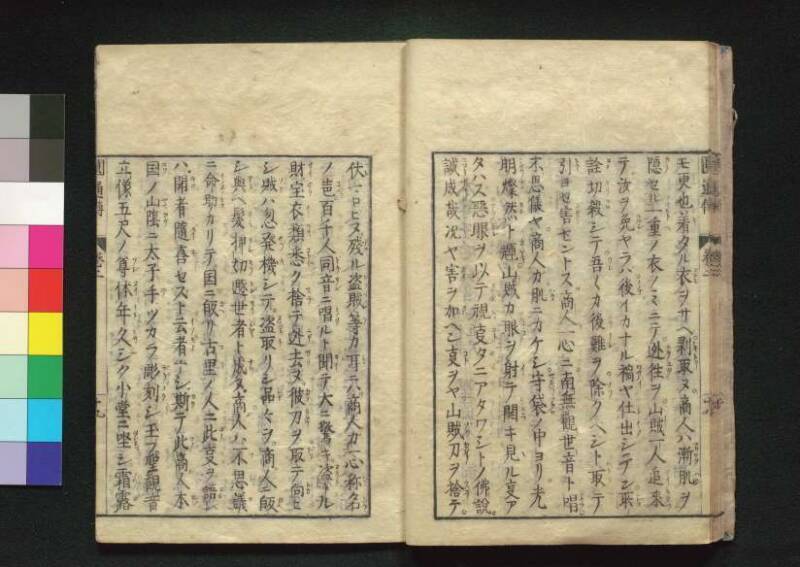
翻刻
【コマ48】
【右丁】
モ更(サラ)也。着(キ)タル衣(コロモ)ヲサヘ。剥取(ハキトリ)ヌ。商人ハ漸(ヤウヤク)肌(ハダ)ヲ
𨼆(カク)セル。一重(ヒトヘ)ノ衣ノミニテ。迯徃(ニケユク)ヲ。山-賊一-人 追來(ヲイキタツ)
テ。汝ヲ免(ユルシ)ヤラバ。後(ノチ)イカナル。禍(ワサハイ)ヤ仕出(シイダ)シテン。《振り仮名:取-|シヨ 》
詮(セン)切殺(キリコロ)#1シテ。吾(ワレ)〳〵ガ《振り仮名:後難|コウナン》ヲ。除(ノソ)クベシト。取(トツ)テ
引(ヒキ)ヨセ。害(ガイ)セントス。商-人 ̄ト一心ニ。南-無観-世-音ト唱(トナフ)。
不-思-儀ヤ。商人ガ。肌(ハダ)ニカケシ。守袋(マモリフクロ)ノ中ヨリ。光
明(ミヤウ)《振り仮名:燦-然|サンセン》ト輝(カヽヤキ)。山-賊カ眼(マナコ)ヲ射(イ)テ。開(ヒラ)キ見(ミ)ル㕝ア
タハズ。惡眼(アクゲン)ヲ以テ。《振り仮名:視㕝|ミルコト》タニアタワシトノ佛-說。
誠成(マコトナル)哉(カナ)。况(イハン)ヤ害(カイ)ヲ加(クハ)ヘン㕝(コト)ヲヤ。山賊( ゾク)刀(カタナ)ヲ捨(ステ)テ。
【左丁】
伏(フシ)マロビヌ。殘(ノコ)ル盗賊等(トウソクラ)ガ耳(ミヽ)ニハ。商-人ガ一心 称名(シヤウミヤウ)
ノ声(コヘ)。百-千-人《振り仮名:同-音|ドウヲン》ニ唱(トナヲ)ルト聞(キイ)テ大ニ驚キ。盗(ヌスミ)トル
《振り仮名:財-宝|サイホウ》《振り仮名:衣-類|イルイ》悉(コト〴〵)ク捨(ステ)テ迯去(ニゲサリ)ヌ。彼刀(かのかたな)ヲ取(トツ)テ向(ムカ)ヒ
シ賊(ソク)ハ忽 発機(ホツキ)シテ。盗取(ヌスミト)リシ品々(シナ )ヲ。商 ̄ン人ニ皈(カヘ)
シ與(アタ)ヘ髪(カミ)《振り仮名:押-切|ヲシキリ》《振り仮名:遯-世者|トンセイジヤ》ト成(ナリ)ヌ。商 ̄ン人ハ不思議(フシキ)
ニ命(イノチ)助(タス)カリテ。国ニ皈(カヘ)リ《振り仮名:古-里|コリ》ノ人ニ此㕝(コノ )ヲ語(カタ)レ
ハ。聞者(キク )隨喜(ズイキ)セズト云者(イフモノ)ナシ。斯(カク)テ此(コノ)商 ̄ン人 本(ホン)
国(コク)ノ《振り仮名:山-隂|ヤマカケ》ニ太-子 手(テ)ヅカラ彫刻(テウコク)シ玉フ。聖観-音
立-像五-尺ノ《振り仮名:尊󠄁体|ソンタイ》年久(トシヒサ)シク小-堂ニ㘴(ヲハシマ)シ。霜露(ソウロ)
現代語訳
【コマ48】
【右丁】
もはや言うまでもなく、着ている衣服までも剥ぎ取られてしまった。商人はかろうじて肌を隠す一重の衣だけをまとって逃げていくのを、山賊の一人が追いかけてきて、「お前を逃がしてやれば、後でいかなる禍を引き起こすかわからぬ。いっそ切り殺して、我々の後難を除くべきだ」と言って、取って引き寄せ、害しようとした。商人は一心に「南無観世音」と唱えた。不思議なことに、商人の肌にかけていた守り袋の中から光明が燦然と輝き、山賊の目を射て、目を開けて見ることができなくなった。「悪しき眼をもって見ることさえできない」という仏の説は、まことにその通りである。ましてや害を加えることなどできようか。山賊は刀を捨てて、
【左丁】
地に伏してまろびついた。残る盗賊たちの耳には、商人が一心に称名する声が、百人・千人が声をそろえて唱えているように聞こえ、大いに驚いて、盗み取った財宝・衣類をことごとく捨てて逃げ去った。かの刀を取って(商人に)向かった賊は、たちまち発機して、盗み取った品々を商人に返し与え、髪を押し切って遁世者となった。商人は不思議にも命が助かり、国に帰り、故里の人々にこのことを語ると、聞く者で随喜しない者はなかった。こうして、この商人が本国の山陰(山かげ)に、太子が自ら手ずから彫刻なさった聖観音の立像・五尺の尊体が、長年にわたって小堂においでになり、霜露に
英語訳
[Frame 48]
[Right page]
— not to mention (their demand for his goods): even the clothes on his back were stripped away. The merchant managed to flee wearing only a single thin garment barely concealing his skin, when one of the bandits came chasing after him, saying, "If we let you go free, who knows what trouble you might stir up for us later. We had best cut you down and kill you now, to remove the threat of future retribution." The bandit seized him and pulled him close, about to do him harm. The merchant, with one-pointed devotion (*isshin*), chanted "Namu Kanzeon" (Homage to Kannon). Wondrously, from within the amulet pouch (*mamori-bukuro*) that hung against the merchant's skin, a brilliant radiance shone forth, dazzling and resplendent, shooting into the eyes of the bandit, such that he was unable to open his eyes and look. The Buddhist teaching that says "even to look with wicked eyes is impossible" — how true it is! How much more impossible, then, to inflict harm! The bandit dropped his sword and
[Left page]
fell to the ground, tumbling and prostrating himself. Into the ears of the remaining bandits, the voice of the merchant chanting the sacred name (*shōmyō*) with single-minded devotion sounded as if a hundred or even a thousand people were chanting in unison; they were greatly alarmed and, abandoning all the valuables and clothing they had stolen, fled away. The bandit who had taken up his sword and advanced upon the merchant was suddenly seized by a spiritual awakening (*hokki*), returned all the stolen goods to the merchant, cut off his own hair, and became a renunciant (*tonseisha*). The merchant, miraculously saved from death, returned to his home province and told the people of his hometown what had happened; there was not a single person who heard the tale and did not weep with joy and reverence (*zuiki*). And so it was that in the shadow of the mountains of this merchant's home province, there resided — housed in a small hall for long years — a standing image of Shō-Kannon, five *shaku* tall, personally carved by (Prince Shōtoku) himself; and exposed to frost and dew…