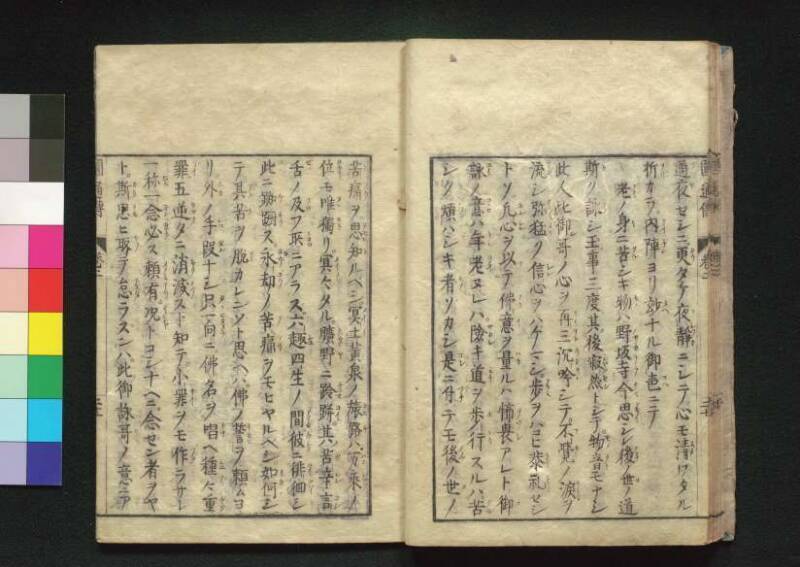
翻刻
【コマ50】
【右丁】
通夜(ツヤ)セシニ。更(カウ)タケ《振り仮名:夜-靜|ヨシツカ》ニシテ。心モ清(スメ)ワタル
折(ヲリ)カラ。内陣(ナイヂン)ヨリ玅(タヘ)ナル《振り仮名:御-声| コヘ》ニテ
□老(ヲイ)ノ身(ミ)ニ苦(クル)シキ物(モノ)ハ野坂寺(ノサカデラ)今(イマ)思(ヲモイ)シレ後(ノチ)ノ世(ヨ)ノ道
斯(カ)ク詠(エイ)シ玉 ̄フ事三-度。其 ̄ノ後《振り仮名:寂-然|ジヤクセン》トシテ。物音(モノヲト)モナシ
此人此御 ̄ン哥ノ心ヲ《振り仮名:再-三|サイサン》《振り仮名:沉-吟|チンギン》シテ。《振り仮名:不-覺|フカク》ノ涙(ナミタ)ヲ
流(ナガ)シ弥(イヨ〳〵)猛(タケ)ク《振り仮名:信-心|シン 》ヲハゲマシ。歩(アユミ)ヲハコヒ《振り仮名:㳟礼󠄁|ケウライ》セシ
トソ。《振り仮名:凢-心|ボンシン》ヲ《振り仮名:以|□ツ》テ。《振り仮名:佛-意|フツイ》ヲ量(ハカ)ルハ《振り仮名:怖𠂽|ヲソレ》アレト。御(ゴ)
詠(エイ)ノ意(コゝロ)ハ年(トシ)老(ヲイ)ヌレハ。險(サカシ)キ道(ミチ)ヲ《振り仮名:歩-行|ホコウ》スルハ。苦(クル)
シク煩(ハツラ)ハシキ者(モノ)ゾカシ。是(コレ)ニ付(ツチ)テモ後(ノチ)ノ世(ヨ)ノ
【左丁】
《振り仮名:苦-痛|くつう》ヲ。思知(ヲモヒシ)ルベシ。《振り仮名:冥-土|メイト》黄泉ノ《振り仮名:旅-路|タビヂ》ハ。《振り仮名:万-乘|バンジヤウ》ノ
位(クライ)モ唯(タヽ)獨(ヒト)リ。冥々(メイ〳〵)タル。曠野(クハウヤ)ニ跉跰(サマヨイ)。其 ̄ノ《振り仮名:苦-辛|クシン》《振り仮名:言-|コン 》
舌(ゼツ)ノ及(ヲヨ)ブ所(トコロ)ニアラズ。《振り仮名:六-趣四-生| シユ 》ノ間(アイタ)。彼(カシコ)ニ《振り仮名:徘-徊|ハイクハイ》シ
此(コヽ)ニ踟蹰(チチウ)ス。《振り仮名:永-却|ヨウゴウ》ノ苦痛(クツウ)ヲモヒヤルベシ。如何(イカヽ)シ
テ。其苦(ソノク)ヲ脫(マヌ)カレンゾト思ヘバ。佛ノ誓(チカヒ)ヲ頼ムヨ
リ。外(ホカ)ノ手段(シユタン)ナシ只(タヽ)一向(ヒタスラ)ニ。佛-名ヲ唱(トン)ヘ種々(シユ〴〵)重(ヂウ)
罪(ザイ)。五逆( ギヤク)ダニ《振り仮名:消-滅|シヤウメツ》スト知テ。《振り仮名:小-罪| サイ》ヲモ作(ツク)ラサレ
《振り仮名:一-称一-念| シヤウ ネン》必(カナラ)ズ頼有(メノミアリ)。况(イハンヤ)トコシナヘニ。念ゼン者ヲヤ
ト。斯(カク)思(ヲモ)ヒ取(トツ)テ怠(ヲコタ)ラズンハ。此 ̄ノ御詠哥( カ)ノ意ニア
現代語訳
【コマ50】
【右丁】
通夜をしたところ、夜が更けて夜が静まり、心も澄み渡るころに、内陣よりたえなる御声にて、
「老いの身に苦しきものは野坂寺 今思い知れ後の世の道」
と、このようにお詠みになること三度。その後、しんと静まりかえって物音もしない。この人はこの御歌の意味をくりかえし心に吟じて、思わず涙を流し、いよいよ猛々しく信心をはげまし、(再び)足を運んで恭礼(礼拝)したということだ。凡夫の心をもって仏の御意を推し量るのは畏れ多いことであるが、(この)御詠歌の意味は、「年老いれば険しい道を歩くのは苦しく煩わしいものだ。これにつけても、後の世の
【左丁】
苦痛を思い知るべきである。冥土・黄泉への旅路は、万乗の位(天子の位)といえどもただ独り、暗々たる曠野をさまよい、その苦しみは言葉の及ぶところではない。六趣四生の間、あちらにさまよい、こちらに立ちすくみ、永劫の苦痛を思いはかるべきである。どうすればその苦しみから逃れられるかと思えば、仏の誓願を頼りにする以外に手立てはない。ただひたすらに仏の名を唱えれば、種々の重罪、五逆の罪でさえも消滅すると知って、小さな罪をも作らぬようにされよ。一称一念(一度でも称え、一心に念ずれば)必ず頼みがある。いわんや、常々念じ続ける者においてはなおさらのことである」と。このように思い取って怠らなければ、この御詠歌の意に
英語訳
[Frame 50]
[Right page]
…kept vigil through the night. As the night deepened and grew still, and his heart too became clear and tranquil, from the inner sanctuary (*naijin*) came a wondrous voice that chanted:
*Oi no mi ni / kurushiki mono wa / Nosakaji / ima omoishiru / nochi no yo no michi*
"For an aging body, what is most trying is Nosaka Temple — realize now the path of the world to come."
This was chanted three times in this manner. Afterward, all was hushed and silent, without a sound. The person pondered the meaning of this sacred verse over and over in his heart, and shed tears unbidden; and with renewed and even fiercer devotion, he made his way (to the temple) and paid reverent homage. It may be presumptuous for one with an ordinary, deluded mind (*bonshin*) to try to fathom the Buddha's intent — yet the meaning of this sacred verse is as follows: "When one has grown old, to walk along a steep and difficult road is indeed trying and wearisome. And let this very fact remind one of the
[Left page]
suffering of the world to come. On the journey to the realm of the dead (*meido*) and the Yellow Springs (*Yomi*), even one of the highest rank — the Son of Heaven — goes utterly alone, wandering through a dark and desolate wilderness (*kōya*), and the anguish thereof is beyond the reach of words. Through the realms of the six destinies and four modes of birth (*rokushu shishō*), one wanders here and there, now drifting, now standing paralyzed; one should contemplate the suffering of endless kalpas (*yōgō*). If one wonders how to escape that suffering, there is no means other than to rely upon the vow of the Buddha. Simply and wholeheartedly chant the Buddha's name. Know that all manner of grave sins, even the five grave offenses (*gogyaku*), are extinguished thereby — and so do not commit even minor sins. In a single recitation, a single moment of mindfulness (*issho ichinnen*), there is surely hope. How much more so for one who recites continuously without ceasing!" If one takes this teaching to heart and practices it without slackening, one will accord with the intent of this sacred verse (*goei*).