翻刻
【コマ51】
【右丁】
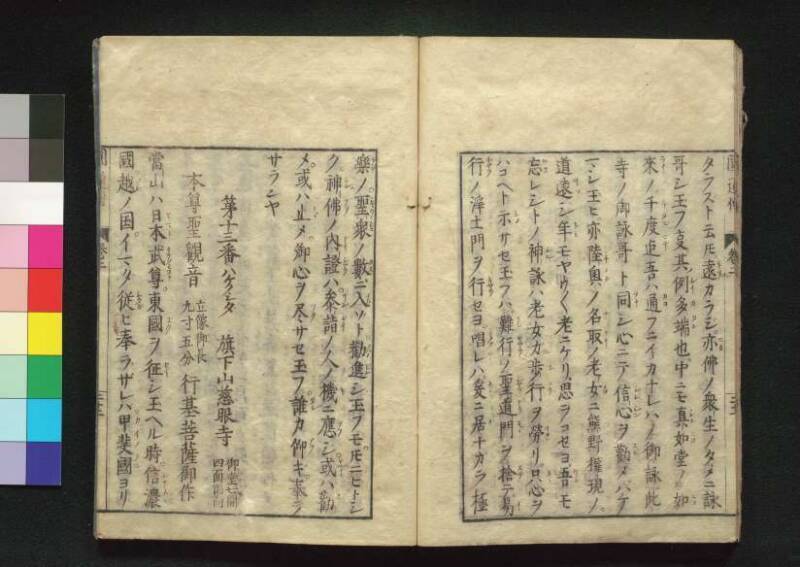
タラズト云𪜈。遠(トヲ)カラジ。亦(マタ)佛ノ衆-生ノタメニ詠
哥シ玉フ㕝。其 ̄ノ例(レイ)《振り仮名:多-端|タタン》也。中ニモ《振り仮名:真-如-堂|シンニヨ 》ノ如(ニヨ)
來(ライ)ノ。千度迠(チタビマデ)吾ハ通(カヨ)フニイカナレハノ御詠。此-
寺ノ御詠哥ト同(ヲナ)ジ心ニテ《振り仮名:信-心|シンシン》ヲ勸(スヽ)メ。ハケ
マシ玉ヒ。亦《振り仮名:陸-奥|ミチノク》ノ名取(ナトリ)ノ《振り仮名:老-女| シヨ》ニ熊-野權-現ノ。
道 遠(トヲ)シ年(トシ)モヤウ〳〵老ニケリ。思ヲコセヨ。吾(ワレ)モ
忘(ワス)レジトノ《振り仮名:神-詠|シン 》ハ老女ガ《振り仮名:歩-行|ホコウ》ヲ勞(イタハ)リ。只(タヽ)心ヲ
ハコヘト示(シメ)サセ玉フハ。難行(ナンキヤウ)ノ《振り仮名:聖-道-門|シヤウトウモン》ヲ捨(ステ)テ。易(イ)
行(ギヤウ)ノ浄-土-門ヲ行(キヤウ)ゼヨ。唱(トノフ)レハ。爰(コヽ)ニ居(イ)ナガラ極-
【左丁】
樂(ラク)ノ。《振り仮名:聖-衆|シヤウジユ》ノ𢿙(カス)ニ入(イル)ゾト。勸進(クハンジン)シ玉フモ。𪜈ニヒトシ
ク。《振り仮名:神-佛|シンブツ》ノ《振り仮名:内-證|ナイシヤウ》ハ。《振り仮名:参-詣|サンケイ》#1ノ人ノ機(キ)ニ應(ヲフ)ジ。或(アルイ)ハ勸(スヽ)
メ。或ハ止(トヾ)メ。御心ヲ尽(ツク)サセ玉フ。誰(タレ)カ仰(アヲ)ギ。奉ラ
ザランヤ
第十三番ハケノシタ 旗下山慈眼寺《割書:御堂七閒|四面南向》
本尊󠄁聖觀音《割書:立像御長|九寸五分》行基菩薩御作
當-山ハ《振り仮名:日本武尊󠄁|ヤマトタケノミコト》。《振り仮名:東-國| ゴク》ヲ征(セイ)シ玉ヘル時。信濃(シナノヽ)#3
國。《振り仮名:越ノ国|コシ 》。イマタ従(シタガ)ヒ奉ラザレバ。甲斐國(カイノクニ)ヨリ
現代語訳
【コマ51】
【右丁】
(御詠歌の意に)沿っていないとは言えず、また(その境地とは)遠くはあるまい。また、仏が衆生のために御詠歌をお詠みになることは、その例は多い。なかでも、真如堂の如来の「千度まで吾は通うにいかなれば」という御詠歌は、この寺(野坂寺)の御詠歌と同じ趣旨で信心を勧め、励ましなさったものである。また、陸奥の名取の老女に熊野権現が「道遠し年もやうやう老いにけり 思いをこせよ吾も忘れじ」とお詠みになった神詠は、老女の歩行をいたわり、ただ心を運べ(心がけよ)とお示しになったもので、難行の聖道門を捨てて、易行の浄土門を修めよ、念仏を唱えれば、ここに居ながら極楽の
【左丁】
聖衆の数に入るぞ、と勧め進めなさるのも、(先の例と)同じく、神仏の内証(深い悟りの内実)は、参詣する人の機根に応じて、あるいは(信心を)勧め、あるいは(無理な行を)止め、御心を尽くしてくださるのである。誰がこれを仰ぎ奉らないでいられようか。
第十三番 ハケノシタ 旗下山慈眼寺 (御堂七間・四面南向)
本尊:聖観音(立像、御長九寸五分) 行基菩薩御作
当山は、日本武尊が東国を征されたとき、信濃の国・越の国がいまだ(朝廷に)従い奉っていなかったので、甲斐国より
英語訳
[Frame 51]
[Right page]
…cannot be said to fall short of the verse's intent, nor is it far from it. Moreover, the instances of buddhas composing sacred verses (*waka*) for the sake of sentient beings are numerous. Among them, the verse of the Tathāgata of Shinnyo-dō — "*Chitabi made / ware wa kayou ni / ika nareba*" ("Though I visit a thousand times — why is it so?") — shares the same spirit as this temple's sacred verse, encouraging and inspiring devotion. Furthermore, the divine verse (*shin'ei*) composed by the Kumano Gongen for the old woman of Natori in Mutsu — "*Michi tōshi / toshi mo yōyō / oi ni keri / omoi wo kose yo / ware mo wasureji*" ("The road is long; the years too have gradually grown old — send me your thoughts; I too shall not forget you") — was intended to spare the old woman the hardship of walking, and to show her that she need only carry (the temple) in her heart. This was a teaching to abandon the difficult path of the *shōdōmon* (the path of sages) and instead practice the easy path of the *jōdomon* (the Pure Land path): that if one chants the nembutsu, one may, even while remaining right here, enter into the number of the
[Left page]
sacred assembly (*shōju*) of the Pure Land. This encouragement is likewise equal (to the examples cited above). The inner truth (*naishō*) of gods and buddhas responds to the spiritual capacity (*ki*) of those who come to worship — sometimes encouraging them, sometimes restraining them — and they exhaust their compassionate hearts on our behalf. Who could fail to look up to them with reverence and gratitude?
---
**The Thirteenth Temple: Hake no Shita — Kikka-san Jigenji**
*(Main hall: seven *ken* on each side, facing south on all four sides)*
**Principal image: Shō Kannon** *(standing image, height nine *sun* five *bu*)*, **created by Bodhisattva Gyōki**
This mountain temple (is associated with the following legend): When Yamato Takeru no Mikoto was subjugating the Eastern Provinces, since the lands of Shinano and Koshi had not yet submitted in obeisance, (he set out) from Kai Province...