翻刻
【コマ7】
【右丁】
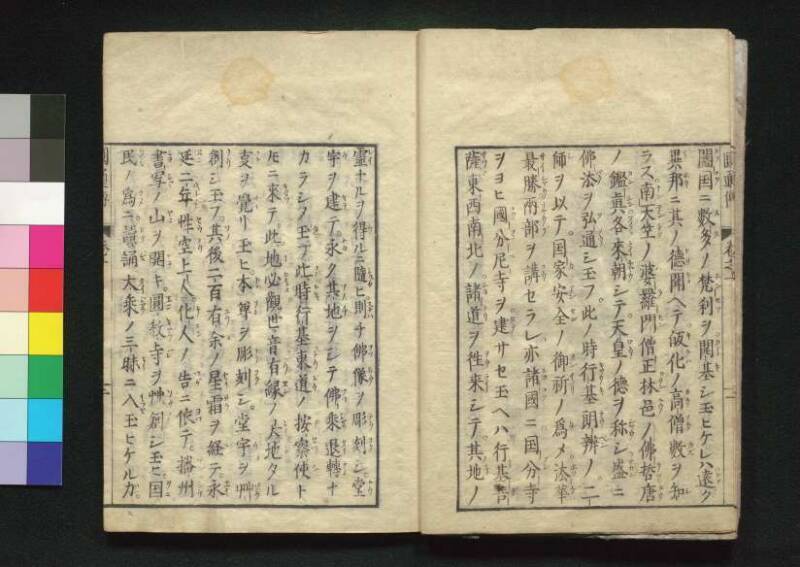
《振り仮名:■⁻国|カツコク》#1ニ《振り仮名:数⁻多|スタ》ノ《振り仮名:梵⁻刹|ホンセツ》ヲ。《振り仮名:開⁻基|カイキ》シ玉ヒケレハ。遠(トヲ)ク
《振り仮名:異⁻邦󠄁|イホウ》ニ其ノ德(トク)聞(キコ)ヘテ。皈化(キクハ)ノ《振り仮名:高⁻僧|カウソウ》數(カズ)ヲ知(シ)
ラス。《振り仮名:南₋天⁻竺|ナンテンヂク》ノ《振り仮名:婆⁻羅⁻門|ハラモン》僧⁻正。林邑(リンユウ)ノ《振り仮名:佛⁻哲| テツ》。唐(タウ)
ノ《振り仮名:鑑⁻眞󠄀|カンシン》。各(ヲノ〳〵)《振り仮名:來⁻朝|ライチヤウ》シテ。《振り仮名:天⁻皇| ワウ》ノ德ヲ称(シヤウ)シ。盛(サカン)ニ
《振り仮名:佛⁻㳒| パウ》ヲ《振り仮名:弘⁻通|クツウ》シ玉フ。此ノ時《振り仮名:行⁻基|キヤウキ》《振り仮名:朗⁻辨|ラウベン》ノ。二⁻
師(シ)ヲ以テ。《振り仮名:国⁻家安全| カアンセン》ノ御祈(ヲンイノリ)ノ為(タ)メ。《振り仮名:㳒⁻蕐|ホツケ》
《振り仮名:最⁻勝|サイシヤウ》。兩部(リヤウブ)ヲ講(コウ)セラレ。亦《振り仮名:諸⁻國|シヨコク》ニ。《振り仮名:国⁻分⁻寺| ブン 》
ヲヨヒ《振り仮名:国⁻分⁻尼⁻寺|コクフンニ 》ヲ。建(タテ)サセ玉ヘハ。《振り仮名:行⁻基⁻吾⁻| ボ》
薩(サツ)。東⁻西南⁻北ノ。《振り仮名:諸⁻道|シヨトウ》ヲ往来(ヲウライ)シテ。《振り仮名:其 ̄ノ地| チ》ノ
【左丁】
霊(レイ)ナルヲ得(ウ)ルニ隨(シタカ)ヒ。則(スナハ)チ佛像(フツサウ)ヲ彫刻(テウコク)シ。堂(トウ)
宇(ウ)ヲ建(タテ)テ。永(ナカ)ク《振り仮名:其⁻地|ソノチ》ヲシテ《振り仮名:佛⁻乘|フツジヤウ》《振り仮名:退⁻轉|タイテン》ナ
カラシメ玉(タマ)フ。《振り仮名:此⁻時|コノトキ》行⁻基《振り仮名:東⁻道|トウドウ》ノ《振り仮名:按⁻察⁻使|アセツシ》ト
𪜈ニ來(キタツ)テ。《振り仮名:此 ̄ノ地| チ》必(カナラス)觀⁻世⁻音 有縁(ウヱン)ノ㚑地(レイチ)タル
㕝(コト)ヲ覺(サト)リ玉ヒ。《振り仮名:本尊󠄁|ホンソン》ヲ彫刻(テウコク)シ。堂宇( ウ)ヲ《振り仮名:艸⁻|ソウ 》
創(ソウ)シ玉フ。其後(ソノ )《振り仮名:二⁻百有⁻余| ユウヨ》ノ星霜(セイサウ)ヲ経(ヘ)テ。《振り仮名:永⁻|ヱイ 》
延(ヱン)《振り仮名:二⁻年|戊子一條六十六》《振り仮名:性⁻空上⁻人|セウクウ 》。《振り仮名:化⁻人|ケニン》ノ告(ツゲ)ニ依(ヨツ)テ。《振り仮名:播⁻州|バンシウ》
《振り仮名:書⁻写|シヨシヤ》ノ山(ヤマ)ヲ開(ヒラ)キ。《振り仮名:圓⁻教⁻寺|ヱンキヤウジ》ヲ《振り仮名:艸⁻創|ソウ 〳〵》シ玉ヒ。国(クニ)
民(タミ)ノ爲(タメ)ニ。《振り仮名:讀⁻誦|ドクジユ》《振り仮名:大⁻乘|タイジヤウ》ノ《振り仮名:三⁻昧| マイ》ニ入(イラセ)玉ヒケルガ。
現代語訳
【右丁】
(前ページより続く)各国に数多の寺院を開基なさったので、遠く異邦にまでその徳が聞こえ、帰化する高僧は数知れず。南天竺の婆羅門僧正、林邑の仏哲、唐の鑑真が、それぞれ来朝して天皇の徳を称え、盛んに仏法を弘通なさった。この時、行基・朗弁の二師をもって、国家安全の御祈りのために、法華・最勝・両部を講ぜられ、また諸国に国分寺および国分尼寺を建てさせなさったので、行基菩薩は東西南北の諸道を往来して、その地の霊なるを得るにしたがい、
【左丁】
すなわち仏像を彫刻し、堂宇を建てて、永くその地に仏乗(仏の教え)が退転(衰え)なからしめなさった。この時、行基は東道の按察使とともに来たって、この地が必ず観世音の有縁の霊地であることを悟りなさり、本尊を彫刻し、堂宇を草創なさった。その後、二百有余の星霜を経て、永延二年(戊子・一条天皇・六十六)に性空上人が、化人の告げによって、播州書写の山を開き、円教寺を草創なさり、国民のために読誦・大乗の三昧に入りなさったところ、
英語訳
[Right page]
(Continued from previous page) ...having founded numerous temple complexes throughout the various provinces. So far did his virtue resound that even distant foreign lands heard of it, and the number of eminent monks who came to be converted and transformed was beyond counting. The Brahmin Sōjō from South India (Nantenjiku), Buttetsu from Linyi (Rinyū), and Jianzhen (Ganjin) from Tang China each came to Japan, praised the virtue of the Emperor, and actively propagated the Buddhist Dharma. At this time, the two masters Gyōki and Rōben were appointed to conduct recitations of the Lotus Sutra, the Sutra of Golden Light, and the Two Mandalas (Ryōbu) as prayers for the safety of the nation. Furthermore, as the Emperor ordered the construction of Kokubunji (provincial temples for monks) and Kokubun Niji (provincial temples for nuns) throughout the various provinces, the Bodhisattva Gyōki traveled along the roads in all four directions, and wherever he perceived a place to be spiritually auspicious,
[Left page]
he would carve a Buddhist image and erect a hall, ensuring that the Buddhist teachings would never decline in that place. At this time, Gyōki came together with the Azechishi (Inspector General) of the Eastern Road, and perceived that this very place was assuredly a sacred site blessed with a karmic connection to Kanzeon (Avalokiteśvara). He carved the principal image and founded the hall. Thereafter, more than two hundred years passed, and in the second year of Eien (998 CE, the year of Tsuchinoe-Ne, the sixty-sixth year of Emperor Ichijō's reign), the Venerable Shōkū, following the instruction of a transformed being (a supernatural messenger), opened the mountain of Shosha in Banshū (Harima Province), founded Enkyō-ji Temple, and entered the samādhi of reciting the Mahāyāna sutras for the benefit of the people of the land. At that point,
</translation_ja>