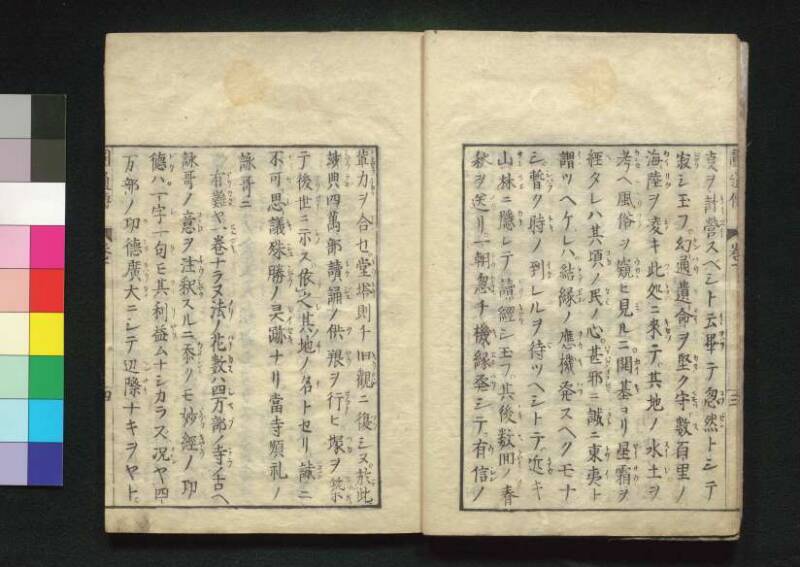
翻刻
【コマ9】
【右丁】
㕝ヲ計營(ケイヱイ)スベシト云畢(イヽヲハリ)テ忽然(コツゼン)トシテ
寂(ジヤク)シ玉フ。《振り仮名:幻⁻通|ケンツウ》《振り仮名:遺⁻命|イメイ》ヲ堅(カタ)ク守(マモリ)。《振り仮名:數百⁻里|ス 》ノ
《振り仮名:海⁻陸|カイリク》ヲ凌(シノ)キ此処(コノトコロ)ニ來(キタツ)テ。其地ノ水土(スイド)ヲ
考(カンカ)ヘ。風俗(フウソク)ヲ窺(ウカヽ)ヒ見(ミ)ルニ。開基(カイキ)ヨリ星霜(セイサウ)ヲ
經(ヘ)タレハ其頃( コロ)ノ民(タミ)ノ心。甚邪(ハナハタヨコシマ)ニ誠(マコト)ニ東夷(トウイ)ト
謂(イヽ)ツヘケレハ。結縁(ケチヱン)ノ應機(ヲウキ)発(ハツ)スヘクモナ
シ。暫(シハラ)ク時(トキ)ノ到(イタ)レルヲ待(マ)ツヘシトテ。近(チカ)キ
山林(サンリン)ニ隠(カク)レテ讀經(トクキヤウ)シ玉フ。其後( ノチ)《振り仮名:数⁻囬|スクハイ》ノ春
秋ヲ送(ヲク)リ。《振り仮名:一⁻朝| テウ》忽(タチマ)チ《振り仮名:機⁻縁|キヱン》発(ハツ)シテ。有信(ウシン)ノ
【左丁】
輩(トモカラ)力(チカラ)ヲ合(アハ)セ。堂塔(ドウトウ)則チ旧觀(キウクハン)ニ復(フク)シヌ。於 ̄テ_レ此 ̄ニ
《振り仮名:玅⁻典|ミヤウテン》四⁻萬⁻部 讀誦(トクジユ)ノ供羪(クヤウ)ヲ行(ヲコナ)ヒ。塚(ツカ)ヲ築(キツキ)
テ後世(コウセイ)ニ示(シメ)ス。依 ̄テ_レ之 ̄レ《振り仮名:其 ̄ノ地| チ》ノ名(ナ)トセリ。誠(マコト)ニ
《振り仮名:不⁻可⁻思⁻議|フカシキ》殊勝(シユシヤウ)ノ㚑跡(レイセキ)ナリ。當寺順礼󠄁ノ
詠哥ニ
《振り仮名:有難|アリカタ》ヤ一巻(ヒトマキ)ナラヌ法(ノリ)ノ花(ハナ)數(カス)ハ四万部(シマブ)ノ寺(テラ)ノ古ヘ
詠哥ノ意(コヽロ)ヲ注釈(チウシヤク)スルニ。忝(カタシケナ)クモ妙經(ミヤウキヤウ)ノ㓛
德(ドク)ハ。《振り仮名:一⁻字一⁻句| シ ク》モ其(その)利益(リヤク)ムナシカラズ。况(イハン)ヤ四⁻
万⁻部ノ㓛德(クトク)廣大(クハウタイ)ニシテ辺際(ヘンサイ)ナキヲヤト。
現代語訳
【右丁】
ことを計り営むべし」と言い終わって、忽然として寂(入滅)なされた。幻通は遺命をかたく守り、数百里の海路・陸路を凌いでこの地に来て、その地の水土(風土)を考え、風俗を窺い見るに、開基より星霜(年月)を経たれば、その頃の民の心は甚だ邪(よこしま)で、まことに東夷(未開の東国の民)と言うべきであったから、結縁の応機(縁を結ぶべき機が熟すること)が発すべくもなかった。しばらく時の至るのを待つべしとして、近くの山林に隠れて読経なされた。その後、数回の春秋を送り、ある朝たちまち機縁が発して、信心ある
【左丁】
人々が力を合わせ、堂塔はすなわち旧観(もとの姿)に復した。ここにおいて、妙典四万部読誦の供養を行い、塚を築いて後世に示した。これによって、その地の名(四万部)とした。まことに不可思議・殊勝の霊跡である。当寺巡礼の詠歌に、
有り難やひとまきならぬ法の花 数は四万部の寺の古(いにしえ)
詠歌の意を注釈するに、かたじけなくも妙経の功徳は、一字一句もその利益(りやく)がむなしいことはない。いわんや四万部の功徳が広大にして辺際(果て)のないことをや(言うまでもない)。
英語訳
[Right page]
...should plan and carry out these matters." Having finished speaking these words, he suddenly passed away (entered nirvana). Genzū strictly kept the final instructions, and enduring the hundreds of leagues of sea and land, came to this place. Examining the land and soil (natural conditions) of the area and observing its customs, he found that, since the time of the temple's founding, many years had passed, and the hearts of the people of that time were exceedingly corrupt — truly they could be called eastern barbarians (tōi) — and so the time was not yet ripe for establishing karmic bonds with them. Thinking that he should wait until the right moment arrived, he hid himself in a nearby mountain forest and recited sutras. After sending through several springs and autumns (years), one morning the opportune moment suddenly arose, and those of sincere faith
[Left page]
joined their efforts together, and the halls and pagodas were accordingly restored to their former appearance. At this point, they performed a memorial service of reciting forty thousand volumes of the Wondrous Sutra, built a burial mound, and showed it to future generations. From this, it became the name of that place (Shimanbu/Yomabe). Truly, it is a wondrous and supremely excellent sacred site. In the pilgrim's verse for this temple:
*Arigataya hito maki naranu nori no hana / kazu wa shimanbu no tera no inishie*
How wondrous — not a single scroll but flowers of the Dharma; / the number is forty thousand volumes, this temple of ancient times.
To annotate the meaning of this verse: Humbly, the merits of the Wondrous Sutra are such that not a single character or phrase is without its benefit (to sentient beings). How much more so, then, the merits of forty thousand volumes, which are vast and boundless without limit.