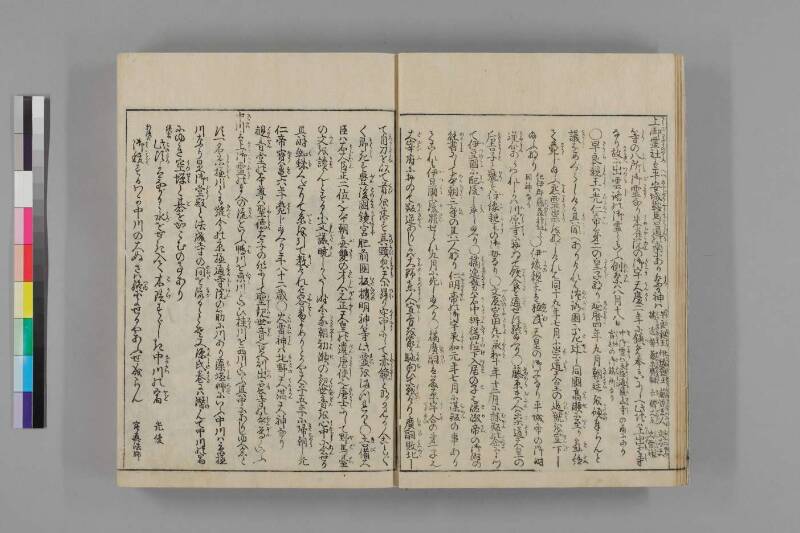
翻刻
【右丁】
上御霊社は平安城鞍馬口通の南にあり祭る神は
《割書:早良親王 伊豫親王 藤原夫人 文太夫|》
《割書:橘逸勢 藤原廣嗣 吉備大臣 火雷神|》
等の八所御霊なり朱雀院の御宇天慶二年に鎮め奉るいにしへ此地は上出雲等
なり故に出雲路の御霊ともいふ例祭は八月十八日
《割書:中御霊は京極通り蘆山寺の南にあり|》
《割書:當社の御旅所なり|》
○早良親王は光仁帝第二の皇子なり延暦四年九月調停を傾奉らんと
議をめぐらしける其聞ありければ淡路國に左遷し同國高瀬に到り氣絶
て薨じ給ふ怨霊祟をなしけれは同十九年七月に崇道天皇の追號を宣下し
給ふなり 《割書:紀伊郡藤森神社|》
《割書:と同神なり|》
○伊豫親王は桓武天皇の御子なり平城帝の御時
逆心あらはれしかは川原寺におゐて飲食を通せず終給へり
○藤原夫人は崇道天皇の
后吉子と號す伊豫親王の御母なり
○文屋宮田丸は承和十年十二月に謀叛を企によつ
伊豆國に配流し卒し給へり
○橘逸勢は右中辨従四位下入居の子也嵯峨帝の御時の
能書にて本朝三筆の其一人なり仁明帝の御宇承和元年に謀叛の事あり
てこれも伊豆國に流罪せられ九月に死し給へり
○藤原廣嗣は藤原宇合の第一子也
大宰府におゐて叛逆ありしかば大野東人宣旨を蒙り馳せ向ひて戦けり廣嗣敗北し
【左丁】
て自刀を以て首を落す其頸を忽天に上り空中にて赤鏡となる見る人こと〴〵
く即死す豊後國鏡宮肥前國板櫃明神寺等此霊をまつれり
○吉備大
臣は右大臣正二位也本朝無雙の才人元正天皇の遣唐使也唐土にて野馬臺
の文を讀んとするに文議暁しかたし時に本朝初瀬の観世音を心中に念せり
其時蜘蛛くだりて糸を引て教ければ容易によめりとかや天平五年に帰朝し光
仁帝寶亀六年薨じ給へり年八十二歳
○火雷神は北野天神なり
観音堂の本尊は聖徳太子の作にして聖観世音也是■出雲路の本尊といふ
中川の上御霊社のまへの流をいふ鴨川を東川といひ桂川を西川といふ其中にありしゆへ名と
す一名京極川とも號今の京極通寺院の筋に川あり藻塩艸にいふ中川は京極
川なり是御堂殿と法成寺の間を流るゝとそ又源氏巻には潜んて中川の宿
にゆき空蝉と碁をかこむの事あり
續古
此頃にながるゝ水をせき入て木陰すゞしき中川の宿 光俊
續古
■■するわか中川の大ぬさは終によせるやあふせ成らん 宇真法師
現代語訳
## 右丁
**上御霊社**は平安城(京都)の鞍馬口通の南に位置する。祭神は、
- 早良親王・伊豫親王・藤原夫人・文太夫
- 橘逸勢・藤原廣嗣・吉備大臣・火雷神
以上の八所御霊である。朱雀院の御代、天慶二年(939年)に鎮め奉った。古くこの地は上出雲などと呼ばれていたため、「出雲路の御霊」とも言う。例祭は八月十八日である。
> ※中御霊は京極通り蘆山寺の南にある。当社の御旅所である。
---
〇**早良親王**は光仁天皇の第二皇子である。延暦四年(785年)九月、朝廷を傾けようと謀議をめぐらしていることが発覚し、淡路国へ左遷された。同国の高瀬に到ったところで気絶してお亡くなりになった。その怨霊が祟りをなしたため、同十九年(800年)七月に「崇道天皇」の追号が宣下された。
> ※紀伊郡藤森神社と同じ神である。
〇**伊豫親王**は桓武天皇の御子である。平城天皇の御時に逆心が明らかになったため、川原寺において飲食を絶ちお亡くなりになった。
〇**藤原夫人**は崇道天皇の后で、吉子と号する。伊豫親王の御母である。
〇**文屋宮田丸**(文太夫)は承和十年(843年)十二月に謀叛を企てたとして、伊豆国へ配流となり、そこで亡くなられた。
〇**橘逸勢**は右中弁・従四位下・入居の子である。嵯峨天皇の御時に能書家として知られ、本朝三筆のひとりである。仁明天皇の御代、承和元年(834年)に謀叛の事があり、伊豆国へ流罪となり、九月にお亡くなりになった。
〇**藤原廣嗣**は藤原宇合の第一子である。大宰府において叛逆を起こしたため、大野東人が宣旨を受けて馳せ向かい戦った。廣嗣は敗北し、
---
## 左丁
自刀をもって首を落とした。その首はたちまち天に昇り、空中で赤い鏡となった。それを見た者はことごとく即死したという。豊後国の鏡宮、肥前国の板櫃明神寺などでこの霊を祀っている。
〇**吉備大臣**は右大臣・正二位である。本朝無双の才人であり、元正天皇の遣唐使として唐へ渡った。唐土にて「野馬臺の文」を読もうとしたが、文の意味が解読しがたかった。そのとき、本朝(日本)の長谷(初瀬)の観世音を心中に念じたところ、蜘蛛が下りてきて糸を引いて教えてくれたため、容易に読めたという。天平五年(733年)に帰朝し、光仁天皇の宝亀六年(775年)に薨去された。享年八十二歳。
〇**火雷神**は北野天神(菅原道真)のことである。
---
**観音堂**の本尊は聖徳太子の作であり、聖観世音菩薩である。これを「出雲路の本尊」という。
---
**中川**とは上御霊社の前を流れる川のことである。鴨川を東川、桂川を西川と呼び、その中間に位置することからこの名がついた。別名「京極川」とも称する。現在の京極通寺院の筋に川がある。『藻塩草』に「中川は京極川である。これは御堂殿(藤原道長)と法成寺の間を流れる」とある。また『源氏物語』の「空蝉」の巻には、忍んで中川の宿へ行き、空蝉と碁を打つ場面がある。
---
**続後撰集**
> この頃に流れる水をせき入れて 木陰涼しき中川の宿
> (光俊)
**続後撰集**
> ■■するわが中川の大幣は ついに寄せるや逢瀬なるらん
> (宇真法師)
英語訳
## Right Page
**Kami-Goryō Shrine** is located south of Kurama-guchi Street in Heiankyō (Kyoto). The deities enshrined are:
- Prince Sawara, Prince Iyo, Lady Fujiwara, Fumi-no-tayu
- Tachibana no Hayanari, Fujiwara no Hirotsugu, Minister Kibi, and the Fire-Thunder Deity (Kaminari-jin)
These are known as the Eight Goryō (vengeful spirits). They were enshrined during the reign of Emperor Suzaku, in the second year of Tengyō (939 CE). In ancient times this area was called "Kami-Izumo" and similar names, hence the shrine is also known as "Izumoji no Goryō." The annual festival is held on the eighteenth day of the eighth month.
> *Note: Naka-Goryō Shrine is located south of Rozanji Temple on Kyōgoku Street. It serves as the otabisho (temporary resting place during processions) of this shrine.*
---
〇 **Prince Sawara** was the second son of Emperor Kōnin. In the ninth month of Enryaku 4 (785 CE), it was discovered that he was plotting to subvert the imperial court, and he was exiled to Awaji Province. He lost consciousness and died upon arriving at Takase in that province. As his vengeful spirit was believed to be causing calamities, he was posthumously granted the title "Emperor Sudō" in the seventh month of the nineteenth year of Enryaku (800 CE).
> *Note: He is the same deity as the one enshrined at Fujinomori Shrine in Kii District.*
〇 **Prince Iyo** was a son of Emperor Kanmu. During the reign of Emperor Heizei, his treasonous intentions became known, and he was confined to Kawaradera Temple, where he refused all food and drink until he died.
〇 **Lady Fujiwara** was the consort of Emperor Sudō (Prince Sawara), known by the name Yoshiko. She was the mother of Prince Iyo.
〇 **Fumi no Miyatamaro** (Fumi-no-tayu) plotted rebellion in the twelfth month of Jōwa 10 (843 CE) and was exiled to Izu Province, where he died.
〇 **Tachibana no Hayanari** was the son of the Right Middle Counselor (Udaiben), Junior Fourth Rank Lower Grade, Nyūkyo. He was a celebrated calligrapher during the reign of Emperor Saga and is counted among the "Three Brushes of Japan" (Nihon Sanpitsu). During the reign of Emperor Ninmyō, in the first year of Jōwa (834 CE), he was implicated in a treasonous affair and exiled to Izu Province, where he died in the ninth month.
〇 **Fujiwara no Hirotsugu** was the first son of Fujiwara no Umakai. He raised a rebellion at Dazaifu, whereupon Ōno no Azumahito received an imperial order and marched to meet him in battle. Hirotsugu was defeated, and—
---
## Left Page
—he cut off his own head with a sword. His severed head immediately rose into the sky and transformed into a red mirror in midair. All who witnessed this died instantly. His spirit is enshrined at Kagami-no-miya in Bungo Province and at Itatsu Myōjin Temple in Hizen Province, among others.
〇 **Minister Kibi (Kibi no Makibi)** held the position of Minister of the Right, Senior Second Rank. He was an unparalleled scholar in Japan and served as an envoy to Tang China during the reign of Empress Genshō. While in China, he was tasked with reading the "Wild Horse Plateau Text" (Yamatai no fumi), which he found very difficult to decipher. At that moment, he prayed in his heart to the Kannon of Hase (Hatsuse) in Japan, whereupon a spider descended and guided him with its thread, enabling him to read the text with ease. He returned to Japan in Tenpyō 5 (733 CE) and died in the sixth year of Hōki during the reign of Emperor Kōnin (775 CE), at the age of eighty-two.
〇 **The Fire-Thunder Deity (Kaminari-jin)** refers to the Kitano Tenjin (the deified spirit of Sugawara no Michizane).
---
The principal image of the **Kannon Hall** was crafted by Prince Shōtoku and is the Holy Kannon (Shō-Kanzeon Bosatsu). It is called the "principal image of Izumoji."
---
**The Nakagawa (Middle River)** refers to the river flowing in front of Kami-Goryō Shrine. The Kamo River is called the "East River" and the Katsura River is called the "West River," and this river lies in between them, hence its name. It is also known as "Kyōgoku River." There is a river along the street of temple districts in what is now Kyōgoku-dōri. The literary anthology *Mosio-gusa* states: "The Nakagawa is the Kyōgoku River, which flows between the Midō-dono (Fujiwara no Michinaga's residence) and Hōjōji Temple." Furthermore, in the "Utsusemi" chapter of *The Tale of Genji*, there is a scene in which Genji secretly visits the lodging at Nakagawa and plays a game of go with Utsusemi.
---
*Shoku-Gosen'shū* (Collection of Later Gleanings, Continued):
> Drawing the flowing waters of this season into the garden—
> How cool is the shade of trees at Nakagawa's lodge.
> *(Mitsutoshi / Kōshun)*
*Shoku-Gosen'shū*:
> ■■ the great sacred wand of my Nakagawa—
> Will it at last drift to shore, to our long-awaited meeting?
> *(Priest Ushin)*