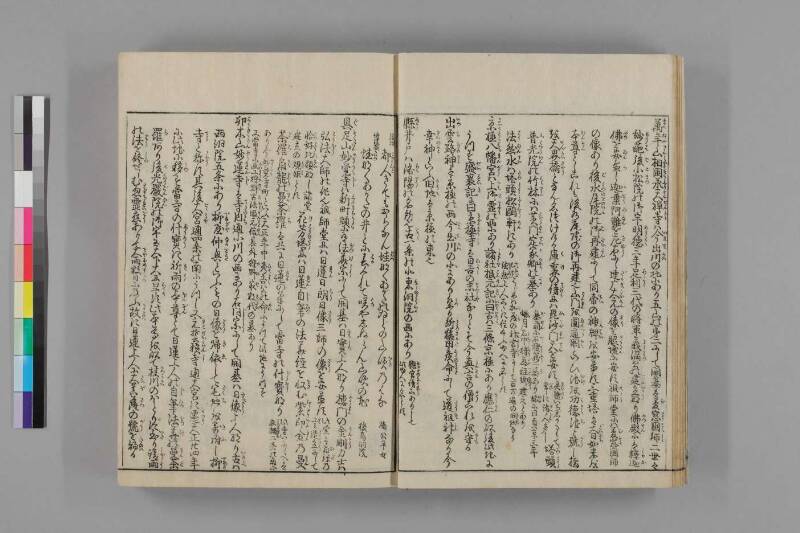
翻刻
萬年山相国承天禅寺は今出川の北にあり五山の第二にして開基は遠国師二世文
妙葩後小松院の御宇明徳二年足利三代将軍義満公の建立なり仏殿には釈迦
佛を安置し迦葉阿難を左右にし達磨大師の像を脇壇に安す祖師堂には夢窓国師
の像あり後水尾院の御再建にして同帝の神牌を安置す三重塔は大日如来を
本尊としこれも水尾院の御再建也山門を圓通国といひ池を功德池と號し橋
を天界橋となん名づけゝる庫裏の傍には毘沙門天を安す
霊験いちじるしくして
常に詣人多し
塔頭
普光院の竹林には黄門定家卿の墓あり
墓前に石燈籠二基あり銘に曰貞享三年
臘月右中将為経卿建之とあり
法然水は塔頭松鶴軒にあり
此地はじめは加茂の神宮寺にして百万遍の旧地なり
法然上人こゝに住給ふゆへに名とす
京極八幡宮は上御盤の西にあり諸社根元記に曰古は三條京極にあり應仁の以後此地に
うつす盛衰記に曰京極寺は日古の末社なりとそ今真言の僧これを守る
出雲路神は京極の西今出川のにあり祭る所猿田彦命にして道祖神なり今
幸神といふ旧地は京極の東也
縣井戸は洛陽の名所也古一条の北東洞院の西にあり
縣宮傍にありし也
此ゆへに名とす
後撰
都人きてもおらなん蛙なくあがたのゐとの山吹のはな橘公平女
続後撰
蛙なくあかたの井とに春くれて咲やしぬらん山吹の花 後鳥羽院
具足山妙音寺は新町頭に有法華宗にして開基は日実上人なり樓門の金剛力士は
弘法天師の作也祖師堂には日蓮日朗日實像三師の像を安置す
此堂には飛騨の朗
工み造立にして
恰好比類なし諸堂
建立の規矩とす
花芳塔には日蓮自筆の法華経を収む紫印金の蔓
荼羅角龍の曼荼羅は共に日蓮の筆にして當寺の什宝なり
此寺いにしへは
衣棚二条の南に
あり今妙覚寺町といふ天正年中秀吉公の命によつて此地にうつす
又當寺に画工狩野古法眼元信其外狩野家数代の墓あり
卯木山妙蓮寺は寺内通小川の西にあり右同宗にして開基は日像上人なり古は
西洞院五条にあり柳屋仲興といふもの日像を帰依して宅地を寄附し柳
寺と称す其後大宮通四条の南にうつし又元哲願寺通大宮に遷天正廿四年
に此地に移す当寺の什宝に祈雨の本尊とて日蓮上人の自筆に法花の宝曼荼
羅あり後光厳院の御宇公天下大に旱す此本尊を以て桂川のほとりに至り請国
の法を修せしむ忽霊應ありて大雨数日及ふ故に日連上人に太菩薩の號を賜る
現代語訳
**万年山相国承天禅寺(相国寺)**
相国寺は今出川の北にあり、五山の第二位であり、開基は遠溪祖雄国師、二世は春屋妙葩である。後小松院の御代、明徳二年(1391年)に足利三代将軍義満公が建立した。仏殿には釈迦仏を安置し、迦葉・阿難を左右に配し、達磨大師の像を脇壇に安置している。祖師堂には夢窓国師の像があり、後水尾院の御再建によるもので、同帝の神牌も安置されている。三重塔は大日如来を本尊とし、これも後水尾院の御再建である。山門を「圓通国」といい、池を「功徳池」と称し、橋を「天界橋」と名づけている。庫裏の傍には毘沙門天を安置しており、霊験が著しく、常に参拝する人が多い。
(塔頭)
普光院の竹林には、黄門(権中納言)定家卿(藤原定家)の墓がある。墓前に石燈籠二基があり、銘文に「貞享三年臘月、右中将為経卿これを建てる」とある。
「法然水」は塔頭の松鶴軒にある。この地はもともと加茂の神宮寺であり、百万遍の旧地である。法然上人がここに住まわれたことから、この名がついた。
---
**京極八幡宮**
京極八幡宮は上御霊(社)の西にある。『諸社根元記』によれば、古くは三条京極にあったが、応仁の乱以後にこの地に移されたという。『盛衰記』には「京極寺は日吉(ひえ)の末社なり」とある。現在は真言宗の僧がこれを守っている。
---
**出雲路神(幸神社)**
出雲路神社は京極の西、今出川のほとりにある。祭神は猿田彦命であり、道祖神である。現在は「幸神(さいのかみ)」と呼ばれている。旧地は京極の東であった。
---
**縣井戸(あがたのいど)**
縣井戸は洛陽(京都)の名所である。かつての一条の北、東洞院の西にある。縣宮(県宮)の傍にあったことから、この名がついた。
【後撰和歌集より】
「都人来てもおらなむ蛙なく あがたの井との山吹の花」 橘公平女
【続後撰和歌集より】
「蛙なく あがたの井戸に 春くれて 咲やしぬらん 山吹の花」 後鳥羽院
---
**具足山妙音寺**
妙音寺は新町の頭(北端)にある。法華宗であり、開基は日実上人である。楼門の金剛力士像は弘法大師(空海)の作である。祖師堂には日蓮・日朗・日実の三師の像を安置している。この堂は飛騨の名工が造立したもので、その出来栄えに比類がなく、諸堂建立の模範とされている。
花芳塔には日蓮自筆の法華経が収められている。紫印金の曼荼羅・角龍の曼荼羅はいずれも日蓮の筆によるもので、当寺の什宝(重要な宝物)である。
この寺はもともと衣棚二条の南にあり、現在も「妙覚寺町」と呼ばれている。天正年中、秀吉公の命によってこの地に移された。また当寺には、画工・狩野古法眼元信(狩野元信)およびその他の狩野家数代の墓がある。
---
**卯木山妙蓮寺**
妙蓮寺は寺ノ内通小川の西にある。妙音寺と同じ法華宗であり、開基は日像上人である。かつては西洞院五条にあり、柳屋仲興という人物が日像上人に帰依して宅地を寄附し、「柳寺」と称した。その後、大宮通四条の南に移り、さらに元哲願寺通大宮に遷り、天正二十四年(文禄五年・1596年)にこの地に移された。
当寺の什宝として、「祈雨の本尊」と称される日蓮上人自筆の法華の宝曼荼羅がある。後光厳院の御代に天下が大旱魃となり、この本尊を持って桂川のほとりに赴き、鎮国の法を修させたところ、たちまち霊験があって大雨が数日続いた。このゆえに、日蓮上人に「大菩薩」の号が賜られた。
英語訳
**Mannenzan Shōkoku Shōten Zen-ji (Shōkoku-ji)**
Shōkoku-ji is located north of Imadegawa. It holds second rank among the Gozan (Five Mountains) temples of Kyoto. It was founded by the National Master Enkei Sogan, with Shunoku Myōha as the second abbot. The temple was built by the third Ashikaga shogun, Yoshimitsu, in the second year of Meitoku (1391), during the reign of Emperor Gokomatsu. In the main hall (butsuden), a statue of Shakyamuni Buddha is enshrined, with Mahakasyapa and Ananda placed to the left and right, and an image of Bodhidharma on a side altar. The Patriarch's Hall (Soshidō) houses an image of National Master Musō Soseki, rebuilt by Emperor Gomizunoo, whose memorial tablet is also enshrined there. The three-storied pagoda enshrines Dainichi Nyorai (Vairocana) as its principal deity and was also rebuilt by Emperor Gomizunoo. The main gate is called "Entsūkoku," the pond is named "Kudoku-ike" (Pond of Merit), and the bridge is named "Tenkai-bashi" (Bridge of the Heavenly Realm). A statue of Bishamonten (Vaiśravaṇa) is enshrined beside the kitchen quarters; this deity is renowned for miraculous powers, and the temple is always frequented by many worshippers.
(Sub-temples)
In the bamboo grove of Fukōin (a sub-temple), there is the grave of Lord Teika (Fujiwara no Teika), the former Middle Counselor (Kōmon). In front of the grave stand two stone lanterns, inscribed: "Built in the twelfth month of Jōkyō 3 (1686) by Lord Tamemichi, former Middle Captain of the Right Guard."
The "Hōnen Water" spring is located at the sub-temple Shōkakuken. This site was originally the shrine temple of Kamo Shrine and the former location of Hyakumanben. Since the Venerable Hōnen resided here, it took its name from him.
---
**Kyōgoku Hachiman-gū**
Kyōgoku Hachiman-gū is located to the west of Kamigoryō (Shrine). According to the *Shosha Kongen-ki*, it was formerly located at Sanjō-Kyōgoku but was relocated to its current site after the Ōnin War. The *Seisui-ki* states: "Kyōgoku-ji is a subsidiary shrine of Hie Shrine." Currently, a Shingon Buddhist monk tends the shrine.
---
**Izumoji-jin (Saino-kami Shrine)**
The Izumoji Shrine is located to the west of Kyōgoku, near Imadegawa. The deity enshrined is Saruta-hiko no Mikoto, a god of crossroads (dōsojin). It is currently called "Saino-kami." Its former site was to the east of Kyōgoku.
---
**Agata no Ido (The Agata Well)**
The Agata Well is a famous site in Rakuyō (Kyoto). It is located north of the former Ichijō, to the west of Higashi-no-tōin. It takes its name from having been situated beside the Agata Shrine.
[Poem from the *Gosen Wakashū*:]
"Come, people of the capital, and linger here — where the frogs cry, the yamabuki (kerria) flowers bloom at the Agata Well." — Tachibana no Kōhei-jo (Lady Kōhei of the Tachibana clan)
[Poem from the *Zoku Gosenshū*:]
"As spring deepens at the Agata Well where the frogs cry, have the yamabuki flowers bloomed, or have they fallen?" — Emperor Gotoba
---
**Gusokuzan Myōon-ji**
Myōon-ji is located at the north end of Shinmachi. It belongs to the Hokke (Nichiren) sect and was founded by the Venerable Nichijitsu. The Niō (Guardian Kings) statues at the main gate are said to be the work of Kōbō Daishi (Kūkai). The Patriarch's Hall enshrines the images of three patriarchs: Nichiren, Nichirō, and Nichijitsu. This hall was built by a master craftsman from Hida Province and is of unparalleled artistry, serving as the model for the construction of temple halls in general.
The Hanabō Pagoda houses a copy of the Lotus Sutra in Nichiren's own handwriting. The Gold Mandala with Purple Seal and the Kakuryū Mandala are both in Nichiren's hand and are the temple's most prized treasures.
This temple was originally located south of Koromo-no-tana-Nijō; the area is still called "Myōkaku-ji-chō." During the Tenshō era, by order of Lord Hideyoshi, it was relocated to its present site. The temple also contains the graves of the painter Kanō Kogen Motonobu (Kanō Motonobu), as well as those of several subsequent generations of the Kanō family.
---
**Ubokizan Myōren-ji**
Myōren-ji is located west of Ogawa on Teranōchi-dōri. Like Myōon-ji, it belongs to the Nichiren sect and was founded by the Venerable Nichizō. It was formerly located at Nishi-no-tōin-Gojō, where a man named Yanagiya Nakako took faith in Nichizō and donated his residential land, leading the temple to be called "Yanagi-dera" (Willow Temple). Thereafter, it was relocated south of Ōmiya on Ōmiya-dōri at Shijō, then moved again to the former site of Ganzoji on Ōmiya-dōri, before being moved to its present location in the twenty-fourth year of Tenshō (Bunroku 5, 1596).
Among the temple's prized treasures is the "Rain-praying Principal Image" — a Lotus Sutra mandala in the hand of the Venerable Nichiren. During the reign of Emperor Gokōgon, there was a great drought throughout the realm. This principal image was taken to the banks of the Katsuragawa River, where rites for the pacification of the realm were performed. An immediate miraculous response occurred, and heavy rain fell for several days. As a result, the honorific title of "Great Bodhisattva" was bestowed upon the Venerable Nichiren.