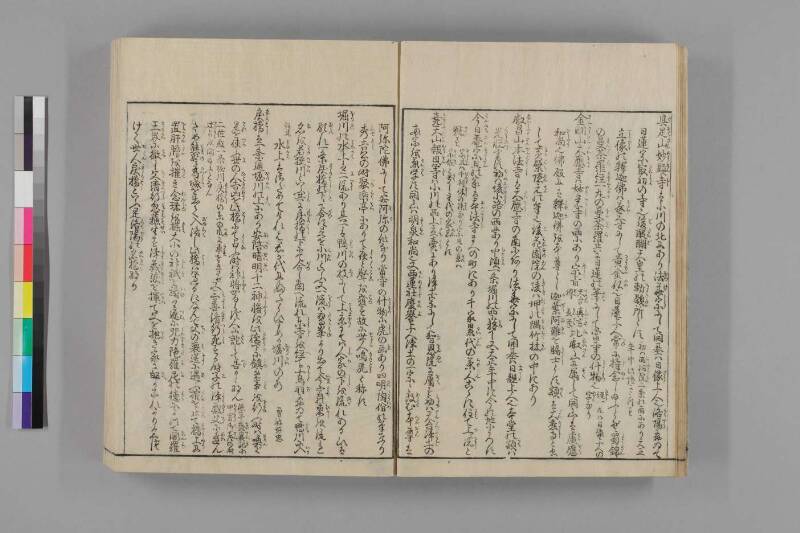
翻刻
【コマ17】
【右丁】
《振り仮名:具󠄁足山|ぐそくさん》妙顕寺(めうけんじ)は小川の北にあり法華宗(ほつけしう)にして開基は日像上人( ざう )也 洛陽(らくやう)におゐて
日蓮宗 㝡初(さいしよ)の寺也 後醍醐天皇(ごだいご )の勅願所(ちよくくはん )とす《割書:初は西洞院二条(にしのとうゐん )の南にあり天正|年中此地にうつす》
立像(りうざう)の釋迦佛は長(みたけ)三寸にして黄金仏(わうごんふつ)也日蓮上人 常(つね)に持念(じねん)し給ふとぞ蜀錦(しよくきん)
《振り仮名:の曼茶羅經| まんだらきやう》#1《振り仮名:一丸の曼茶羅|いちまる まんだら》共に日蓮の筆(ふで)にして當寺の什物(しうもつ)也《割書:經一丸(きやう )は日像上人の|字(あざな)なり》
金剛山(こんかうさん)大應寺(たいをう )は妙覚寺(めうかくじ)の西にあり宗㫖(しうし)《割書:天台(てんだい)《振り仮名:眞󠄀言|しんごん》|禅(ぜん)兼学(けんがく)》《振り仮名:比𠮉山|ひゑいさん》に属(ぞく)して開山は虚應(きをう)
和尚(をしやう)也佛殿には釋迦佛(しやか )を夲尊とし迦葉(かせう)阿難(あなん)を《振り仮名:𦚰士|けうし》とす額(がく)は大應寺(だいをうじ)と書
して黄檗隠元(わうばくゐんげん)の筆也 後花園院(ごはなそのゐん)の陵(みさゝき)は坤(ひつしさる)の隅(すみ)竹林(ちくりん)の中にあり
《振り仮名:𠮉昌山|ゑいしやうさん》本法寺(ほんばうし)は大應寺(たいをう )の南にあり法華宗にして開基は日親上人(につしん )也夲堂の額(かく)は
光悦(くはうゑつ)書す初(ばじめ)は綾小路(あやのこうし)の西にあり中頃(なかころ)一条堀川の西に移(うつ)し又天正年中に今の地にうつす
今日菴宗旦(こんにちあんそうたん)の家は夲法寺(ほんはうじ)まへの町にあり千家累代( るいだい)の茶人(ちやじん)こゝに住(すみ)て《振り仮名:上 ̄み流|か#3りう》と
號(がう)す《割書:宗且(そうたん)#2は千利休(せんりきう)の孫(まこ)なり宗且の息(そく)は|宗佐(そうさ)と号(がう)し重代の家名(かめい)とす》
堯天山(きやうてんさん)報恩寺(ほうをんじ)は小川の西 上立賣(かみたちうり)にあり浄土宗にして智恩院(ちをんゐん)に屬(ぞく)す初(はじめ)は天台(てんたい)浄土(じやうど)の
両宗を兼学(けんがく)す開山は明泉和尚(みやうせん )也又 西蓮社慶譽上人(せいれんしやけいよ )浄土の一宗と改(あらた)む夲尊(ほんぞん)は
【左丁】
阿弥陀佛にして安阿弥( あみ)の作なり當寺の什物(しうもつ)に虎(とら)の画(ゑ)あり四明陶佾( めいたういつ)#4の筆なり
《振り仮名:秀𠮷公|ひでよし 》の时《振り仮名:聚楽𠅘|じゆらくてい》にありて夜々(よる〳〵)聲(こゑ)を發(はつ)す故に世人(せじん)鳴虎(なきとら)と称す
堀川(ほりかは)の水上(みなかみ)は二流(にりう)あり其一は鴨川(かもかは)の枝(ゑだ)にして上京(かみきやう)にては人家(じんか)の下(した)を流(なが)れあるひは
顕(あらは)れ一条戾橋( もとりはし)の下(した)にて合(がつ)す是を小川(こがは)といふ又 一流( りう)は鷹峯(たかゝみね)より出て今宮(いまみや)の東(ひかし)を流れ
名(な)を若狹川(わかさかは)といふ共(とも)に戾橋(もどりはし)の下にて合(がつ)し南へ流れ東寺(とうじ)を經(へ)て上鳥羽(かみとば)におゐて鴨川(かも )に入(いる)
《割書:詞花》
水上(みなかみ)はさだめてけれは君が代にふたゝひすめる堀川(ほりかは)の水 曾󠄂祢好忠
戾橋(もどりはし)は一条通堀川( ほりかは)の上(うへ)にあり安陪晴明(あべのせいめい)十二神將( じんしやう)を此 橋下(きやうか)に鎭(しつ)め事を行(をこな)ふ时は喚(さけん)で
是(これ)を使(つか)ふ世(よ)の人(ひと)《振り仮名:𠮷凶|きつけう》を此 橋(はし)にて占(うらな)ふ时は神將(しんしやう)かならず人に詑(たく)#5して告(つぐ)るとなん《割書:《振り仮名:源平盛■記| せいすいき》#6に|中宮(ちうくう)御産(こさん)の时》
《割書:二位殿一条堀川 戾橋(もどりはし)の東の爪(つめ)に車(くるま)を立させ|辻占(つじうら)を問給ふとなん》又 三善清行(みよしきよつら)死(し)する时 子(こ)の浄藏(しやうざう)父(ちゝ)に逢(あは)ん
ため熊野(くまの)《振り仮名:葛󠄀城|かつらき》を出て入洛(じゆらく)し此橋( はし)を過るに及んで父(ちゝ)の喪送(もそう)に遇(あ)ふ棺(くはん)を止(とゝめ)て橋上(きやうしやう)に
置(をき)肝膽(かんたん)を摧(くだ)き念珠(ねんじゆ)を揉(もみ)大小の神祇(じんき)を《振り仮名:禱󠄁|いの》り遂(つひ)に咒力陁羅尼(しゆりきたらに)#7の德によつて閻羅(ゑんら)#8
王界(わうかい)に徹(てつ)し父(ちゝ)清行(きよつら)忽(たちまち)蘓生(そせい)す浄藏(しやうさう)涙(なんた)を揮(ふるふ)て父を抱(いだ)き家に皈(かへ)るこれより名づ
けて丗人(せじん)戻橋(もとりはし)といふ是 洛陽(らくやう)の名橋(めいきやう)なり
現代語訳
## 妙顕寺・大應寺・本法寺・報恩寺・堀川・戻橋
**具足山(ぐそくさん)妙顕寺(みょうけんじ)** は小川の北にある。法華宗であり、開基は日像上人である。洛陽(京都)において日蓮宗最初の寺である。後醍醐天皇の勅願所とされた。
(もとは西洞院二条の南にあり、天正年中にこの地に移した。)
本堂には立像の釈迦仏があり、御丈三寸の黄金仏である。日蓮上人が常に持念(身近に持って念じること)されたとのことである。蜀錦(しょっきん)の曼荼羅経と「一丸の曼荼羅」はともに日蓮の筆によるものであり、当寺の什物(じゅうもつ)である。
(「経一丸(きょういちまる)」とは日像上人の字(あざな)である。)
**金剛山(こんごうさん)大應寺(だいおうじ)** は妙覚寺の西にある。宗旨は天台・真言・禅を兼学し、比叡山に属する。開山は虚應和尚である。仏殿には釈迦仏を本尊とし、迦葉(かしょう)・阿難(あなん)を脇士(きょうじ)とする。額には「大應寺」と書かれており、黄檗の隠元(いんげん)の筆である。後花園院の御陵は、坤(南西)の隅の竹林の中にある。
**叡昌山(えいしょうさん)本法寺(ほんぽうじ)** は大應寺の南にある。法華宗であり、開基は日親上人である。本堂の額は光悦(こうえつ)が書いたものである。もとは綾小路の西にあり、中頃に一条堀川の西に移し、また天正年中に現在の地に移した。
**今日庵宗旦(こんにちあんそうたん)の家** は本法寺前の町にある。千家累代の茶人がここに住み、「上(かみ)の流」と号する。
(宗旦は千利休の孫である。宗旦の息子は宗佐(そうさ)と号し、これを重代の家名とする。)
**堯天山(ぎょうてんさん)報恩寺(ほうおんじ)** は小川の西、上立売(かみたちうり)にある。浄土宗であり、知恩院に属する。もとは天台・浄土の両宗を兼学していた。開山は明泉和尚(みょうせんおしょう)である。その後、西蓮社慶誉上人(せいれんしゃけいよしょうにん)が浄土一宗と改めた。本尊は
---
阿弥陀仏であり、安阿弥(あんなみ)の作である。当寺の什物に虎の絵があり、四明陶佾(しめいとういつ)の筆である。
秀吉公の時代、聚楽第(じゅらくだい)にあった頃、夜ごと声を発したため、世の人々は「鳴き虎(なきとら)」と称する。
**堀川の水上(みなかみ)** には二つの流れがある。その一つは鴨川の支流であり、上京(かみぎょう)では人家の下を流れ、あるいは表れ出て、一条戻橋の下で合流する。これを小川という。もう一つの流れは鷹峯(たかがみね)より出て、今宮の東を流れ、名を若狭川(わかさがわ)という。両流は戻橋の下で合流して南へ流れ、東寺を経て上鳥羽において鴨川に合流する。
《詞花和歌集より》
> 水上はさだめてければ君が代にふたたびすめる堀川の水 曾禰好忠(そねのよしただ)
**戻橋(もどりばし)** は一条通堀川の上にある。安倍晴明(あべのせいめい)が十二神将をこの橋の下に鎮め、必要な時に呼び出して使ったという。世の人々が吉凶をこの橋で占う時、神将が必ず人に憑依して告げると伝えられる。
(『源平盛衰記』に、中宮の御産の時、二位殿が一条堀川の戻橋の東の端に車を立てて辻占いを問われたとある。)
また、三善清行(みよしのきよつら)が死に瀕した時、子の浄蔵(じょうぞう)が父に会おうと熊野・葛城を出て入洛し、この橋を過ぎようとした折に、父の葬列に行き合わせた。棺を止めて橋上に置き、肝胆を砕き、念珠を揉み、大小の神祇に祈り、ついに呪力陀羅尼(しゅりきだらに)の功徳によって閻魔王界に至り、父の清行はたちまち蘇生した。浄蔵は涙を振るって父を抱き、家に帰った。これよりこの橋を世の人々は「戻橋」と名付けた。これは洛陽の名橋である。
英語訳
## Myōkenji Temple, Daiōji Temple, Honpōji Temple, Hōonji Temple, the Horikawa River, and Modori Bridge
**Myōkenji Temple (具足山 Gusokuzan)** is located to the north of the Ogawa River. It belongs to the Hokke (Nichiren) sect, and was founded by the Venerable Nisshin. It is the very first Nichiren sect temple established in Rakuyō (Kyoto). It was designated as a prayer temple (chokuganjo) by Emperor Godaigo.
(It was originally located to the south of Nishinotōin-Nijō, and was relocated to its present site during the Tenshō era.)
In the main hall stands an image of Shakyamuni Buddha, a golden statue three *sun* (approximately 9 cm) in height. It is said that the Venerable Nichiren always kept it close for personal veneration. A *mandala-kyō* woven in Shu brocade silk and an "Ichimaru Mandala" are both written in Nichiren's own hand and are treasured objects of this temple.
(The name "Kyō Ichimaru" was the courtesy name (*azana*) of the Venerable Nisshō.)
**Daiōji Temple (金剛山 Kongōzan)** is located to the west of Myōkakuji Temple. Its doctrinal tradition encompasses the combined study of Tendai, Shingon, and Zen, and it is affiliated with Mount Hiei. The founder is Abbot Kyōō. The Buddha hall enshrines a statue of Shakyamuni Buddha as its principal object of worship, with Kashyapa and Ānanda as attendant figures. The temple plaque bearing the name "Daiōji" was written by the Ōbaku master Ingen. The imperial mausoleum of the Gohanazon-in (Emperor Gohanazon) is located in the southwest corner, within a bamboo grove.
**Honpōji Temple (叡昌山 Eishōzan)** is located to the south of Daiōji Temple. It belongs to the Hokke (Nichiren) sect, and was founded by the Venerable Nisshin. The plaque on the main hall was written by Hon'ami Kōetsu. The temple was originally located to the west of Ayakōji, later moved to the west of Ichijō-Horikawa, and then relocated to its present site during the Tenshō era.
**The Residence of Konnichiansōtan** is located in the town in front of Honpōji Temple. Tea masters of the Sen family have lived here for generations, using the name "Kami-no-Ryū" (the Upper School).
(Sōtan was the grandson of Sen no Rikyū. Sōtan's son took the name Sōsa, which has been passed down as the family's hereditary name.)
**Hōonji Temple (堯天山 Gyōtenzan)** is located to the west of the Ogawa River, on Kamitachiuri Street. It belongs to the Jōdo (Pure Land) sect and is affiliated with Chion'in Temple. Originally, it practiced both Tendai and Jōdo teachings simultaneously. The founding abbot was Myōsen. Later, the Venerable Keiyo of Seirensha reformed it into a single Jōdo sect temple. The principal object of worship is
---
a statue of Amida Buddha, crafted by Anna-mi. Among the temple's treasured objects is a painting of a tiger, executed by Siming Tao Yi.
During the time of Lord Hideyoshi, while this painting was kept at Jurakudai (the Palace of Assembled Pleasures), it cried out every night, and so the people came to call it the "Crying Tiger" (*Naki Tora*).
**The headwaters of the Horikawa River** have two sources. One is a branch of the Kamo River, which flows beneath the houses of the Upper Capital (Kamigyo) district, occasionally emerging above ground, and joins together beneath Ichijō Modori Bridge. This is called the Ogawa River. The other stream originates from Takagamine, flows to the east of Imamiya Shrine, and is called the Wakasa River. Both streams merge beneath Modori Bridge, flow southward, pass by Tōji Temple, and eventually join the Kamo River at Kamitoba.
*From the Shikashū (Anthology of Verbal Flowers):*
> *Minakami wa / sadamete kereba / kimi ga yo ni / futatabi sumeru / Horikawa no mizu*
> (The headwaters are fixed and clear — just as, in your reign, the waters of the Horikawa run pure once more.)
> — Sone no Yoshitada
**Modori Bridge (戻橋)** stands over the Horikawa River on Ichijō Street. The legendary master of onmyōdō, Abe no Seimei, is said to have sealed his twelve *shinsho* (divine generals) beneath this bridge, and summoned them forth when needed. It is said that whenever people came to this bridge to divine good or ill fortune, the divine generals would invariably possess a person to deliver their oracle.
(According to the *Genpei Seisui-ki*, at the time of the consort's labor, a lady of the second rank had her carriage stationed at the eastern end of Ichijō Horikawa's Modori Bridge to seek an omen from a passerby.)
Furthermore, when Miyoshi no Kiyotsura lay at the point of death, his son Jōzō, wishing to see his father, departed from Kumano and Katsuragi and entered the capital. As he was crossing this bridge, he encountered his father's funeral procession. He halted the coffin and placed it on the bridge, crushed with grief, he rubbed his prayer beads and prayed to all the great and small deities. Through the power of the *shuriki dhāraṇī* (the mantra of spiritual power), his prayers reached the realm of King Yama, and his father Kiyotsura was suddenly restored to life. Jōzō, shaking with tears, embraced his father and carried him home. From this event, people came to call this bridge "Modori Bridge" (the Bridge of Return). It is one of the famous bridges of Rakuyō (Kyoto).