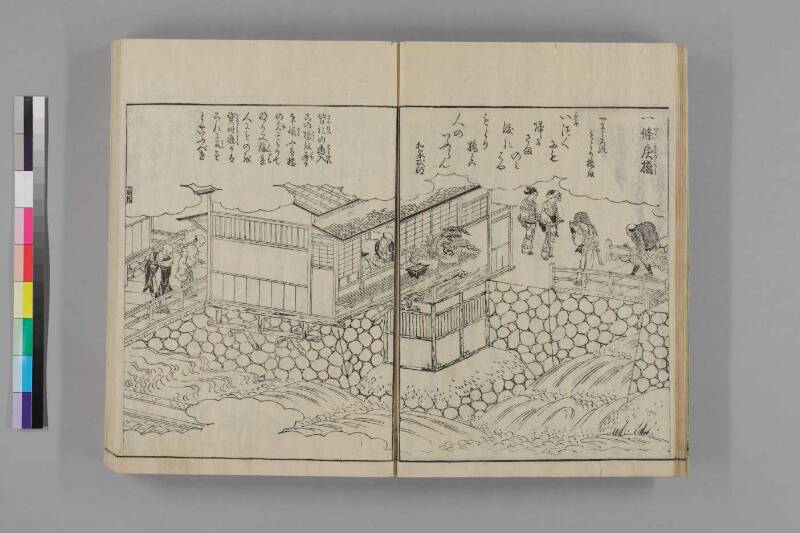
翻刻
一條戻橋
やましろの
もとり橋を
家集
いつく
にも
帰る
さま
のみ
渡れ
はや
もとり
橋とは
人の
いふらん
和泉式部
婚礼の輿入
この橋を通る
事嫌ふは橋
の名によりて
なり又旅立
人にものを
貸時通るは
これに反す
とやいふべき
現代語訳
## 一条戻橋
【和泉式部の歌(家集より)】
やましろの もとり橋を
いづくにも 帰るさまのみ 渡れはや
もとり橋とは 人のいふらん
(意訳:山城国の「もとり橋」よ、どこへ行っても帰ってくるばかりの私を見て、人々はこれを「戻り橋」と呼ぶのだろう。)
---
【欄外注】
婚礼の輿入れに際し、この橋を通ることを忌み嫌うのは、橋の名(「戻る」)にちなんでのことである。また、旅立ちをする人に物を貸す時にこの橋を通るのは、これとは逆の意味合い(貸した物が戻ってくる=返ってくる)になるとでも言うべきであろうか。
英語訳
## Ichijo Modori-bashi (The Bridge of Return)
**Poem by Izumi Shikibu (from her personal poetry collection):**
*Yamashiro no / modori-bashi wo / izuku ni mo / kaeru sama nomi / watare haya / modori-bashi to wa / hito no iuran*
(The "Modori Bridge" of Yamashiro — since I do nothing but return wherever I go, people must call this the Bridge of Return.)
---
**Marginal note:**
It is considered inauspicious for a bride's wedding procession (koshi-iri) to pass over this bridge, owing to the bridge's name — "Modori" meaning "to return" — implying that the bride might be sent back home. On the other hand, one might say that passing over this bridge when lending something to a traveler would carry the opposite, favorable meaning — that the lent item will surely be returned.