翻刻
【コマ19】
【右丁】
小野小町(をのゝ )《振り仮名:雙紙洗の水|さうしあらひ 》は戻橋(もどりはし)の艮(うしとら)諸侯屋舗(しよこうやしき)の庭(には)にあり清和水(せいわすい)ともいふ傍(かたはら)に
小町塔(こまちのたう)あり晴明水(せいめいすい)《割書:此所にあり安陪晴明(あべのせいめい)密法(みつほう)を行ふとき神水(しんすい)を得(ゑ)んか為(ため) |祈誓(きせい)によつてこゝに涌出(ゆしゆつ)せしとぞ》《振り仮名:下り松|さか まつ》
《割書:此所にあり一条の《振り仮名:下り松|さが 》は是なり|古(いにしへ)より丗(よ)に名高(なたか)し》
安陪晴明社(あべのせいめいのやしろ)は一条の西 葭屋町晴明町(よしやまちせいめいてう)にあり祭(まつ)る所は晴明(せいめい)が霊神(れいしん)也
古(いにしへ)は此地 晴明(せいめい)か居舘(きよくはん)なりとそ
水火天神(すいくはてんじん)は堀川(ほりかわ)の北《振り仮名:天神の辻子| つじ》にあり祭る所 水火(すいくは)の霊神(れいしん)なりといふ《割書:一説( せつ)には天満(てんまん)|天神(てんじん)なりとそ》
瑞光院(ずいくはうゐん)は安居院(あぐゐ)の北にありむかしは浅野弾正(あさのだんじやう)の第宅(ていたく)也 鎭守(ちんじゆ)の神を浅野(あさの)
稲荷(いなり)と称(しやう)す播州(ばんしう)赤穂城主(あこのじやうしゆ)浅野内匠頭長矩( たくみのかみながのり)其外 家臣(かしん)の塔(たう)一基( き)あり
《割書:大石内藏介良雄(をゝいしくらのすけよしを)を始(はじめ)|義臣(ぎしん)四十六人の姓名(せいめい)を記す》當院(たうゐん)の什物(じうもつ)に内藏介(くらのすけ)の画像(ぐはざう)辞丗(じせい)の詩歌(しか)書翰(しよかん)等(とう)あり
惠光山(ゑくはうさん)本隆寺(ほんりうじ)は五辻の北にあり法華宗にして開基は《振り仮名:日眞󠄀上人|につしん 》也 題目(だいもく)の
石塔(せきたう)は日像上人( ざう )の筆也《割書:はじめ當寺は四条の西にあり中頃(なかごろ)西陣(にしぢん)にうつし|《振り仮名:聚楽𠅘|しゆらくてい》造営(ざうゑい)の时今の地にうつす》
櫻葉宮(さくらはのみや)は出水通千本(でみつとをり )の東にあり祭る所 天照太神(てんしやうだいじん)也むかし《振り仮名:右近馬場|うこんの 》に
天降(あまくだ)り給ふゆへ《振り仮名:日降の神明|ひふり しんめい》と称す
【左丁】
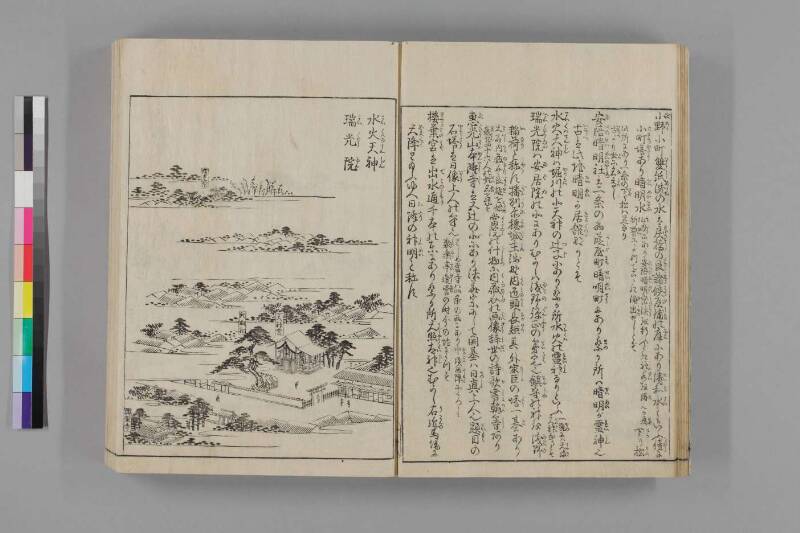
水火天神(すいくはのてんじん)
瑞光院(すいくはうゐん)
【図中】
天神宮
影向松
瑞光院
興聖寺
現代語訳
## 小野小町の双紙洗水(そうしあらいのみず)
小野小町の「双紙洗の水(そうしあらいのみず)」は、戻橋の艮(うしとら=北東)の方角、諸侯の屋敷の庭にある。「清和水(せいわすい)」とも呼ばれる。その傍らに**小町塔(こまちのとう)**がある。
---
## 晴明水(せいめいすい)
この場所にある。安倍晴明が密法を行う際、神水を得ようと祈誓したことによって、ここに湧き出したと伝えられる。
---
## 下り松(さがりまつ)
この場所にある。一条の「下り松(さがりまつ)」とはこれのことであり、古くから世に名高い。
---
## 安倍晴明社(あべのせいめいのやしろ)
一条の西、葭屋町・晴明町にある。祭神は晴明の霊神である。古くはこの地が晴明の居館であったと伝えられる。
---
## 水火天神(すいかてんじん)
堀川の北、天神の辻子(つじこ)にある。祭神は水火の霊神であるという。一説には天満天神であるとも伝えられる。
---
## 瑞光院(ずいこういん)
安居院(あぐい)の北にある。かつては浅野弾正の邸宅であった。鎮守の神を「浅野稲荷(あさのいなり)」と称する。播州赤穂城主・浅野内匠頭長矩、およびその家臣たちの塔が一基ある。大石内蔵助良雄をはじめ、義臣四十六人の姓名が記されている。当院の什物(じゅうもつ)には、内蔵助の画像・辞世の詩歌・書翰などがある。
---
## 恵光山本隆寺(えこうざんほんりゅうじ)
五辻の北にある。法華宗であり、開基は日真上人(にっしんしょうにん)である。題目の石塔は日像上人(にちぞうしょうにん)の筆によるものである。はじめ当寺は四条の西にあり、中頃に西陣へ移し、聚楽第(じゅらくてい)造営の際に現在の地へ移された。
---
## 桜葉宮(さくらばのみや)
出水通り千本の東にある。祭神は天照大神(あまてらすおおみかみ)である。昔、右近の馬場に天降り給うたことから、「日降の神明(ひふりのしんめい)」と称する。
---
【図中の題】
- 天神宮
- 影向松(ようごうのまつ)
- 瑞光院
- 興聖寺
英語訳
## Ono no Komachi's "Sōshi-arai" Spring (The Manuscript-Washing Well)
The spring associated with Ono no Komachi, known as the *Sōshi-arai no mizu* (the "manuscript-washing water"), is located to the northeast (the *ushitora* direction) of Modori Bridge, within the garden of a daimyō residence. It is also called the *Seiwa-sui* (Seiwa Water). Beside it stands a **memorial pagoda to Ono no Komachi**.
---
## Seimei-sui (Abe no Seimei's Sacred Spring)
This spring is located at the same site. It is said to have welled forth here as a result of the prayers and vows of Abe no Seimei, who beseeched the gods to grant him sacred water when performing esoteric rites.
---
## Sagari-matsu (The Drooping Pine)
This tree is located at the same site. This is the famous "Sagari-matsu of Ichijō Street," celebrated throughout the ages since ancient times.
---
## Abe no Seimei Shrine
The shrine is located to the west of Ichijō Street, in the district of Yoshiyamachi and Seimei-chō. The enshrined deity is the divine spirit of Abe no Seimei himself. It is said that this site was once Seimei's own residence.
---
## Suika Tenjin (The Deity of Water and Fire)
Located to the north of Horikawa, in the alleyway (*tsujiko*) known as Tenjin no Tsujiko. The enshrined deity is said to be the divine spirit of water and fire. According to one account, however, it is Tenman Tenjin (the deified spirit of Sugawara no Michizane).
---
## Zuikō-in Temple
Located to the north of Agui. In former times, this was the private residence of Asano Danjō. The guardian deity of the estate is venerated under the name *Asano Inari*. Within the temple grounds stands a memorial pagoda (*tō*) for Asano Takumi-no-kami Naganori, lord of Akō Castle in Harima Province, as well as for his retainers. The names of the loyal retainer Ōishi Kuranosuke Yoshio and the other forty-five faithful samurai are inscribed upon it. Among the temple's treasured possessions are a portrait of Kuranosuke, his death poem (*jisei*), and letters.
---
## Ekōzan Honryū-ji Temple
Located to the north of Itsutsuji (Five-辻 Street). It belongs to the Nichiren (Hokke) sect, and was founded by the Venerable Nisshin. The stone pagoda bearing the *daimoku* (the sacred title of the Lotus Sutra) was inscribed by the Venerable Nichizō. Originally, this temple was situated to the west of Shijō Street; in the middle period it was relocated to Nishijin; and when Jurakudai Palace was constructed, it was moved to its present location.
---
## Sakuraba-no-Miya Shrine
Located to the east of Senbon on Demizu Street. The enshrined deity is Amaterasu Ōmikami (the Great Deity of the Sun). Because the goddess is said to have descended from heaven (*amakudari*) to the right-side horse grounds (*Ukon no baba*) in ancient times, the shrine is known as *Hifuri no Shinmei* ("The Shinmei Deity of Descending Sunlight").
---
*(Captions within the illustration)*
- Tenjin-gū (Tenjin Shrine)
- Yōgō-no-matsu (The Pine of Divine Manifestation)
- Zuikō-in
- Kōshō-ji