翻刻
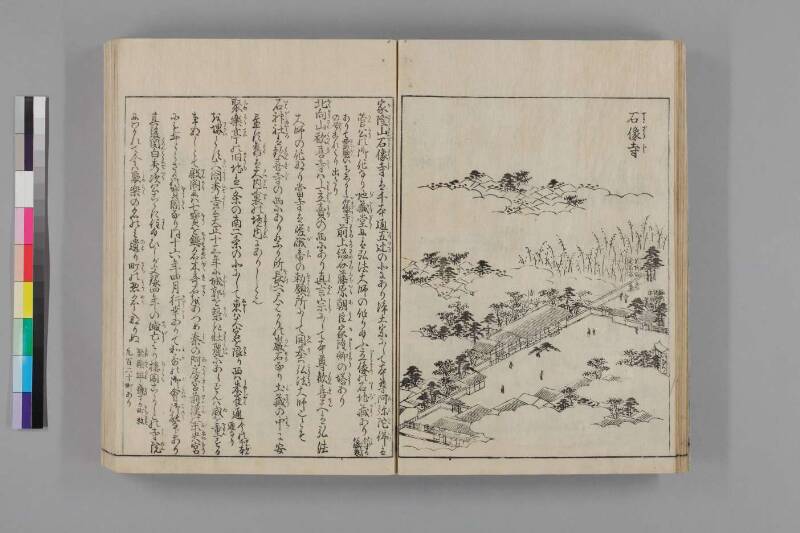
石像寺
家隆山石像寺は千本通五辻の北にあり浄土宗にして本草阿弥陀仏は
菅公の御作なり地蔵堂には弘法大師の作り給ふ立像の石地蔵あり
信する
に感応
ありて霊験いちしるし石像寺
の号これより出たり
前上総介藤原朝臣家隆卿の塔あり
北向山歓喜寺は上立売の西にあり眞言宗にして本尊歓喜天は弘法
大師の作なり当寺は嵯峨帝の勅願所にして開基は弘法大師也とそ
石神社は歓喜寺の西にあり祭る所長六尺はかりの巌石なり土藏の中に安
置す旧は大内裏の境内にありしと也
聚樂亭の旧地は二条の南二条の北にして東は大宮を限り西は朱雀通
今の千本
通なり
を堺とす太閤秀吉公大正十三年に城郭を築き壮麗にあらずんは威を重する
事なしとて殿閣には七寶を鏤名木奇石をあつめ秦の阿房宮前漢の未央宮
にもおとらざるの寶閣なり同十六年四月行幸ありて和哥の御会御能などあり
其後関白秀次公こゝに住給ひしが文禄四年の滅亡はり樓閣こゝかしこの寺院
にわかれて今は聚楽の名のみ遺り町の惣名となりぬ
聚樂組と号する町数
凡百二十町あり
現代語訳
## 石像寺・歓喜寺・石神社・聚楽亭旧跡
---
**家隆山石像寺**は、千本通五辻の北にある。浄土宗の寺院であり、本尊の阿弥陀仏は菅原道真公(菅公)の御作である。地蔵堂には弘法大師が作られた立像の石地蔵がある。信心深く祈れば感応があり、霊験はいちじるしい。「石像寺」の号はここに由来する。また、境内には前上総介藤原朝臣家隆卿の供養塔がある。
---
**北向山歓喜寺**は、上立売の西にある。真言宗の寺院であり、本尊の歓喜天は弘法大師の作である。当寺は嵯峨天皇の勅願所であり、開基は弘法大師であると伝えられている。
---
**石神社**は歓喜寺の西にある。祭神は長さ六尺ほどの巌石(いわいし)であり、土蔵の中に安置されている。もとは大内裏の境内にあったとされる。
---
**聚楽第の旧地**は、二条の南・二条の北にわたり、東は大宮通を境とし、西は朱雀通(現在の千本通)を境としている。太閤秀吉公は天正十三年(1585)にここに城郭を築き、「壮麗でなければ威光を示すことができない」として、殿閣には七宝をちりばめ、名木・奇石を集め、秦の阿房宮・前漢の未央宮にも劣らない壮麗な宮殿とした。天正十六年(1588)四月には後陽成天皇の行幸があり、和歌の御会や御能などが催された。その後、関白秀次公がここに居住されたが、文禄四年(1595)の滅亡によって、楼閣はあちこちの寺院に移されて散り散りになり、今は「聚楽」の名のみが残って、町の総称となっている。聚楽組と号する町数は凡そ百二十町ある。
英語訳
## Sekizō-ji Temple · Kangi-ji Temple · Ishi-jinja Shrine · The Former Site of Jurakudai
---
**Karyūzan Sekizō-ji Temple** is located to the north of Itsutsuji on Senbondōri Avenue. It belongs to the Jōdo (Pure Land) sect, and its principal image of Amida Buddha is said to have been carved by Sugawara no Michizane (Lord Kan). In the Jizō Hall stands a stone image of Jizō Bodhisattva in the form of a standing figure, carved by Kōbō Daishi. Those who believe and pray are met with divine response, and the temple's miraculous efficacy is remarkable. The name "Sekizō-ji" (Temple of the Stone Image) derives from this very image. Within the temple grounds there is also a memorial pagoda for the former Governor of Kazusa, Fujiwara no Ason Ietaka.
---
**Kitamuki-zan Kangi-ji Temple** is situated to the west of Kamitatéuri. It belongs to the Shingon sect, and its principal object of worship, the Kangiten (the Joyful Deva), is a work of Kōbō Daishi. This temple was established as a prayer temple (*chokuganjo*) by Emperor Saga, and its founding is attributed to Kōbō Daishi.
---
**Ishi-jinja Shrine** is located to the west of Kangi-ji. The object of worship is a great boulder approximately six shaku in length, enshrined within a storehouse (*dozō*). It is said to have originally stood within the precincts of the Great Imperial Palace (*Daidairi*).
---
**The Former Site of Jurakudai** stretches from south of Nijō to north of Nijō, bounded to the east by Ōmiya-dōri Avenue and to the west by Suzaku-dōri Avenue (present-day Senbondōri). In the thirteenth year of Tenshō (1585), the Grand Minister Toyotomi Hideyoshi constructed a great fortified palace here, declaring that only magnificent splendor could lend true authority and dignity. The palace halls were encrusted with the seven precious gems, and rare trees and curious stones were gathered from far and wide, making it a treasury of wonders rivaling the Afang Palace of the Qin dynasty and the Weiyang Palace of the Former Han dynasty. In the fourth month of Tenshō sixteen (1588), Emperor Go-Yōzei paid an imperial visit, during which gatherings for the composition of *waka* poetry and performances of *Nō* drama were held. Thereafter, the Regent Toyotomi Hidetsugu resided here, but upon his downfall in the fourth year of Bunroku (1595), the towers and halls were dismantled and distributed among various temples throughout the city. Today, only the name "Juraku" survives, having become the general designation for the surrounding district. The number of town blocks bearing the name "Jurakugumi" totals approximately one hundred and twenty.